








Author: Caroline Olsen-Van Stone
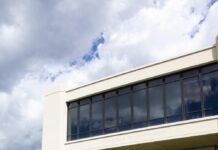
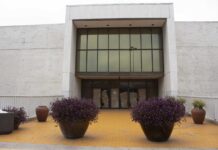
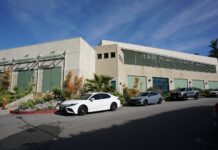
Entering from the San Fernando Road entrance of Drkrm-a combination darkroom-gallery in Glassell Park-requires speaking into an intercom, and going down a long dimly-lit hallway past two other galleries called Another Year in LA and Shotgun Space.
“It’s the equivalent of the meat packing district in New York,” gallery owner John Matkowsky said.
However visitors shouldn’t be daunted by the less than polished exterior, as this small gallery’s high ceilings and multi-level floorplan provide a spacious atmosphere like its West LA counterparts. The small space and opened workroom provide for an intimate, but in your face show.
Currently on show is the provocative, multi-artist photography exhibit Love Me, running since Jan. 19 until Feb. 24. Love Me challenges one’s ideas about the division between pornography and art. Many of the pieces were nudes-both tame and erotic-staged in a variety of different contexts.
The show embodies Matkowsky’s proclaimed filter: “the combination of fine art and documentary photography.”
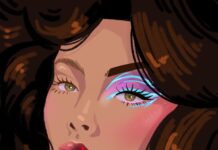
Paul Zone’s pre-punk scene portrait of Deborah Harry wearing blue eyeliner and vibrant pink served as the icon of the show, but definitely fell on the benign end of the show’s shock spectrum.
Jeff Reese’s “Kitchen” featured a cramped, cluttered kitchen with pots hanging from a ceiling rack, a wire shelf that served as a pantry, and the lower half of a nude woman’s body. She stands atop a small stove wearing patent-leather six-inchers. This placement of nudity in the kitchen invites questions about a woman’s role in society.
Close by was Aaron Hobson’s “Peg’s Leg,” an eerie color photograph of a man covered in machine grease sitting in a machine shop next to a female mannequin leg partially covered with a black plastic bag. Hobson’s other photo showed a couple having sex against a wall in a decrepit building. Similar to “Kitchen,” the photo does not show their faces. Interestingly, the man and woman in the shot aren’t facing each other. This element, combined with the contrast of the soft texture of their skin and the leaves on the ground make this piece gripping. Hobson’s work will be exhibited at Drkrm again in July as part of his solo show.
In the main level workroom of the gallery, amid light tables and parts of the gallery’s photography book collection were some of the most interesting photos of the show.
Lavish “L” Series, a set of four nude full-body shots of an overweight woman, made its subject seem particularly graceful. Because Don Jim photographed her from above and the photos are exhibited vertically, she appears almost weightless. Though her imperfections are visible, a spare background, low lighting and Jim’s use of silver gelatin printing seemed to flatter her.
This room also contained a portrait of photographer Robert Mapplethorpe by Mark Thompson, taken in 1980 from his series “Gay Body.” This piece was appropriate because of Mapplethorpe’s infamy as a photographer of nudes. This complicates Mapplethorpe’s relationship with the viewer, because as the artist, he has the power to decide what to show and is now being viewed himself.
Many of these works begged the viewer to not only look, but to keep looking. At first glance, “Brenda and Adriana” by Nicola Goode seemed to pair a before and after of a transsexual. According to Matkowsky, a lot of visitors thought the same thing, but the photo is of two people.
Though Ryan Herz’s two shocking photos were taken from his seemingly consciousness-raising “Women on Display” essay, I could not look at “Ivar Theater, Hollywood Feb 1982” for more than a second. This set of two photos showed a naked woman on stage having her vagina recorded with a video camera. If the artist was trying to shock and disgust the viewer, it worked. But, to what purpose? I can understand the argument that shock value sends a potent message, but this is lost as few photos in this show provided an illustration of empowered women, or were taken by one.To be fair, there were also a few sets of photos that showed nude males sitting casually with their penises fully visible, as in “Seated Male Figure,” and “Dan, Portrait of a Hustler.” However, they were not depicted as powerless, like the woman in “Ivar Theater.”
Markowsky is currently working on putting together the next show, The Children of Edgewood, an exhibit of photographs by Ryan Herz of children with developmental disabilities taken in the 1970s. The Children of Edgewood opens March 8th.
This article has been archived, for more requests please contact us via the support system.