















Author: Erik Parker, Torch Staff
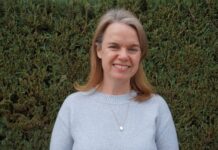
On Thursday, Feb. 28, Save Darfur Coalition’s Zahara Heckscher visited campus to discuss the ongoing genocide in Darfur and to motivate students to take actions towards ending the genocide. Approximately 30 students and teachers attended the hour-long talk in Johnson 200.
Heckscher prefaced her informational session with her reasons for campaigning for peace in Darfur. “I’m here because when my dad was 17 years old, activists saved his life,” she said, explaining that her father was a Jewish child in Nazi Germany who was luckily transported to England.
“He was saved because of activists working hard against a genocide,” Heckscher said. She also spoke about her grandfather who was saved from a concentration camp because of an American woman who sponsored her grandparents to come to the United States.
“I also have relatives who did not survive the Holocaust,” she said. “I’ve aspired in the case of Darfur to do all I can in their honor and memory.”
Heckscher then addressed the current situation in Sudan’s western region of Darfur. She described it as a “slow-moving genocide” with government-sponsored violence and Sudanese people being displaced from their homes to refugee camps in the neighboring country of Chad.
Violence in Darfur began five years ago when fighting broke out between Darfurian rebel groups and the government. “The rebels subsided in Darfur, so the government decided to kill them all,” Heckscher said.
It is estimated that 400,000 civilians have been killed in the conflict and the situation has forced 2.5 million people from their homes to refugee camps. Heckscher said that no accurate estimates are available because “no one is there to count the people as they die.”
She said that currently, not enough is being done for Darfur because “governments of the world are not committed to peacekeeping. Citizens have not forced them.”
Heckscher said that citizens have the power to change how their governments act and that students are an important part of this. She hopes that within a month, a student group will exist that promotes activism for Darfur.
As an undergraduate student at Wesleyan College, Heckscher participated in an anti-apartheid student group. She spoke about how the group’s actions had visible effects and that student groups now can do this for Darfurians.
Heckscher then gave examples of what students can do to help Darfur. She suggested screening an awareness film, such as “Darfur Now.”
Additionally, she said that it is crucial to encourage companies and governments to “divest,” which means to stop investing in companies that are funding the genocide. California was actually the first state to divest, and dozens of other states followed its example.
California often “sets the standard” for activist movements, Heckscher said. She also reemphasized the importance of student involvement. “With all social justice movements, students are at the forefront,” she said.
“I need you to educate yourself and get involved,” Heckscher said. She recognized that many students are too busy to give up much time, but encouraged everyone to be on Save Darfur Coalition’s e-mail list and take the small actions mentioned in the e-mails, such as signing a petition. “Our e-mail list has created legislative change,” she said.
Heckscher also spoke about STAND (Students Taking Action Now: Darfur), a student anti-genocide coalition with students groups at many educational institutions. She encouraged Occidental students to consider creating their own chapter, and facilitated a meeting between interested students after the talk.
This article has been archived, for more requests please contact us via the support system.