











Author: Yennaedo Balloo
My middle school took pretty serious measures to make sure its students read during summer break: we were given a reading list by our future English teacher, asked to read four books from the list, and turn in a report on each one through the mail on pre-assigned dates throughout the summer.
In college no one is held to such stricture during their summers, but given how much reading for academia we do here, reading can become a zesty endeavor when you finally get to do it purely for fun. At this time of year you’ll generally see bookstores with tables set up with their recommended summer reading. Since you, like me, probably have no idea who Barnes or Noble is (or why you should trust their recommendations), take some advice from the people you know and trust: your professors. Unlike my teachers from middle school, these recommendations come without the mail-in assignment.
Economics
Professor Studenmund: “To me, a great “beach book” should be fun but well-written. That way you can relax and enjoy your summer while also being exposed to high-quality prose.” Studenmund also recommends his favorite book: Presumed Innocent by Scott Turow. The plot is terrific, the characters are complex, and the writing is evocative. For example, try this sentence on for size: “I dream that my skin is slick with sweat, my father is calling, a cake has fallen, and my fear is like an acid that is corroding my veins and bones.”
Professor Giorgio Secondi: Paul Collier, The Bottom Billion: Why the Poorest Countries Are Failing and What Can Be Done About It. “This is a great book for students interested in learning about why poor countries are poor. It’s accessible to anyone-not just Econ majors! Oxford economist Paul Collier thinks that foreign aid has a role to play, however, he believes that it also has serious limitations and needs to be provided in different ways. He goes on to recommend alternative solutions to aid provision, including military intervention (which he believes to be effective in very specific circumstances-he’s not advocating more Iraqs). Collier’s research is very interesting, and he does an excellent job at explaining it to the general reader. His writing style, often witty as well as refreshingly blunt, adds to the enjoyment of reading this book (e.g., he states that Mao made his contribution to China’s recent decades of fast economic growth by ‘dropping dead.’).”
Politics
Professor Dreier takes into account that an election year is approaching: “Cornel West’s two books, Race Matters and Democracy Matters are evocative and inspiring analyses of America’s class and racial divide, but also hopeful essays about how we can do better. For both fun and political insight, I’d recommend two books by Al Franken, the comedian and talk show host who is running as a serious candidate for U.S. Senator in Minnesota: Lies and Lying Liars Who Tell Them: A Fair and Balanced Look at the Right and The Truth. If you want to learn about Los Angeles, you can’t do better than any of Walter Mosley’s series of novels (my favorite is The Red Death, set in the 1950s), Chester Himes’ two novels, The Lonely Crusade and If He Hollers, Let Him Go.”
Diplomacy and World Affairs
Professor Chase shakes things up a bit by recommending a magazine instead of a book: “I’d recommend not a book but, rather, a subscription to The New Yorker. Why? Much, much easier to read on the beach, and pairs nicely with a G & T-so perfect for summer, right? Beyond such essentials, what makes The New Yorker wonderful is its wide-ranging reportage that takes you in unexpected directions. It isn’t for those who want to read about things they already know, but rather goes in-depth on everything from art to zoology-always well written and often with the sort of sardonic wit that makes for a good summertime companion.”
Library Services
Emily Bergman shares her favorite book of all time, and it’s Plato’s The Republic: “It helps me understand my place in the world . . . what more can you ask?” For some lighter summer fare, she adds: “The Amazing Adventures of Kavalier and Clay by Michael Chabon. Even though it’s not a new book, it’s an amazingly written novel about the beginning of comic books.”
History
Professor Jennifer Jung-Kim recommends a book she feels all college students can read and get something out of: This Book is Not Required: An Emotional Survival Manual for College Students by Inge Bell. According to Jung-Kim, “This is a how-to manual for college students on dealing with a range of topics, such as grades, academic integrity and parents. Even if you’re going into your senior year, still a worthy read to make the most of your last year and beyond.”
Urban Environmental Policy
Professor Robert Gotlieb recommends: Storming the Gates of Paradise: Landscape for Politics by Rebecca Solnit.
Professor Derek Shearer: “Any Oxy student interested in politics or world affairs should read The Looming Tower-The Road to 9/11 by Lawrence Wright. This book won the Pulitzer Prize, and is essential reading to understand how the events of 9/11 came to happen. It is available in paperback, and I recommend it to students who are planning to be DWA majors or take any of my courses. My second choice of serious reading is The Bin Ladens-An Abrabian Family in the American Century by Oxy grad Steve Coll [’80]. He won the Pulitzer Prize for his previous book Ghost Wars . . . For lighter fare but still educational, I recommend mysteries set in foreign countries. [ . . . ] Checking out foreign writers who have won the Nobel Prize is a good way to broaden your horizons during the summer.”
Music
Professor William Bing recommends a more humanitarian text: The Story of My Experiments With Truth by Mahatma Gandhi. “Although it has been some time since I read the book, the idea of writing so honestly about one’s life, about the value of humility, and of course, non-violence have been values that continue to resonate with me on a daily basis.”
Psychology
Professor Raphael Rose recommends books to soothe the pangs on existential questioning and confusion: Viktor Frankl’s Man’s Search For Meaning. “It describes Frankl’s experiences in a concentration camp and his writings on an existential therapy approach he called Logotherapy. While Logotherapy has proven to not be an influential therapeutic approach, I think Frankl’s views on how to find meaning in life, even in the most difficult moments is an important and potentially very helpful read for individuals and certainly anyone trying to come to grips with such issues.”
Professor Andrew Shtulman: The Ghost Map by Steven Johnson. “It’s a book about London’s cholera epidemic of 1854 and those who sought to discover its origin. The reason I really enjoyed this book is that it ties many different disciplines-the biology of cholera, the history of science, the psychology of creativity, the sociology of 19th century London and the politics of urban development-into one captivating, well written story.”
Geology
Professor James Woodhead recommends The Hobbit and The Lord of the Rings trilogy by J. R. R. Tolkien for enjoyable and classic fantasy. You’ve seen the trilogy on film, maybe it’s time to experience the source material? Jackson is making The Hobbit into film soon, so reading that may not be such a bad idea either.
Biology
Professor Gretchen North shares one of the favorite titles she has on her shelf: “The best novel I’ve read in five years-maybe ten-is The People of Paper by Salvador Plascencia, an author who graduated from Whittier College not long ago. The leading female character is made of folded paper, who gives nasty paper cuts to people who get too close, and the leading male chara
cter is, occasionally, the planet Saturn. Baby Nostradamus, who speaks in black rectangles, lives up to his name. Despite such mythical figures, the book is a true and beautiful portrait of fluid lives in Mexico and Southern California.”
Education
Professor Desiree Zamorano: Neil Gaiman’s American Gods. “He brings the gods of mythology to life in contemporary America. Dazzling and intoxicating, I enjoyed it so much that I did something I absolutely never do: once I finished it I immediately started it all over again.” She also recommends Sherman Alexie’s The Absolutely True Diary of a Part-Time Indian. “[It] is marketed as a young-adult book, but its language, drama and insight are equally riveting for adults. I fell in love with it.”
German Studies
Professor Juergen Pelzer: A Tale of Love and Darkness by Amos Oz; Interesting Times by Eric Hobsbawm; and Everyman by Philip Roth.
ECLS
Professor Eric Newhall: Ralph Ellison’s novel, Invisible Man. “Why? Because it’s one of the best novels written by anyone in the twentieth century. It’s a beautifully crafted piece of fiction. It deals with issues that remain significant in U.S. culture today-identity, inclusion, exclusion, conformity, non-conformity, race and power. It raises questions about the nature of democracy and calls attention to the difference between idealistic rhetoric and social reality. It relates directly to the mission of Occidental College as articulated in our formal ‘mission statement.’ And finally, Invisible Man is a novel that speaks to all of its readers on one level or another. As Ellison’s narrator says to us at the end of the book, ‘Who knows but that, on the lower frequencies, I speak for you.'”
Professor Michael Near: Stella Gibons’ Cold Comfort Farm/i>. “Great summer fare-light, hilarious, and incisive in its parodic skewering of Hardy, Lawrence, rural romance, pastoral idealism, and gentrification. This book will cowdle thee in its bosom as a mommet.”
Professor Martha Ronk: “I have been recommending the author W.G. Sebald to my students; he focuses on the loss of place and memory in Europe post-World War II and the Holocaust. His novel, Austerlitz, is perhaps the most accessible; others of his books, The Emigrants and Vertigo, are made up of separate narratives. The NY Times Book Review said, ‘Sebald is a thrilling, original writer. He makes narration a state of investigative bliss.'” Ronk suggests Interpreter of Maladies by Jhumpa Lahiri for incoming first-year students. Ronk also recommends poetry: Anne Carson, “The Autobiography of Red,” George Oppen, and Frank O’Hara, among others.
Professor Deborah Martinson: “Books students ‘should’ or ‘could’ read over the summer are many.” Since, just as in pursuit of education at Occidental, students should read as much of an array as they can, but with that in mind she still recommends the following: “Middlesex by Jeffrey Eugenides (fiction), Thunder of Angels by Donnie Williams and Wayne Greenhaw (nonfiction about the 1955 Montgomery Bus Boycott), Jed Horne’s Breach of Faith: Hurricane Katrina and the Near Death of an American City (nonfiction). Old continuing favorites are Pentimento by Lillian Hellman, House of Spirits by Isabel Allende and The Bluest Eye by Toni Morrison. And for airplane reading? Lisa Scottolini’s Daddy’s Girl (legal thriller) and Michael Connolly’s The Lincoln Lawyer (also legal thriller-sort of).” Her final advice to readers: “Read what captivates you in the summer. Read what is well-written.”
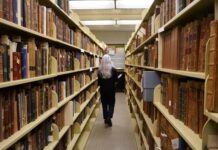
With this many recommendations you can trust, wandering the aisles of your favorite bookstore should be a bit more productive than simply leading you back to the magazine rack this summer. I’ve already begun to jot down the books I want to check out, and it’s a good idea for everyone to get their lists ready so they can pack something good to read in their beach bags.
This article has been archived, for more requests please contact us via the support system.