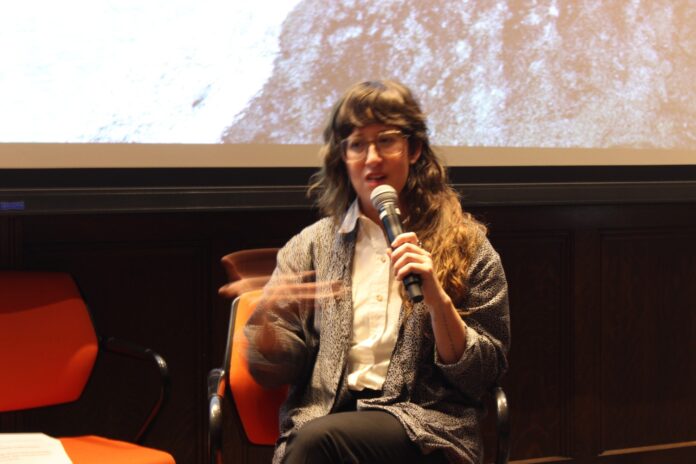
Occidental College hosted a screening of the 2023 film “The Tuba Thieves“ Feb. 22. The screening, co-presented by Oxy Arts and Oxy Disabled Student Union, is a part of Occidental College’s Media Arts & Culture (MAC) Department’s long-running MAC Cinematheque series. The screening was attended by the film’s director, Alison O’Daniel, and producer, Maya E. Rudolph, who stayed for a Q&A hosted by James Irvine Professor of Media Arts & Culture Broderick Fox.
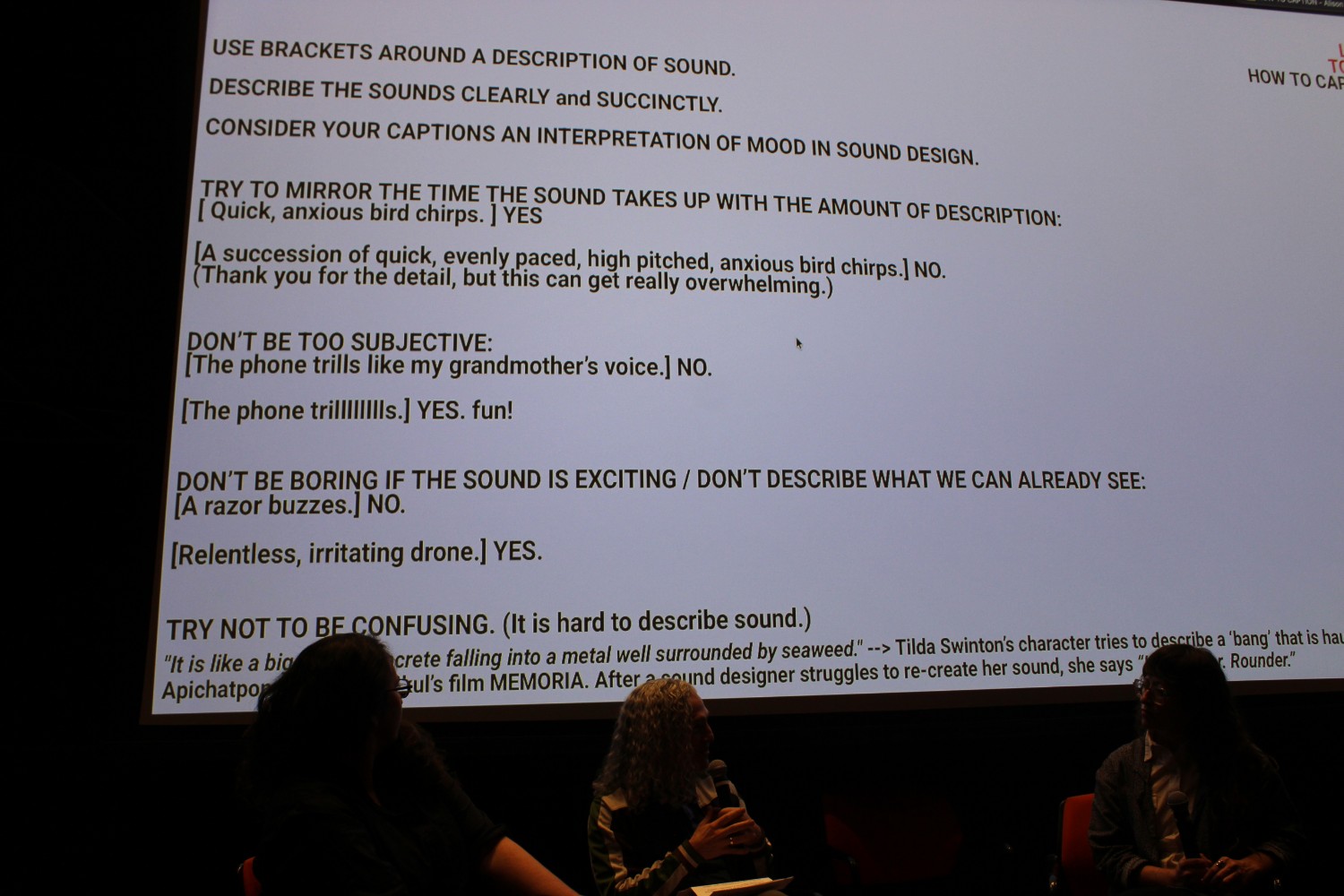
The film outlines the years from 2011–2013, when several schools in the SoCal area were robbed of one or more of their tubas. Rather than focusing on the tuba thefts themselves, the story focuses on a handful of diverse hard-of-hearing and Deaf characters and the ways in which they engage with each other and the world.
This small group of Deaf characters, based in LA, includes a high school student directly affected by the thefts, a pregnant musician and her partner. The three navigate life, love and listening, even without sound.
According to O’Daniel, “The Tuba Thieves” seeks to shake up many misconceptions about the Hard of Hearing and Deaf communities. According to O’Daniel, the process of getting the film made was a long and hard-fought one.
“‘The Tuba Thieves’ was such a process-oriented project and it did start with the story of the tuba thefts,” O’Daniel said, “It emerged from a story that I had heard in November 2011 about tubas that had been stolen from Jordan High School in Watts, and the second was Centennial High School in Compton. I knew when I heard the first story that I was gonna make a movie called ‘The Tuba Thieves’ and I made this decision right away that it wasn’t really gonna be about the thieves, and then I wanted to try and figure out what it means to listen.”
According to O’Daniel, who identifies as Deaf herself, this film and the story behind it is incredibly personal.
“The reason I had been so drawn to this story was because, in deaf culture, there’s this very empowered turn of phrase where we say we have ‘Deaf Gain’, whereas in hearing culture and in audiology, we are told we have hearing loss,” O’Daniel said, “It’s such a big deal to turn that, and for me, this film was this real recognition of grief, when grief is imposed on you because something is taken or you’re told always that you’ve lost something.”
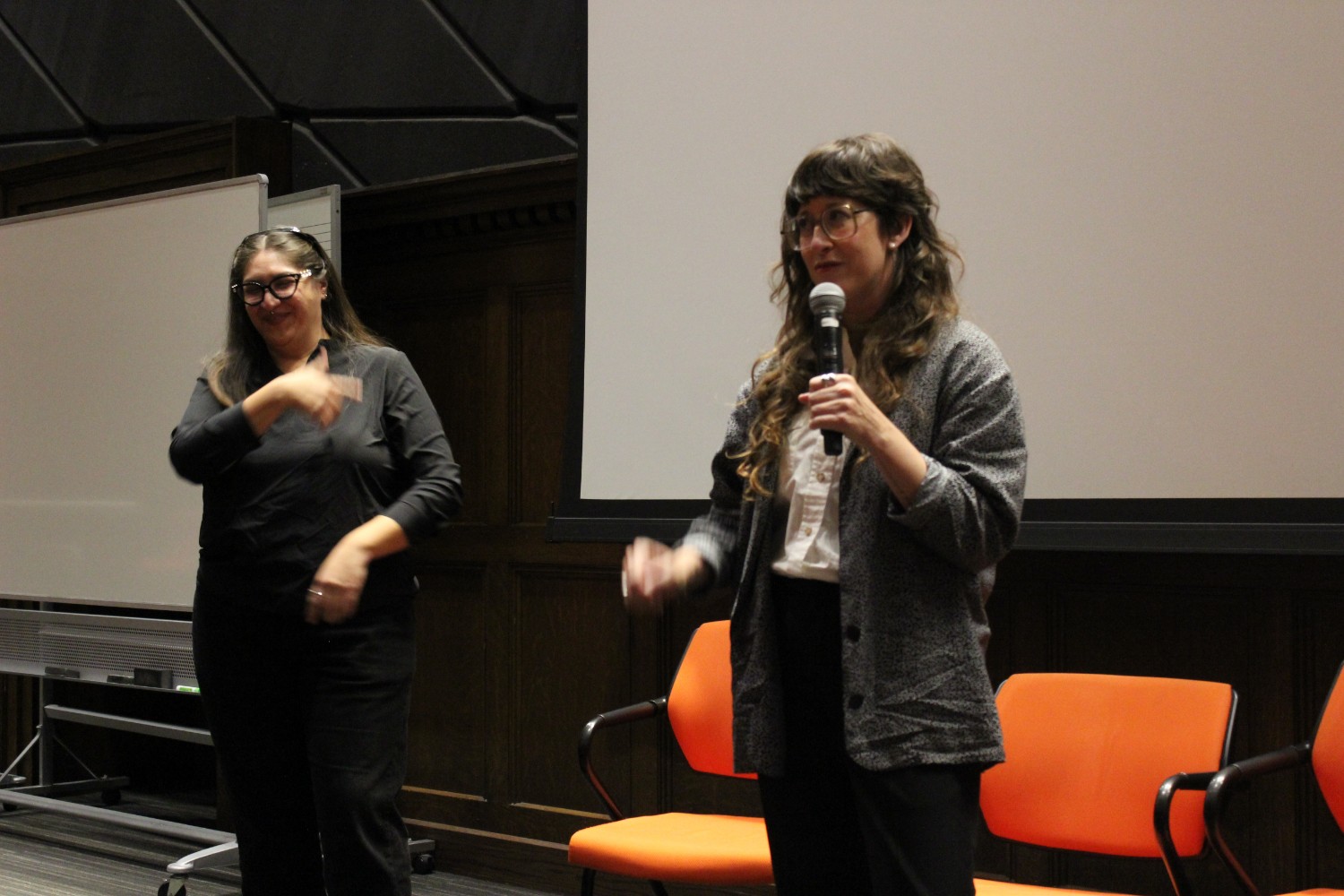
Assistant Professor of Cognitive Science Shengyun Gu said she has experience researching ASL as well as Shanghai Sign Language and is currently teaching the class “Language and Culture in Deaf Communities.” Gu said the screening led her to reflect and reconsider some of her curriculum.
“I’ve been very excited to see some representations of Deaf folks and artists that I’ve seen somewhere else in my past years and encounters with the deaf community as well as the research community,” Gu said.

According to Sophia DeLuna (sophomore), she attended the screening as part of her position at Oxy Arts, but was also influenced to attend by her Aesthetics of Cinema class, where it had recently been discussed.
“It’s not a very traditional movie, but I thought it was super cool how it put you in the subjective point of view of a person who is hard-of-hearing,” DeLuna said. “As someone who is not hard-of-hearing, that was just something new to me that you don’t see often in film, so I thought it was a cool new concept.”
According to DeLuna, sound was used to build space in the film, with background sounds being brought forward as the main focus.
“A lot of the time, hard-of-hearing and deafness is portrayed as the absence of sound and something that you don’t have,” DeLuna said. “But I thought it was really cool how it used elements of film to tell the story with the absence of audio.”

As guests entered the screening, Mia Fasick (sophomore) was stationed outside of Thorne, handing viewers balloons with the words “THIS IS NOT JUST HOT AIR. ACCESS FOR ALL!” inscribed on them. Prior to the film starting, viewers were asked to clutch the balloons to more deeply engage with the sound choices made throughout the film, feeling every vibration thoroughly.
According to Fasick, the film’s techniques and portrayal of ASL served to make it more powerful.
“[A protagonist takes] the hearing test, and then he just starts going into poetry and ASL, and I thought that was so beautiful,” Fasick said. “It was like language poetry, but also like visual poetry. I guess I never thought about ASL that way and so that was really cool to see.”
Contact Shelby Kernisant at kernisant@oxy.edu