Nestled on Baer Road between Thorne Hall and the McKinnon Family Tennis Center lies Occidental’s Central Chiller Plant. Despite its nondescript exterior, the plant provides an essential service: cooling buildings across campus. According to Louie Avalos, who leads Occidental’s Heating, Ventilation, and Air Conditioning (HVAC) team, the Central Chiller Plant cools the majority of academic buildings across campus as well as some dorms.
According to Avalos, in addition to a control center, the plant consists of centrifugal chillers, pumps, fans, cooling towers and heat exchangers. The centrifugal chillers use the vapor compression cycle to chill water, sending collected heat to cooling towers. Heat exchangers are responsible for distributing the cold water produced to the rest of campus.
According to the Occidental website, the facility was built in 1998 and revamped in 2015. Avalos said updates to the plant improved sustainability, with the system now using drives — electronic power controllers — to manage fan speed for energy conservation.
“This is as green as it gets,” Avalos said.
HVAC Technician Shane Allen said the plant produces ice overnight, which is then used to cool campus throughout the day. Ice is preserved in the plant in five massive storage tanks. Allen said he inspects the system daily, monitoring water treatment and conductivity as well as ice production.
According to Allen, keeping the plant clean and efficient is important in order to operate at maximum capacity.
“If [the plant] doesn’t build ice [overnight], it costs a lot of money and electricity to run those chillers to keep the water [temperature] down,” Allen said.
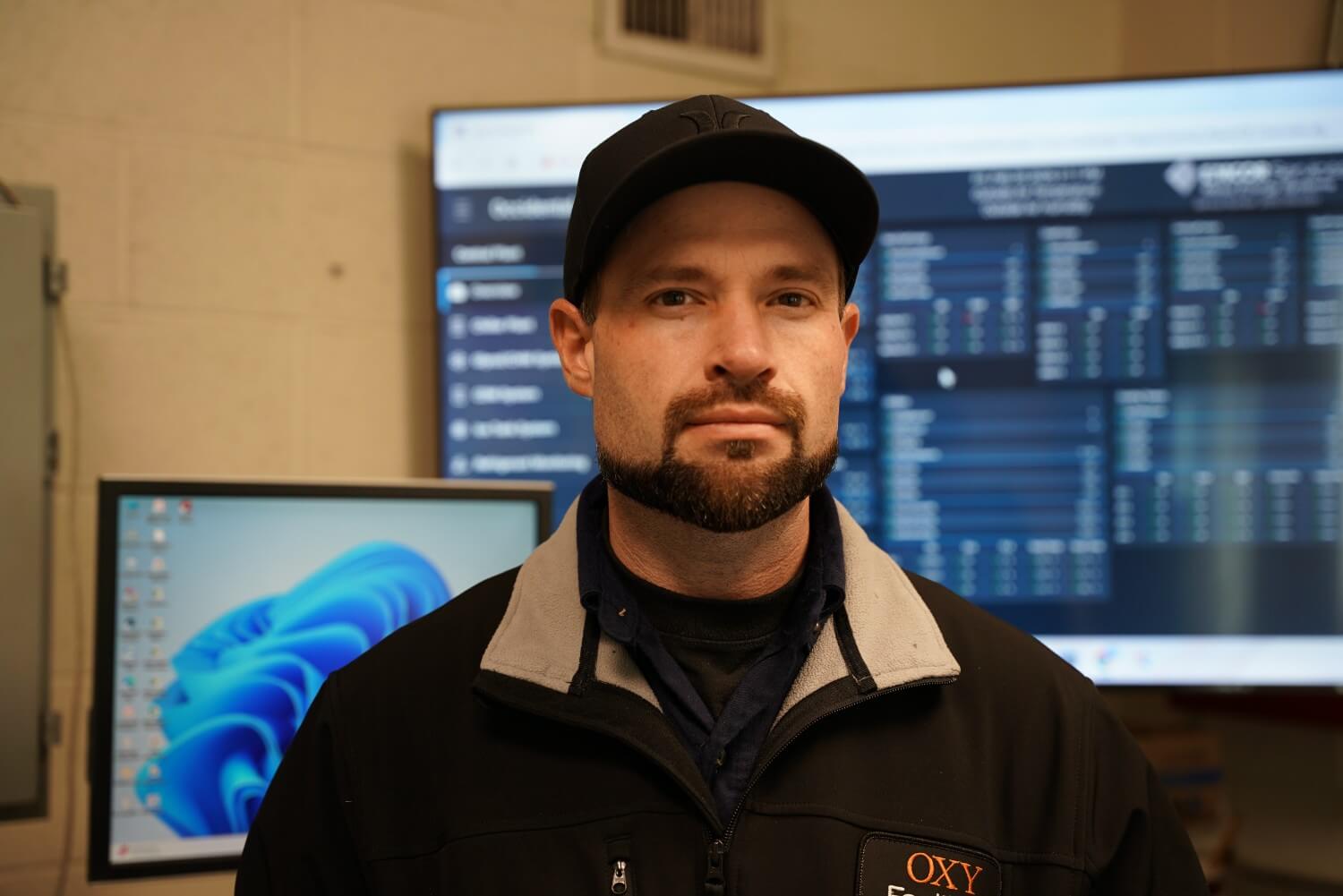
Avalos said Allen’s daily maintenance is responsible for the regular operation of the plant.
“[Allen]’s going to catch [any issues] first thing in the morning,” Avalos said. “Before anybody knows, he’s gonna catch it and we’re gonna take care of it.”
Trades Manager Joe Hernandez said the chiller plant provides cooling for most of campus, an essential service. Hernandez said his team’s maintenance work often goes unrecognized, yet students and staff reap the benefits of their labor everyday.
“Without [us] classes wouldn’t be able to be taught, especially in the summer — it gets really hot [here],” Hernandez said.
Avalos said his team’s work goes down behind the scenes.
“The only time you think about us is when you’re sitting there and going, ‘Oh shoot man, my air conditioning doesn’t work,’” Avalos said.
Avalos said much of the Central Chiller Plant’s operations across campus are managed from the plant itself via control software, in order to maximize efficiency. Avalos said the software allows his team to troubleshoot from afar before conducting on-site maintenance. According to Avalos, sensors provide detailed information about every room cooled by the system.
Allen said he can control how much chilled water is distributed to each space on campus and monitor specific information all from the computer room.
“You can see supply temperatures, and the valve positions for heating and cooling, and whether they’re on or off, and what speed they’re running at,” Allen said.
Avalos said tunnels underneath campus contain the piping used to transport cooled water.
“You’ve heard of the tunnels right? Under the campus?” Avalos said. “[All the pipes] go into the tunnels, and then the tunnel runs right across the quad, and as it is going out it is hitting these buildings.”
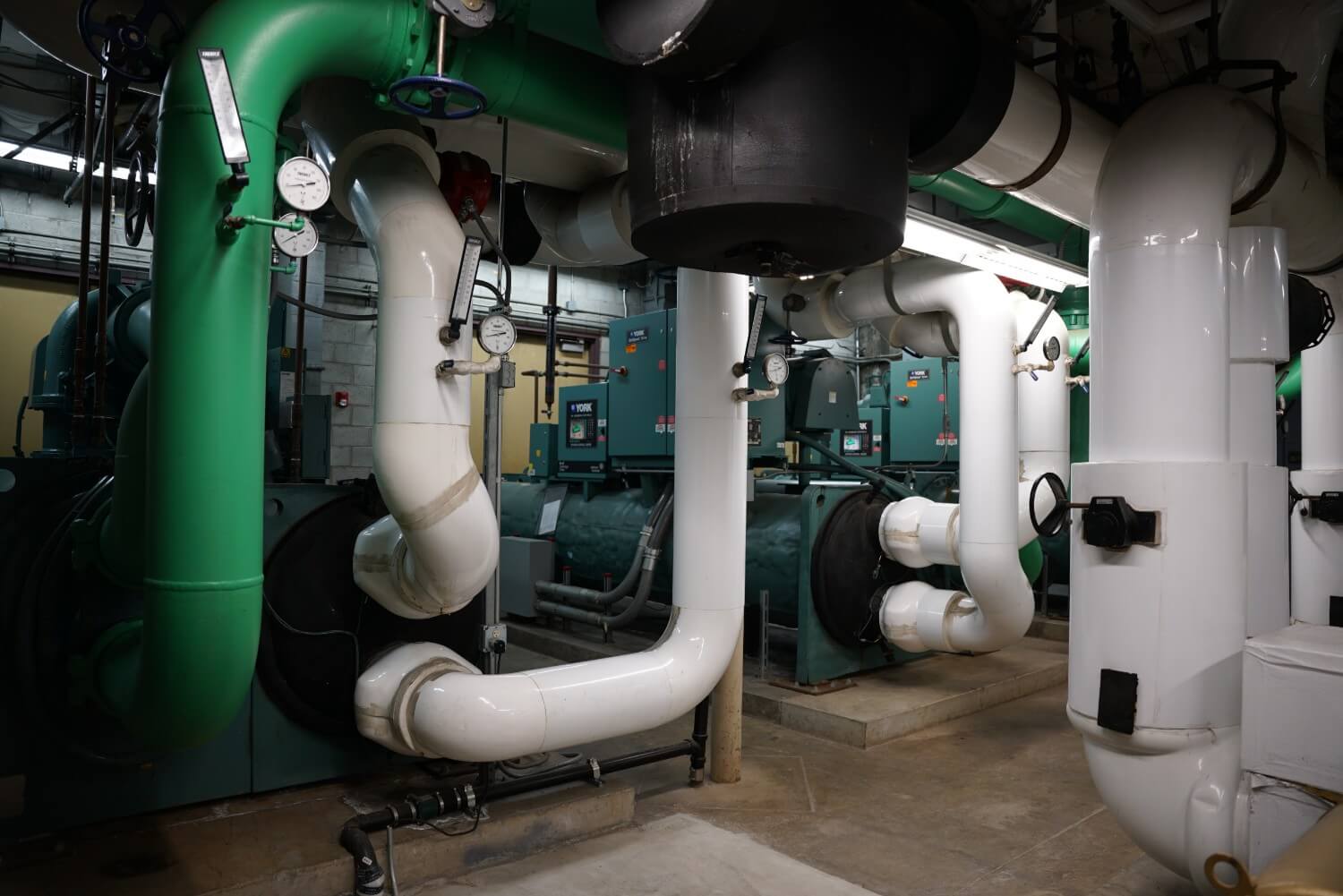
Avalos said his team occasionally has to enter the tunnels to inspect operations and identify issues.
“We’re in the tunnels when we have to be,” Avalos said. “We’re not down there all the time.”
Hernandez said going into the tunnels takes a lot of work and is always a team effort, necessitating radio communication.
“There’s a lot down there, [and] we’re working little by little on bringing it up to standard,” Hernandez said. “This is an old campus with a lot of old buildings, so it takes a lot to keep it going.”
Contact Eli Heringman at heringman@oxy.edu