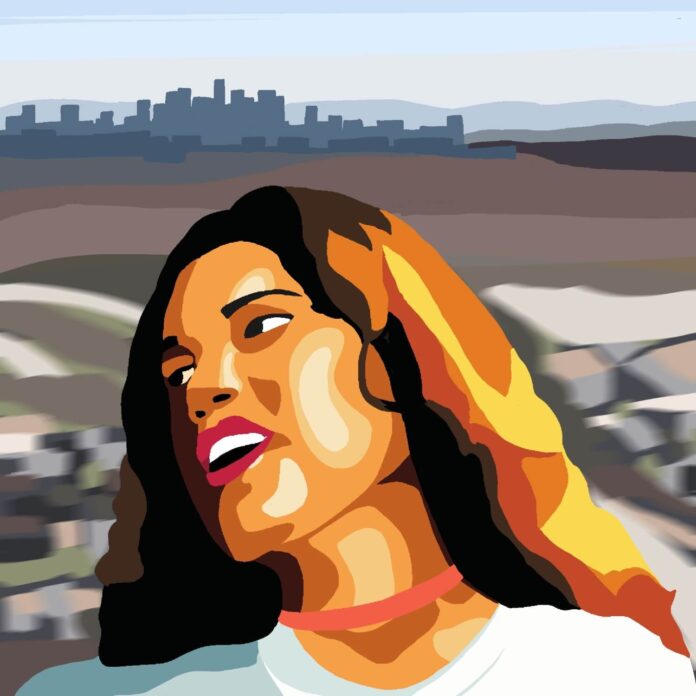
LA is the U.S. capital of movies — whether you like it or not. Although the city produces fewer and fewer movies within its borders, it has remained at the center of the industry. Just drive down Sunset Boulevard and take in the high-rise studio buildings and billboards advertising the latest film and television attractions. Before I toured Occidental, I had never been to LA. Before I arrived and since being here, I’ve watched a few movies to get me in the “LA spirit,” or make me excited about this new city I get to experience. Whether you’ve lived in LA for your entire life or you’re new to the city like me, these are some of my favorite movies to help remind you what you love about LA.
LA Story (1991)
“LA Story” is truly a love letter to LA. The opening montage alone illustrates what makes LA great and things that people from inside or outside the city can laugh at: constant tanning, traffic and an annoying sort of blind happiness. One of my favorite small moments that shows how well this movie makes fun of LA: a crosswalk sign that reads “Uh like walk” and then changes to “Uh like don’t walk.”
The film revolves around a weatherman named Harris, played by Steve Martin, who is seeking something greater in his life. The concept of a weatherman in LA is already funny; he’s constantly bored and pre-taping his segments because he knows it will be in the 70s and sunny every day. And let’s be honest, most of the reason people come here is for that sun, even when we pretend it isn’t.
This movie is full of things that I love about LA. Its quirky characters, vibrance, palm trees, city lights and references to rollerblading and dieting are what fill a mostly ordinary romantic comedy plot (specific shoutout to Harris rollerblading through LACMA). Like some of my favorite pieces of humor, the movie’s masterful satirization of LA is what celebrates the city itself. One of my favorite scenes is when Harris tries to make a reservation at a restaurant, only to meet the host and the chef at a bank to discuss his social status and financial situation. Of course, this is not the typical experience of most Angelenos in the city. Still, it pokes fun at the absurd culture of celebrity and status that sometimes overtakes aspects like restaurant culture in this city — something we can all come together and laugh at. And what could be better than that?
One of the most special aspects of this film is the role that traffic and cars play throughout the entire story, something I especially appreciated after experiencing it firsthand this summer during my first real LA commute. Our introduction to Harris is how he masterfully avoids traffic by driving through people’s front yards and on sidewalks. In fact, much of the humor in the film stems from the frustration of driving in this city. But, somehow, most beautifully, one of the main characters in the film is a sign on the freeway that speaks to Harris through subtle hints, helping shape his life (until they are no longer so subtle).
Being on the road is a part of LA life — but we can see it as something more beautiful. We can see traffic as a way to finally have a time to think, reflect on the ones we love and be in transition from one phase to the next. For me, I would use my commute home over the summer to call family members or catch up with a new podcast episode. It was a rare moment in my day when I couldn’t focus on anything else but the road in front of me, a moment of self-reflection and transformation. LA is home to many, but it’s also a place where people travel to with the intention of transformation. This ethos is put most eloquently in a beautiful line in the movie when Sarah, played by Victoria Tennant, says LA is “a place where they’ve taken a desert and turned it into their dreams.”
While “LA Story” is by no means a perfect movie, the love story employs the city as a character and will remind you of the things you love — and sometimes love to hate — about this city.
Licorice Pizza (2021)
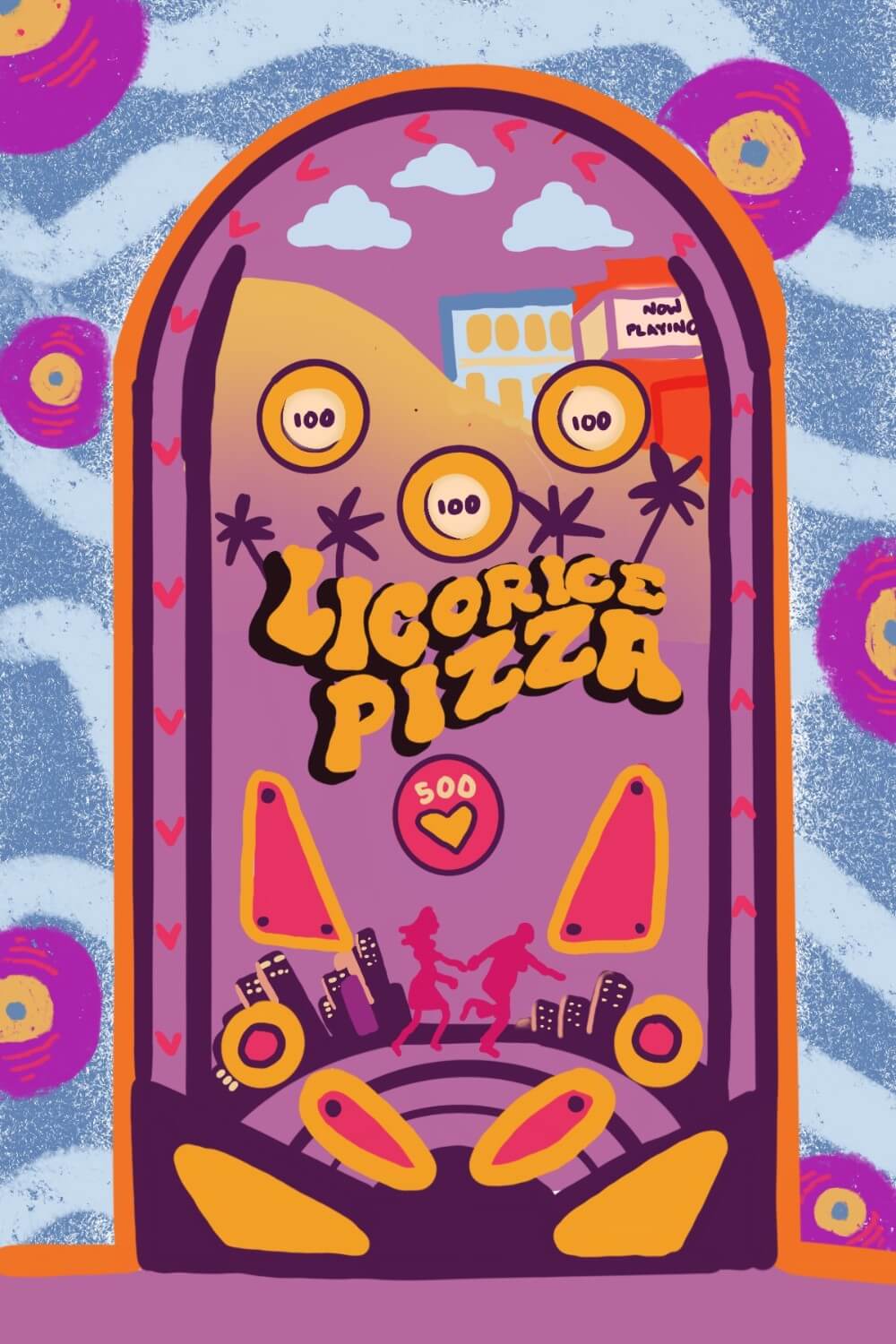
If there’s any director who celebrates LA, it’s Paul Thomas Anderson, or “PTA.” “Licorice Pizza” is his love letter to the San Fernando Valley, where he grew up. The film is bursting with color and romance, with a dreamy ’70s feel. Just like “LA Story,” “Licorice Pizza” is a film about dreams. Spoiler alert: All of the movies on this list are also about dreams. “Licorice Pizza” is a story about two young people in different phases of life who share a big dream that they’ll do anything to achieve, as long as they maintain their youthful sense of humor along the way.
The film revolves around Gary Valentine and Alana Kane, played by Cooper Hoffman and Alana Haim. Even the casting of the principal roles makes this movie uniquely LA: Cooper Hoffman’s father is the late and great Phillip Seymour Hoffman, making his life uniquely grounded in Hollywood. Alana Haim, in her own right, is an LA icon: she is one-third of the band Haim, along with her two sisters, Danielle and Este. They grew up in the San Fernando Valley themselves, so they have a specific familial tie to the film, along with PTA, who has directed some of their music videos. Haim is loyal to LA, even having a song titled “Los Angeles.” I like to think this familiarity made the film even more homegrown.
Now, many people criticize “Licorice Pizza” for being a movie about nothing. While the film definitely focuses more on aesthetics, mood and an episodic storyline rather than posing critical questions, that doesn’t mean it’s not a really good time. It’s a movie that grapples with innocence, identity and understanding what it means to be an adult. It also just has a lot of fun with its Hollywood scenery. Alana Haim said in an interview that they filmed scenes in real places where people would hang out in the Valley, which made her reminisce about her childhood growing up in the same place.
I watched “Licorice Pizza” for the first time when it premiered in theaters in 2021, before I had even considered attending college in LA. I knew nothing about the city, but something about its magic made me wish I could experience something close to ’70s LA, running around a colorful, music-filled city with big dreams. When I recently rewatched it, I admired the romanticism and celebration of LA, as well as the realistic nature of people trying to achieve their goals. But it’s a movie that focuses less on realism and more on a joyful aesthetic. Maybe that’s what we need sometimes.
Fun fact: The name Licorice Pizza originates from a record store chain from the ’70s and ’80s in LA with the same name. Licorice refers to the color of black licorice, and a pizza refers to the shape of a record. “Licorice Pizza” is all about the pure nostalgia and dreamy joy that comes from this time period in LA.
Tangerine (2015)
Sean Baker’s “Tangerine” is a complete departure from the rest of these films. The film is not about the romanticism or joy of LA, but rather about the diverse people often overlooked in LA stories. “Tangerine” revolves around two transgender sex workers, Sin-Dee and Alexandra, as well as a B plot about an Armenian cab driver named Razmik.
The city serves as a backdrop for a worldly adventure, as Sin-Dee seeks revenge on the woman her boyfriend cheated with, while Alexandra seeks a job. Razmik is driving around the city, interacting with various characters, while he is one of Alexandra’s main customers. Oh, and it all takes place on Christmas Eve.
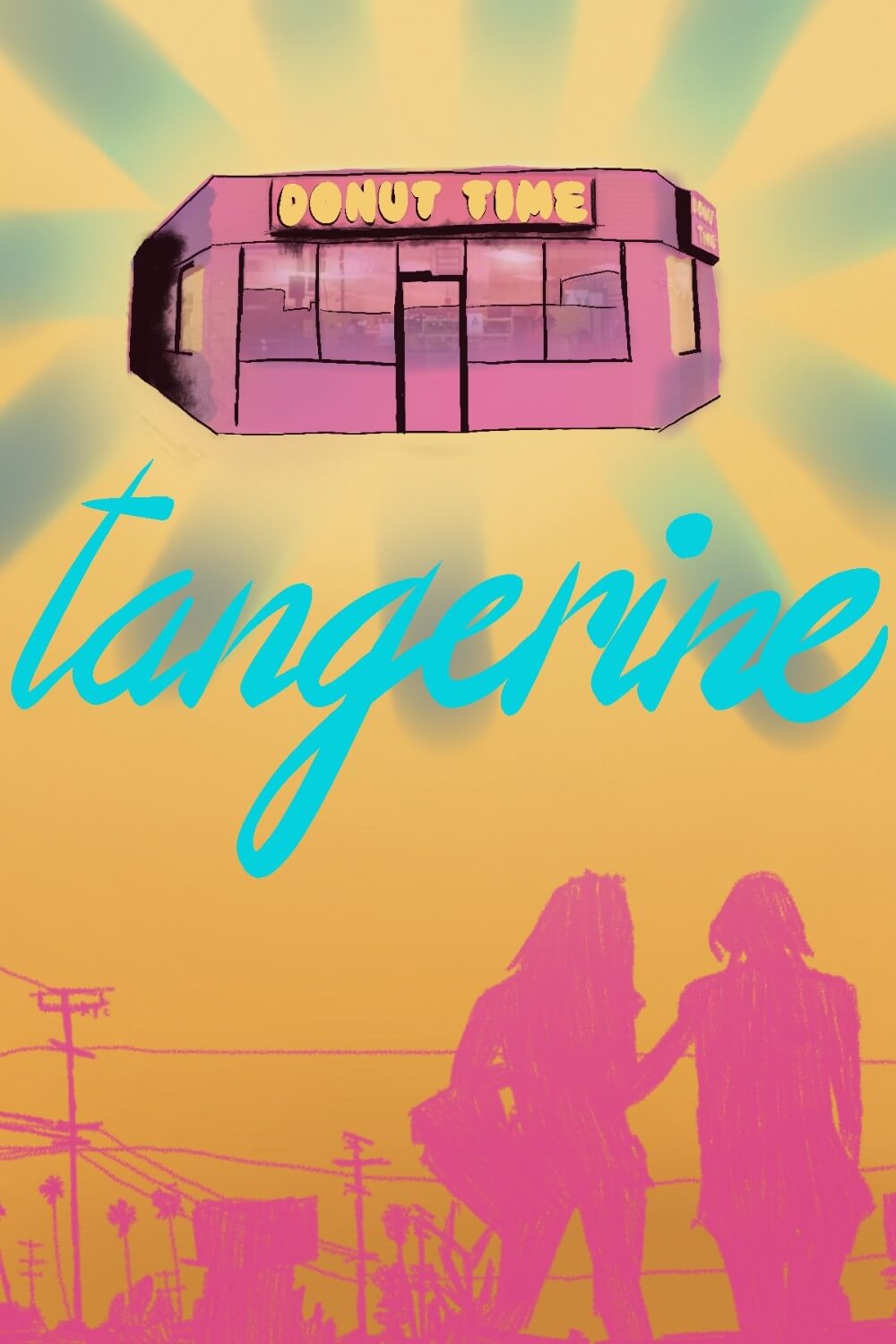
“Tangerine” is exciting, but it also realistically represents the city. Baker does not attempt to make LA look like a place where dreams come true, just a place where people live and conduct their business as usual. And that’s what makes it so special: the beauty lies in paradoxical moments, like an orange-pink sunset during a catfight between two sex workers or glistening lights outside of a donut shop where chaos ensues.
Just like every other film on this list, it also represents people having dreams and using the city as a way to make them a reality. There’s a beautiful scene of Alexandra singing at a dive bar, with only a few people in the audience. Sin-Dee looks at her with admiration, watching her best friend do what she loves. It reminds me of everyone having dreams in the city, and the community (big or small) that comes together to support them. The final scene of the film is one of the most beautiful and memorable moments for me — which I won’t spoil — as it also illustrates this unwavering support through a powerful friendship. It made me think about the kind of support Occidental and its creative community have granted me. Receiving support from my friends in my endeavors and getting to support them in return makes living in a big, unpredictable city like LA a little more worth it.
There are so many stunning accomplishments within “Tangerine,” one of the most notable being that it was all shot on an iPhone 5s. The grainy, saturated look of the film makes every color pop, evoking a time capsule of mid-2010s LA. Additionally, Baker cast his actors off the street and from social media and asked for input from them while writing and directing, employing a more participatory approach in his filmmaking. His creative methods in the process are one of the biggest reasons I love LA: the collaborative and creative process behind a work of art, telling authentic and hilarious stories along the way.
Real Women Have Curves (2002)
“Real Women Have Curves” is not a movie distinctly about LA, but it is one of the few on this list that portrays East LA with beauty and vivid color. The film focuses on an 18-year-old girl named Ana, played by the prolific America Ferreira. Ana is a Mexican-American girl living in LA with dreams of going to college. But her family needs her to help at her aunt’s factory. Through working at this factory, Ana learns about the women of her heritage and her city, inspiring her to follow her dreams.
There are beautiful scenes sprinkled throughout this film where Ana walks, takes the bus or gets a ride from her family and we immediately see a colorful world populated with immigrants from all different places. On her commute to school, the audience sees the various communities that make this city what it is. These communities have businesses and lives of their own that we have the pleasure of peeking into, even just for a brief moment. At the time, Hollywood often portrayed Boyle Heights — the neighborhood where the film is set — as a place with gang violence and crime. But the film’s director, Patricia Cardoso, chose to represent the neighborhood as she saw it.
Similar to the other films on this list, “Real Women Have Curves” does not shy away from the difficulties of living in LA, especially as a child of immigrant parents. Ana must work hard, and her family tries to persuade her to sacrifice her dreams of higher education to support them. Ana doesn’t feel like she entirely fits in with either her Mexican or American culture, as the film explores her search for her place in the world. But these reasons are what make this film so beautiful. Whether this experience is relatable to you or not, it offers an honest portrayal of many people in this city. Maybe, for some kids, it will help them feel less alone for questioning their identity, even if it isn’t cultural.
For me, the conversations about Ana’s comfort level in her body and womanhood were what helped me connect to the film the most. In a city that sometimes feels overly focused on aesthetics, getting the opportunity to see a young girl have these conversations in a real and honest way marked it as an essential film in my book.
“Real Women Have Curves” is special, specifically to our community, as it reminds us of the rich cultural context of East LA. When the film premiered, it won the Audience Award at Sundance and became the first Latina-directed film to enter the Library of Congress’s National Film Registry. Now, it’s celebrated as a glimpse into LA culture, with theater adaptations and various celebrations of the film to prove it.

La La Land (2016)
Okay, now the obvious choice. “La La Land” was the movie that everyone in my life told me I needed to rewatch before I came to LA, as I’m sure everyone else experienced as well. The film is truly a love letter to LA, even if you think (like me) some of it can be cringeworthy. There’s not much I can say about this film that audiences haven’t already said hundreds of times, but what I most enjoy about “La La Land” is how the city plays a character. Its locations are integral to the plot, from dancing on the mountains to the Griffith Observatory.
As a musical fanatic, “La La Land” always felt reminiscent of some of the most celebrated musicals, such as “Singin’ In The Rain” or “West Side Story.” This similarity is not accidental: the romanticism of a specific city and its associated group of people are two factors that make those musicals work so well. Just as “West Side Story” celebrates New York City, “La La Land” celebrates LA, featuring engrossing and colorful dance scenes set against the city’s backdrop.
But “La La Land” does not shy away from some of the complex parts of trying to “make it” in LA. A love story falls apart because of two different dreams — and two different people who have dedicated their lives to their dreams. LA brings these people’s dreams to life while also tearing them apart from each other. It’s sad, yet a real part of cities where ambitious people are constantly attempting to transform. The bittersweet ending of this film is what marks it as something special, as Damien Chazelle asks: What is making your dreams come true without sacrifice?
“La La Land” is not a perfect movie for me. Still, even as a critic, I have to appreciate the way it excels in every aspect, particularly in its romanticization of LA. One day, I’ll venture to one of its iconic locations and get to say, “It’s just like La La Land!”
While I can get nerdy about movies, I by no means claim that these films perfectly represent the city of LA. In fact, except for “Tangerine” and “Real Women Have Curves,” these movies tend to represent a very “Hollywood” version of what makes this city beautiful. But, especially when it can feel exhausting to be in LA, diving into a movie that makes you appreciate its greatness can be the best form of entertainment. I hope this list inspires you to check out one of these films or motivates you to find your own examples of art to appreciate your city.
Contact Eliana Joftus at joftus@oxy.edu