





























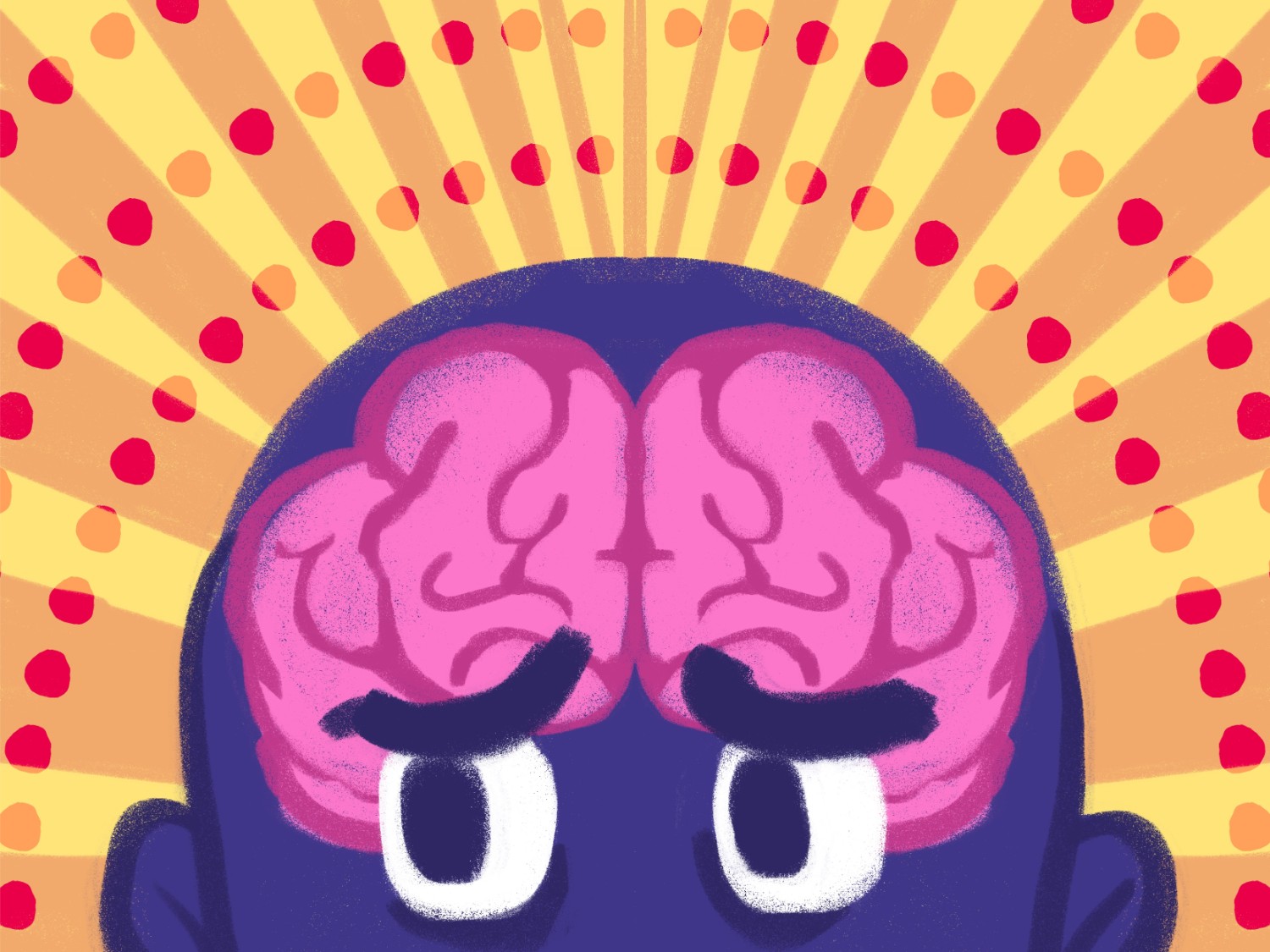
As an award-winning overthinker, I understand the power of the mind. Pressure build-up, chest tightening and leg weakening are classic somatic expressions of our thoughts. In the middle of the semester, with major deadlines coming up, it is no surprise that our brains feel like they are overheating.
Juggling schoolwork and non-academic expectations as a pre-med student has often left me drained. Staring at the mechanisms on the board when studying organic chemistry has had me questioning my worth several times. I wish someone had told me before going into these classes that I was much more than erasable strokes on a whiteboard.
I have found that overthinking is my body’s way of trying to gain control over things I cannot. The hot streams running down my face weren’t going to make me any warmer. The strain on my temples wasn’t doing my body, a temple, any good.
Getting out of mental marathons takes practice and patience with yourself. We require discipline to train ourselves to choose healthy habits over self-harming ones when we find ourselves caught up in adulting. I continuously practice four calming and grounding techniques that I believe would be helpful to you as well.
Seven minutes on the timer. Silence.
Whenever it feels like I’m drowning and can no longer resist the pull my stress has on me, I take out my phone, set a timer and turn it face down. Seven minutes is the perfect time for overwhelming feelings to take up space, dissipate and let stability seep in.
When our bodies are strained, they go into stress mode. The seven-minute silence is a signal for your sympathetic nervous system to relax and return to baseline response levels. Consequently, our parasympathetic system, responsible for calm, activates during that silent period. Silence serves as a break in the overthinking loop.
Once I have regained some sense of neutrality, I call my loved ones. Strain from overthinking often arises from isolation. When isolation turns into solitude after the moment of silence, reaching out to a loved one re-establishes the sense of connection I have with people outside of my work. It reminds me that there’s more to life than a small moment of pressure.
Hearing a familiar voice activates the brain’s safety wiring. It tells your brain, “This is safe and familiar. You can let your guard down.”
Additionally, connecting with others releases oxytocin, an “anti-stress” hormone. It stabilizes blood pressure and reduces physical tension. This step is one that I would recommend every time, and the science backs it.
After speaking with a loved one, I find that breaking down my tasks into smaller pieces is very helpful for my reset. Think of it as chewing food in your mouth before sending it into your system for digestion. Just like our digestive system, our brains handle tasks better when delivered in smaller chunks. It keeps the brain from trying to process large amounts of information at once.
Uncertainty is one of the main driving forces behind overthinking. When your brain is handling a big task, it doesn’t know where to start, so it feels like it’s glued in one spot trying to decide how to move forward. Giving yourself smaller pieces of work to handle creates increased predictability and control, and this feels safer for your brain.
Finally, celebrating my small wins is one of the most rewarding habits I have taken up. Celebration and overthinking are polar opposites. While overthinking spikes up cortisol levels, celebration counters that by releasing dopamine.
Dopamine reduces our bodies’ responses to threats by cutting off our mental spiral cycles. Celebrating our wins essentially creates a safety net by reminding us, “You can do it,” and “See how easy that was?”
As college students, we face demanding expectations. We are required to get the best grades, have a great social life, a great partner and always look the part. Overthinking our tasks and what people think of us is inevitable. From your favorite hypochondriac, I want to reassure you that the long-term effects of overthinking outweigh the B you got on your paper or what your friends think about your fashion choices.
Heightened anxiety, disrupted sleep cycles, fatigue, impaired focus and chronic stress are typical repercussions of overthinking. Your body is worth so much. Protecting it from harm should be of utmost importance.
For me, facing my stress head-on has improved my physical and emotional health tremendously, and I wish other students could do the same. Next time you feel your sanity is being overridden by a piece of paper with ink marks on it, remember to take seven minutes of solitude, speak to a loved one, break down your tasks and celebrate your wins. Your journey to success begins with inner clarity and peace.
Love,
Your Favorite Hypochondriac.
Contact Ama Owusu-Agyemang at owusuagyeman@oxy.edu
