































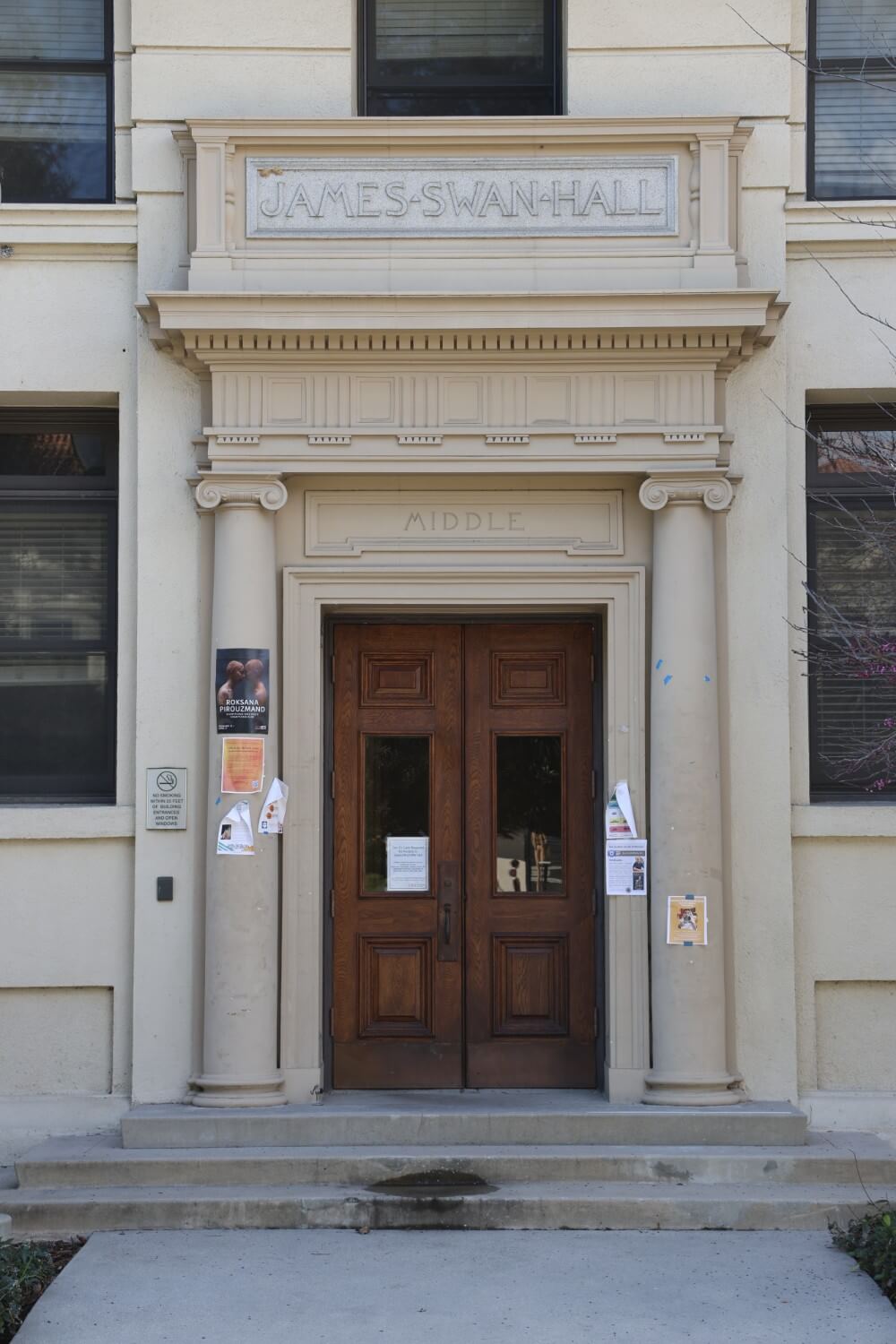
President Tom Stritikus released an email statement detailing new security measures in response to concerns about immigration enforcement Feb. 13. According to the email, the AGC Administrative Center, Hameetman Science Center, Swan Hall and Hinchliffe Hall were transitioned to card access only beginning Feb. 17. Stritikus said these buildings, which were previously card access accessible outside of business hours, were chosen as they are already equipped with card readers.
According to Stritikus, these changes are intended to designate more private spaces on Occidental’s open campus, offering additional secure locations for shelter in the case of an emergency, from immigration enforcement presence to an active shooter.
“People felt that the dorms provided security, but that there was nothing then on the lower campus that provided that kind of security,” Stritikus said. “There are now multiple private spaces on lower campus that people could go to.”
According to Stritikus, although Occidental is a private institution, the university is subject to both federal and state laws because it receives federal funding. Stritikus said this includes California Attorney General Rob Bonta’s guidance on education rights of immigrant students to protect immigrant students. Stritikus said, for example, that Campus Safety will not ask students about their immigration status, nor will the college share student information unless legally compelled.
“The students can’t learn if they feel fearful,” Stritikus said. “Faculty and staff can’t do their best job if they’re feeling fearful, so we need to work to make sure that every student can walk on this campus feeling as comfortable as they possibly can.”
Perrine Mann, Vice President of Marketing and Communications, said the college is committed to protecting student privacy and ensuring the campus is a safe learning environment.
“The College has clear protocols in place to ensure that any request for campus access or information meets established legal standards,” Mann said via email. “We do not share student information without proper legal authorization, consistent with applicable privacy laws. Maintaining student privacy and an environment conducive to learning is paramount.”
According to Occidental’s Information on Potential Immigration Issues webpage, immigration enforcement should not be given access to private spaces on campus unless they have a judicial warrant. The webpage directs students to immediately notify Campus Safety of immigration enforcement presence and to refer agents to the appropriate Designated Campus Official for Immigration Rights and Actions, such as Dean of Students Vivian Santiago, without obstructing their duties.
Jackie Hu (senior), a member of the Occidental Rapid Response Network, said that while the new private spaces are a good starting point, the school could be doing more to ensure students’ safety.
“All it takes is a student to open the door for them, right?” Hu said.
According to the webpage, Occidental will send out notifications if immigration enforcement presence is confirmed on campus. These messages will be sent over email or other methods to share the time, date, and location of immigration enforcement activity, along with additional resources. Stritikus said the timely notifications will include information about how students should interact with agents.
“We have a process,” Stritikus said. “Our whole goal here is to make sure that we’re following due process to protect students, which is vital.”
According to Stritikus, the college has been taking measures to ensure that members of the Occidental community knows their rights.
“From the beginning, from early on in the Trump administration, we led with the Know Your Rights workshop,” Stritikus said. “We push that information out to campus, and we’ve done extensive training with staff to make sure that they’re prepared in case this happens.”
Occidental’s Human Resources department also sent out an email explaining CA Senate Bill 294, the Workplace Know Your Rights Act, Feb. 28. According to the email, California law offers employees the right to designate an emergency contact who will be notified if they are arrested or detained while working. The email said this is an option in addition to a standard medical emergency contact and will apply to immigration enforcement situations.
According to Mann, the college will continue ensuring students and staff are protected on campus.
“Occidental College is committed to ensuring that our community can live, work, and learn in a safe and inclusive environment,” Mann said via email. “We will continue to be guided by our institutional values as we work to support our community and advocate for the well-being of our students, faculty, and staff.”
Contact Naisha John at njohn@oxy.edu
