








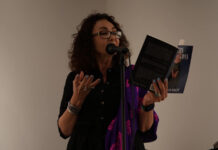









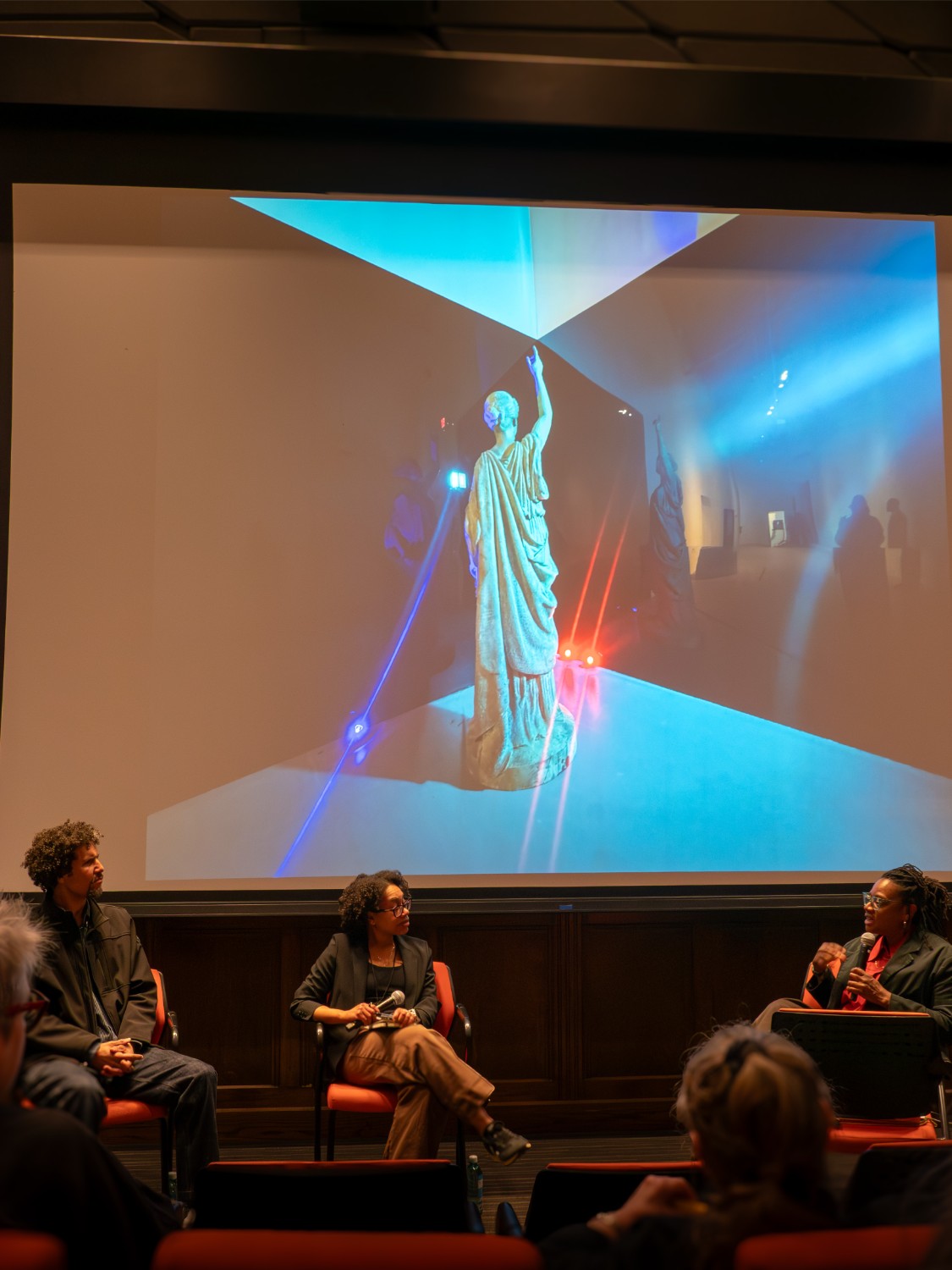
Cauleen Smith, multimedia artist and filmmaker, gave a guest lecture about her most recent art installation titled “The Warden” in Choi Auditorium Feb. 3. The piece is now on display as part of the MONUMENTS exhibition in the Museum of Contemporary Art (MOCA). The talk, hosted by the Art & Art History department, was followed by a conversation moderated by Associate Professor of Theater & Performance Studies Will Power, and Professor of Black Studies Erica Ball. Many Occidental alumni from the 50 Year Club were present in the audience, along with students and faculty.
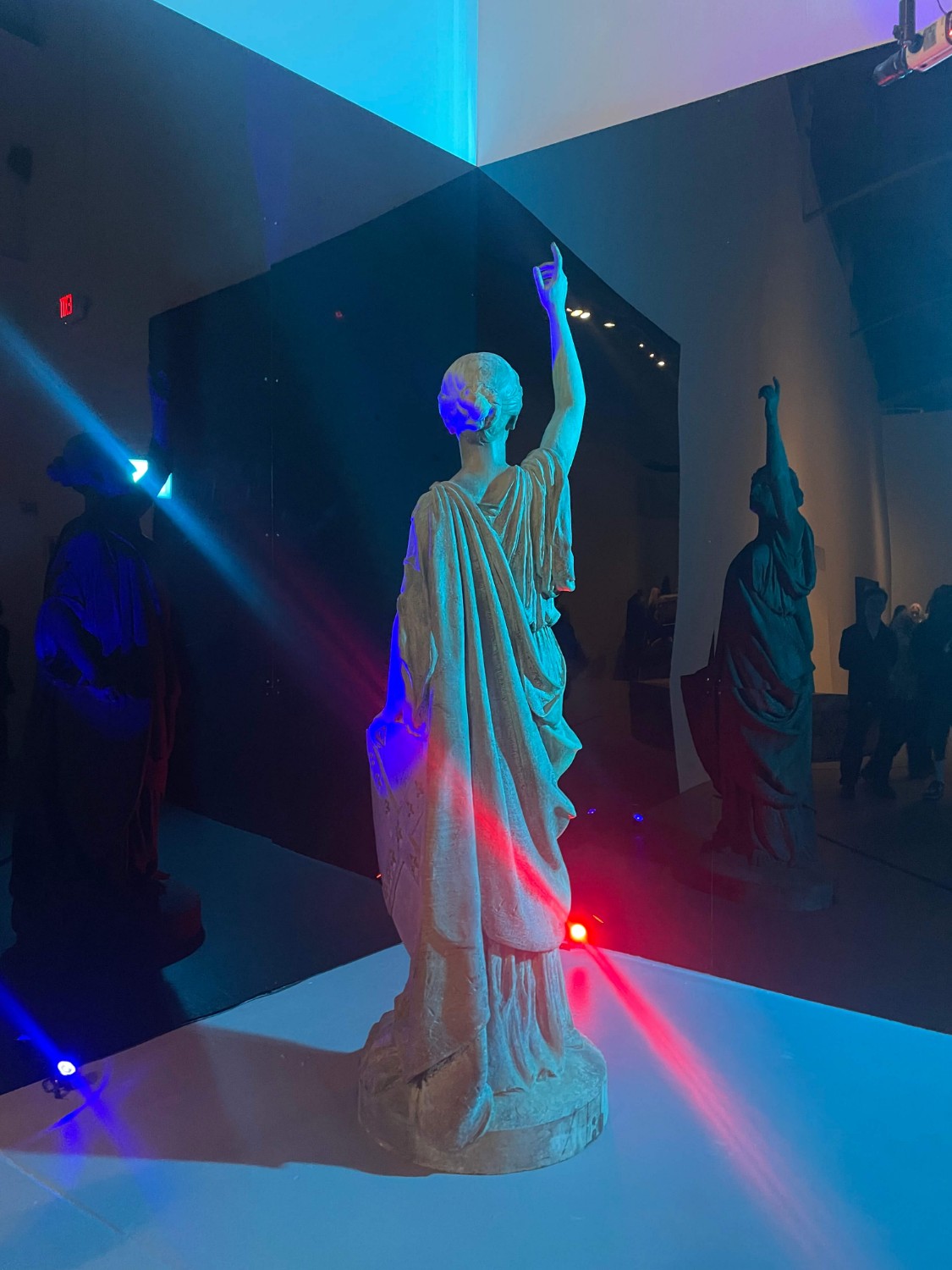
According to Smith, the statue used in “The Warden” is of an allegorical woman known as Vindicatrix, or “Miss Confederacy,” which once stood atop a 70-foot pillar on Monument Avenue in Richmond, Virginia. It was removed in the wake of George Floyd’s murder and the subsequent protest movement in the summer of 2020, along with numerous other statues that represented white supremacist histories. Smith said she was commissioned to transform Vindicatrix into an exhibit that recontextualized the statue’s narrative through an artistic reinterpretation.
“I accepted the challenge of making some artwork that responded to this statue,” Smith said. “I did not really consider the rules, or maybe they weren’t explicit about one of the rules, which was that I couldn’t touch her. I couldn’t intervene with her at all.”
Under these guidelines, Smith said she decided to put a mirror up to the statue and place her in a corner between two walls on either side. Smith said the statue was then submerged in red, white and blue lights with a live CCTV camera pointed at her at all times, which is where the title, “The Warden,” comes from.
“I really had problems with the way her beauty was always discussed in the description of the statue,” Smith said. “And I thought that we should be denied some kind of access to her, or that she should be denied the power to project that beauty.”
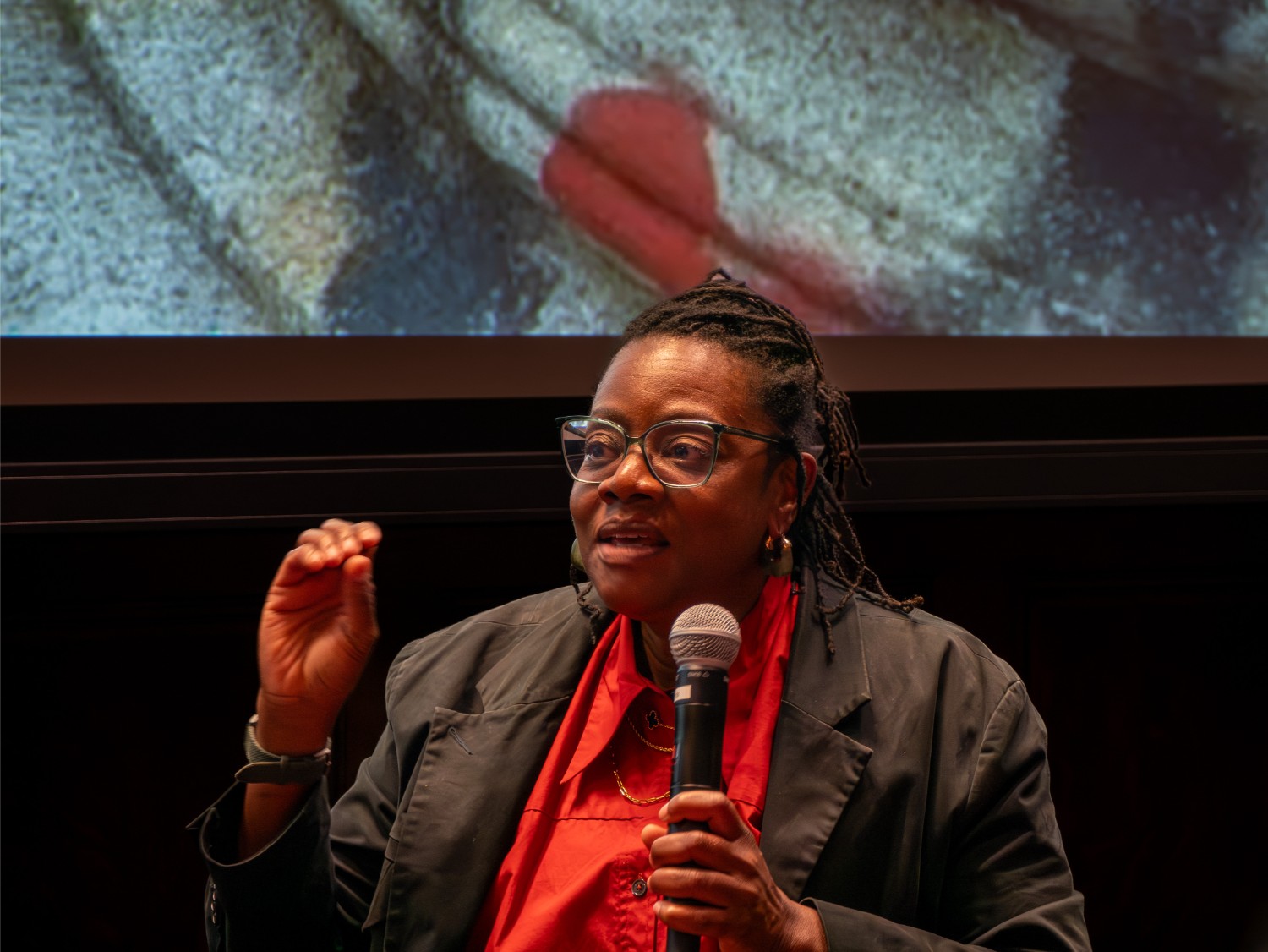
According to Smith, the statue was sculpted by Edward Valentine and commissioned by the Daughters of the American Revolution, who wanted to preserve Confederate ideals in the wake of the Civil War. Smith said she believes this exhibit is a way of confronting white supremacy.
“What if you brought your history back but in a way that signifies the ending of a particular regime, and hopefully space for the contemplation of a new one?” Smith said. “Because obviously the regime isn’t over. So when you say dismantle the monuments, I don’t care about the monuments. I want to dismantle the country.”
Art & Art History major Ravij Diallo (senior), who introduced Smith, was able to see the MONUMENTS collection in person. According to Diallo, viewing the statue is more of an immersive experience than it is a static exhibition.
“The fact that it’s in prison means that it still has some sort of agency. And [Smith] makes it face the wall, so that you don’t see her face, and that kind of implies that there would be an effect seeing it,” Diallo said. “It’s the only [statue] that is almost treated as a person. And then because of that, it feels like there’s a really latent danger to it.”
Smith said that while she originally broke into the art scene through filmmaking, she has recently expanded her creative horizons into gallery exhibits. Power, a longtime collaborator of Smith’s, said he has seen an artistic evolution in her work over the years.
“Now, she’s a multimedia artist, an interdisciplinary artist. But if you look, she’s still utilizing film in a way,” Power said. “With this whole thing, she still had CCTV cameras and they had videos of the hands she described projected all over the museum.”
According to Smith, a Latin inscription on the platform where the statue used to stand reads ‘God Will Avenge Us.’
“Even though this Confederate monument is removed, her promise is still there to bring revenge,” Diallo said. “I think it’s almost just a message of vigilance more than it is of hope, which I think is important.”
Diallo said that the exhibit took on an even greater significance after hearing about the thought process behind it and the creative vision Smith had in order to bring the project to life.
“One of the things I loved was she was so uncompromising in her message, and she was so direct,” Diallo said. “And you never got any sense that this was about anything other than reminding a majority white audience that this is still happening today.”
Smith said she understands “The Warden” as a way of addressing the fact that racism and white supremacy are inseparable from the national identity of the U.S. and that they cannot ever be fully extinguished.
“I’m actually talking about white supremacy and how it needs to be contained at best because it will never be destroyed, not in this country,” Smith said.
Power said he believes that art has the ability to lead the way towards a real reckoning with legacies of oppression, even in the wake of such powerful reminders of white supremacy that continue to resurface in today’s political landscape.
“The idea of taking these monuments and having a deeper, truthful, transparent conversation, and to be engaging them in a profound way is powerful,” Power said. “I thought Cauleen was so brilliant at giving perspective. She’s such a great conveyor of ideas.”
Diallo said everyone has something to learn from the exhibit, and emphasized the importance of contemporary art’s role in helping us understand how to grapple with the past in order to forge a better future.
“I am so swayed by monuments and I think they’re one of my favorite subjects in art history, because they’re something that [has] such a direct integration with people and time periods,” Diallo said. “They’re not displayed as much as they are interwoven into the fabric of a space.”
Contact Athya Lodhia Paramesh at paramesh@oxy.edu
