






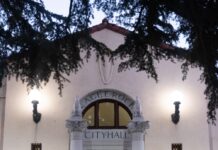





















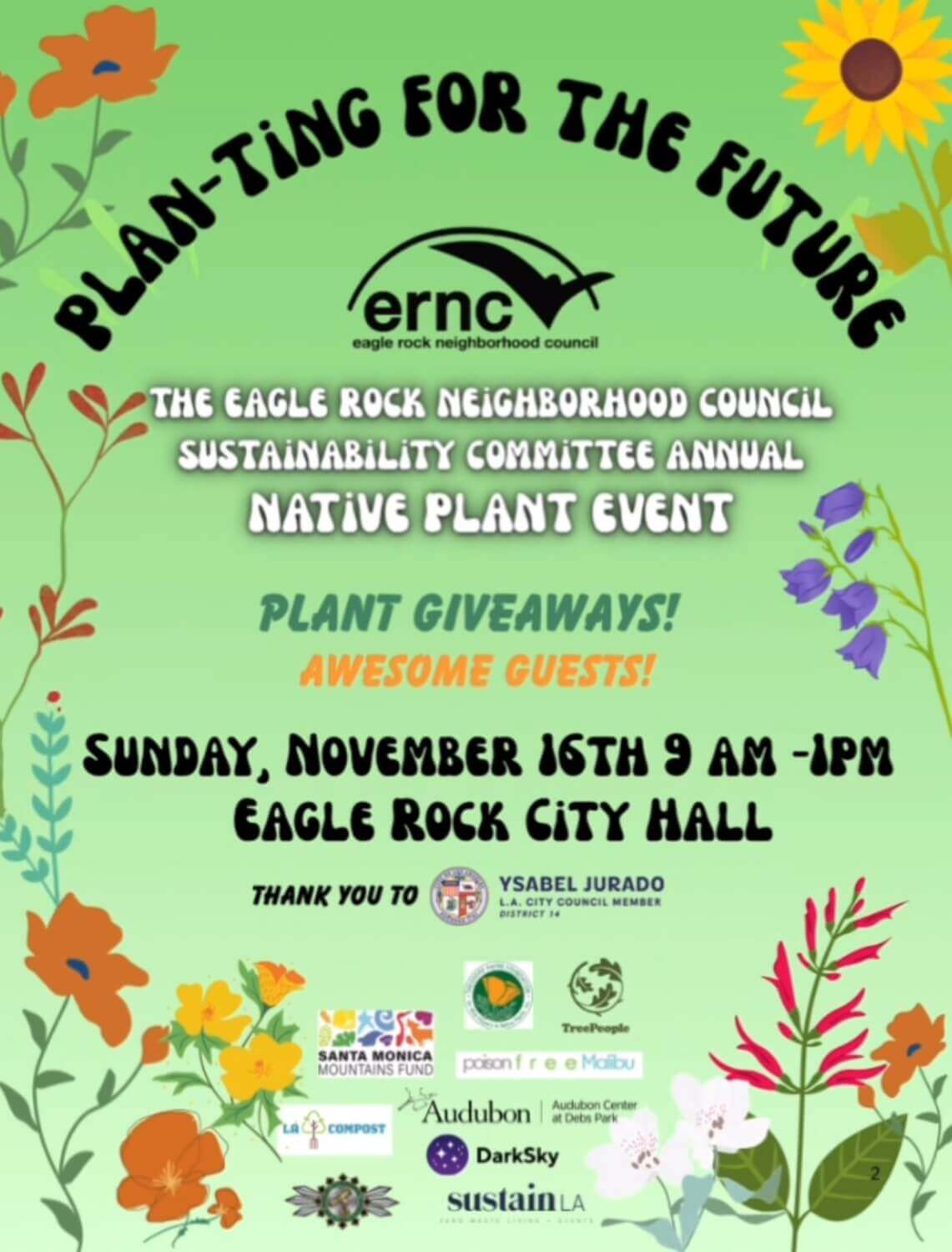
The Eagle Rock Neighborhood Council’s (ERNC) Sustainability Committee will hold their annual Native Plant Event at Eagle Rock City Hall from 9 a.m. to 1 p.m, Nov. 16. According to Natalie Freidberg ‘94, a member of the sustainability committee, the event will include a giveaway of a variety of around 200 native plants, as well as several booths and guest speakers.
Freidberg said the giveaway started in 2014, when she was the sustainability director, and has only become more successful since. According to Freidberg, as information about the importance of native plants has become more widespread, people have become increasingly interested in bringing them into their homes.
“Those of us who’ve been preaching about native plants for decades are finally [being] listened to,” Freidberg said. “More and more native plant [nurseries] are opening [and] more and more information about native plants is being spread on social media.”
Denys Hemen, current director of the sustainability committee, said he observed this trend over the past six years.
“There’s been a boom in popularity around native plants here very recently, so they’re getting easier and easier to find,” Hemen said. “You can walk into Baller Hardware in Highland Park and they have a great variety of native plants inside.”
According to Hemen, a native plant is historically found in a certain area and adapted to that specific environment. Hemen said that while exotic plants may survive in a foreign ecosystem, they do not support the surrounding wildlife in the way that a native plant would.
“Animals have evolved to use these plants for food and shelter,” Hemen said. “When you have exotic plants, the animals haven’t necessarily adapted to those, so it doesn’t really offer up the same amount of resources as a native plant would. The exotic plants do take out resources and crowd out some native plants.”
Freidberg said providing native plants is critical for pollinators, especially in Southern California.
“We’re what’s considered a biodiversity hotspot,” Freidberg said. “We have a huge number of native species, pollinators, as well as birds, that rely on native plants. In some cases, they cannot exist without certain native plants.”
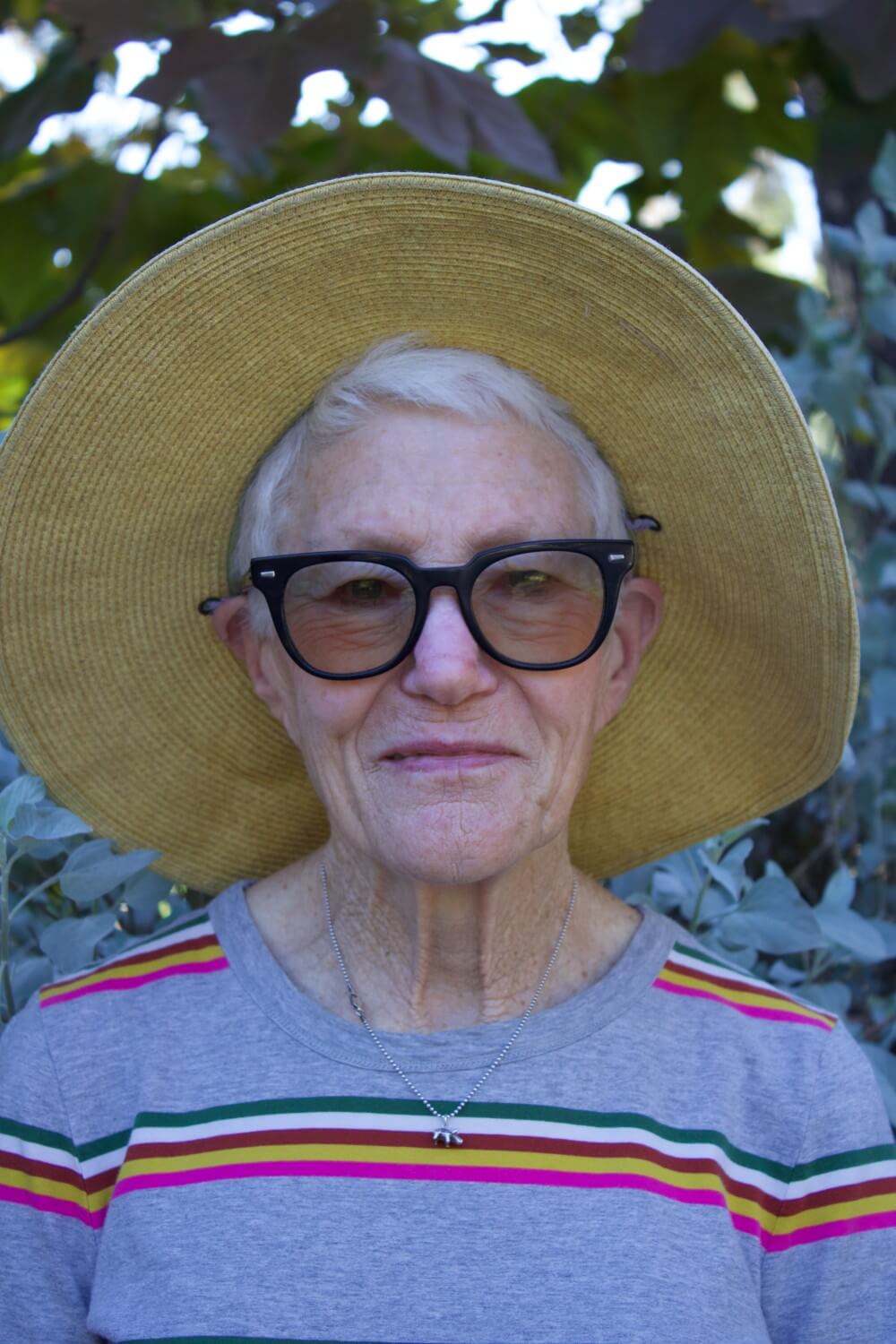
According to Occidental College biology professor Gretchen North, one of the most harmful gardening practices in Southern California is planting lawns. North said lawns waste a significant amount of water and harm other life forms that rely on the native species. Instead, North said we should focus on mimicking the natural environment through a variety of native plants that grow to different heights: ground-level cover, mid-level shrubs and trees. According to North, this diversity of levels is critical to creating the various ecosystems necessary for biodiversity.
“You can do it in your backyard […] it sounds silly, and it also sounds like a typical American solution, right?” North said. “Just do it as an individual and you’ll be okay, buy the right stuff and you’ll fix the environment. But it just shows that organisms are resilient. As long as there’s a source of them somewhere, they can find a restored piece of land, even at a small scale.”
North said some of her favorite native plants are the various sages, as well as drought-resistant crops, such as pomegranates, kumquats and chard. According to North, some other great ways to source native plants and learn how to garden sustainably are by collecting them in accordance with indigenous guidelines and through organizations such as The Urban Homestead and North East Trees.
North said another critical issue in the area is tropical milkweed. Stores tend to point customers towards the tropical species, North said, but the plant carries a pathogen that kills monarch butterfly larvae.
“[Tropical milkweed] really is poisoning the monarchs,” North said. “If you go to the store or the nursery and you say you want milkweed for the monarchs, chances are they’ll point you to this flashy […] milkweed […] it doesn’t lose its leaves over the winter, so it builds up a pathogen that kills the monarch larva.”
According to Freidberg, as Eagle Rock lies in a monarch corridor, it is important for people to plant native milkweed. Freidberg said the ERNC sustainability committee brings in vendors to supply their fall giveaway and their spring events.
“In the spring, some of the vendors will bring some other plants to give away like milkweed, which doesn’t need as much time to get established,” Freidberg said.
For the upcoming event, Hemen said the committee sourced the plants from El Nativo Growers and will bring in organizations, such as the Theodore Payne Foundation, the SAMO Fund and Poison Free Malibu, to host educational booths. Freidberg said the local Dark Sky International chapter and a local zero-waste store will have tables as well.
According to Hemen, there will also be a landscaping expert to answer questions about the plants and help participants plan on how to integrate them into their gardens. He said the giveaway is not just an opportunity to get a free plant, but a chance to learn about the community.
“It’s a great way to meet your neighbors, and it’s a great way to hear their concerns because not everyone can come to a meeting,” Hemen said. “They can bring any kind of concerns that they have to us. We’d love to get the word out about the neighborhood council to more folks. Come ready to learn and come ready to walk out with some complimentary native plants.”
Contact Naisha John at njohn@oxy.edu
*A correction was made on Nov 24 at 11:16 a.m. to reflect the word nurseries instead of groceries
