






























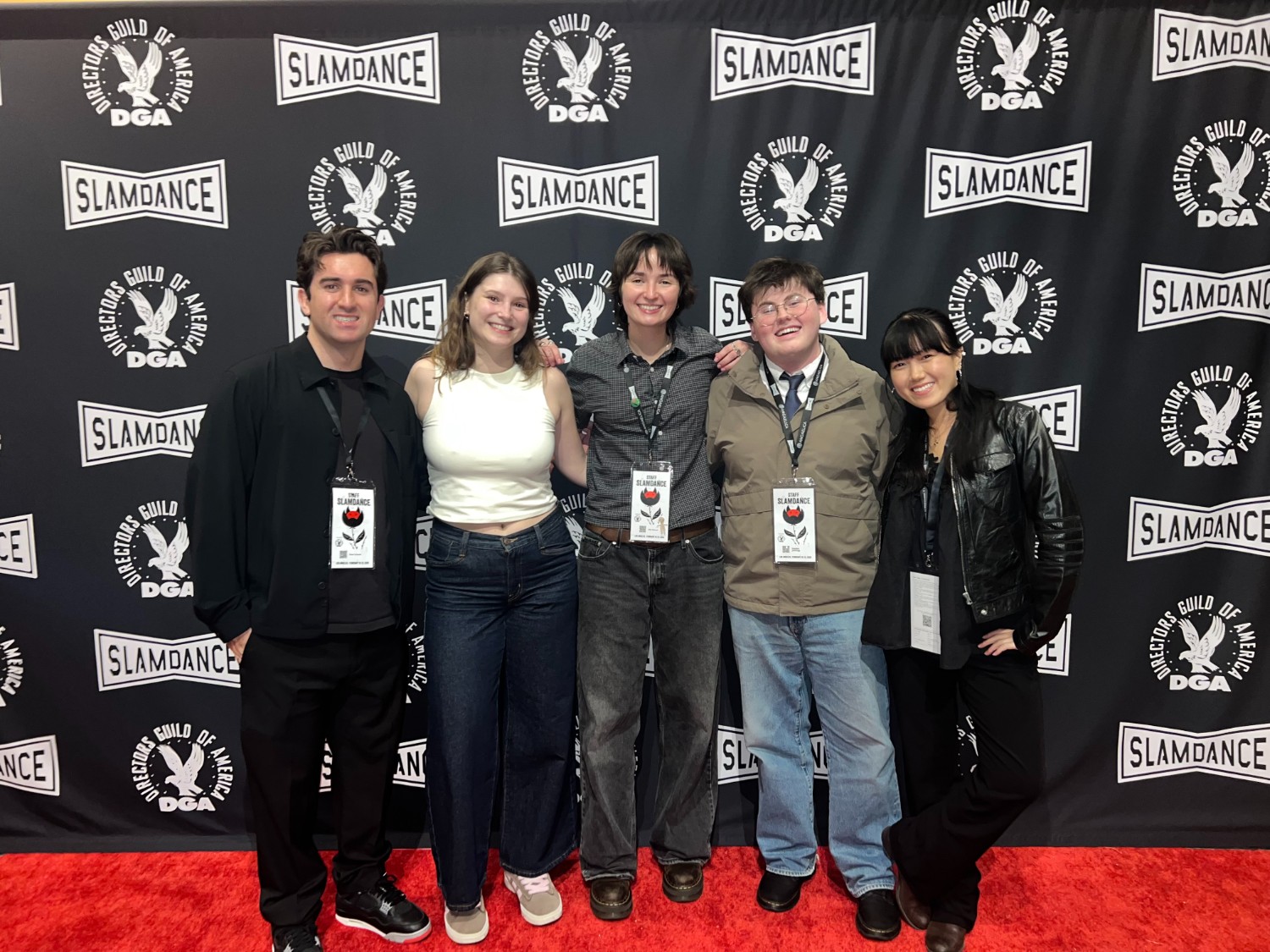
The annual Slamdance Film Festival concluded its 31st year Feb. 25, with past and present Occidental students helping to manage production needs for the festival. What started as a paid internship experience with the Slamdance Film Festival has become a full-time job for two Occidental alums.
The Slamdance Film Festival, founded in 1995, started as a response to the Sundance Film Festival by filmmakers who were “tired of relying on a large, oblique system to showcase their work”.
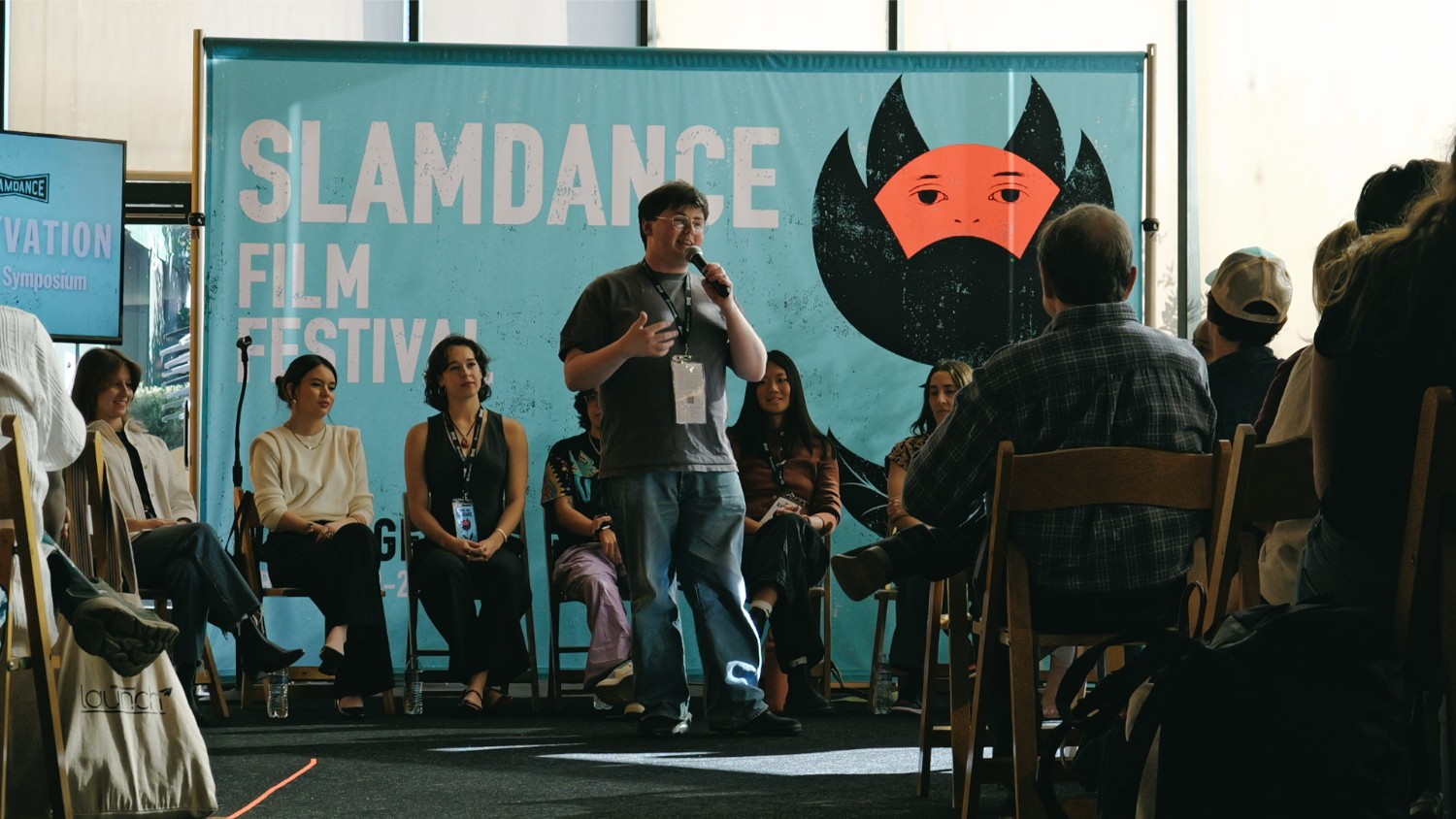
Today, Festival Coordinator Lizzie Friedrich ’25 refers to the festival as “Sundance’s little indie sister.” Friedrich said Slamdance’s ethos revolves around lifting up the voices of low-budget, independent filmmakers, especially those with visible and non-visible disabilities.
“We provide a launching point for artists and filmmakers who haven’t had their big step yet,” Friedrich said.
Originally located in Park City, Utah, with the Sundance Film Festival, Slamdance made the move to LA two years ago in an attempt to reach a wider audience and be more accessible, Friedrich said.
Professor Diana Keeler, director of Digital Media and Production in the Media Arts and & Culture (MAC) department, said that since Slamdance Film Festival’s move down to LA, it has provided Occidental students with hands-on experience in the film festival world.
Keeler said the festival’s move opened up the opportunity for a partnership with the College, which was initiated by MAC student Max Brown ’25.
Keeler said she was excited about this partnership with the festival, which is unique in many ways.
“We are always looking for paid internships, which I will say in the media world in Los Angeles is hard,” Keeler said. “To have an opportunity where we’re partnering with a film festival that also understands that [it] is about equity and about paying students for their work and that is one of their core missions.”
Isabel Rubin (junior) is a MAC major who interned for the festival this year. Rubin had met both Friedrich and Lily Calvert ’25 on a set in Fall 2025 and heard that they had interned at Slamdance the year prior, which sparked her interest in working for Slamdance this year.
“It was cool to reconnect with them since they graduated last year,” Rubin said.
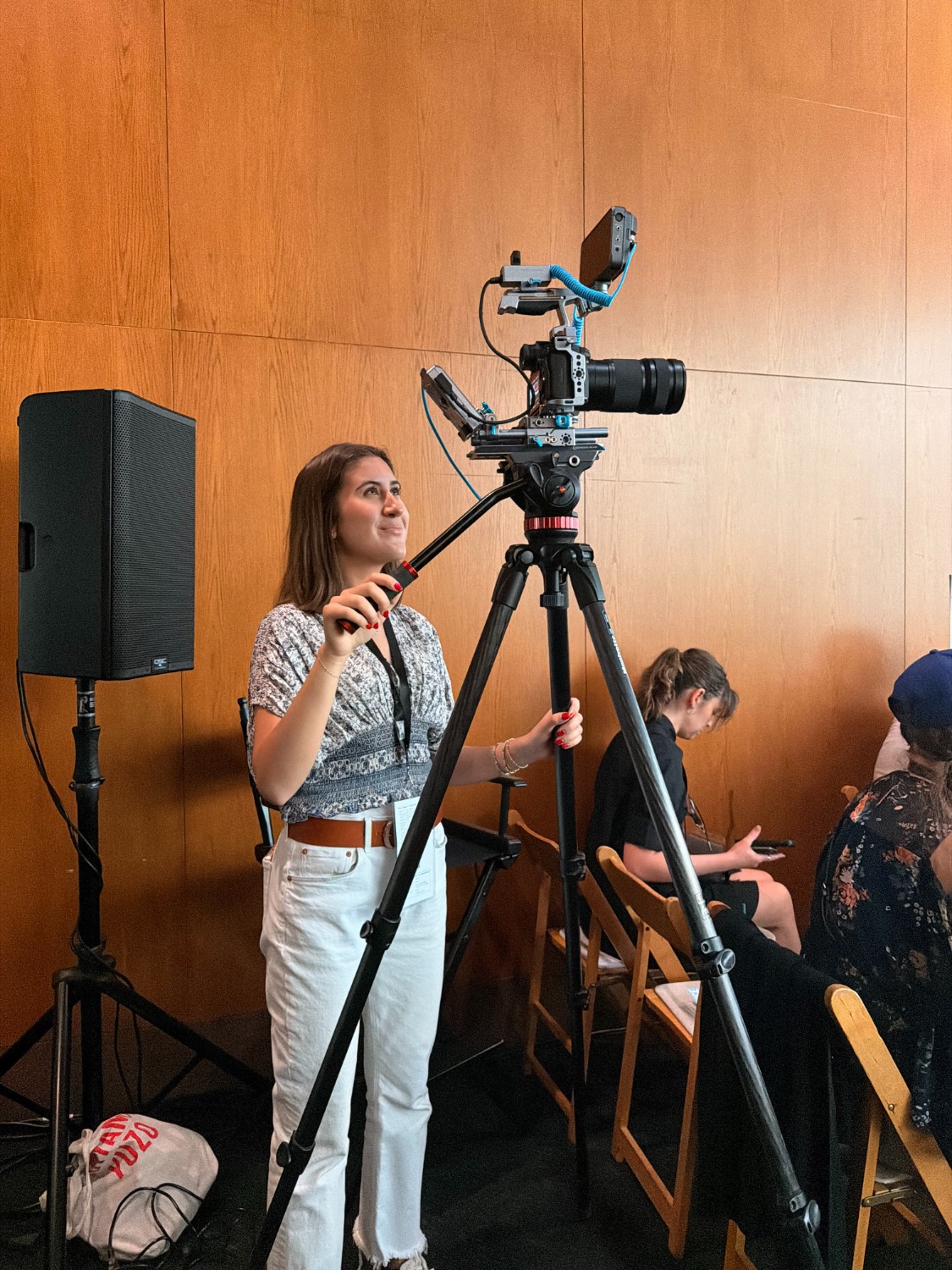
Rubin said her responsibilities as a festival intern ranged anywhere from scanning passes, setting up chairs and line management, to answering questions for filmmakers. Rubin said one of her jobs was mixing for a panel which allowed her to learn from the festival programming while working the festival.
“[It] was cool because I was mostly just monitoring the sound levels, but I was also able to sit in on the panel and listen,” Rubin said.
Calvert currently works as Slamdance’s Digital Content and Social Media Manager. They said they also interned at Slamdance while they were a student in the MAC department at Occidental.
Calvert said interns have all kinds of responsibilities on the production side of the festival, many of which include front-end filmmaker relations. Calvert said they recall escorting Star Trek star George Takei to a screening when they were a festival intern last year.
“It’s honestly just a total mishmash of just whatever people wind up needing,” Calvert said.
Friedrich said this is Slamdance’s first educational partnership since the festival’s move to LA. She said the collaboration is positive for both Slamdance and Occidental because the festival needed help and MAC majors wanted hands-on experience. According to Friedrich, she sees it as a very fitting pairing.
“I think Oxy and Slamdance operate similarly in their smaller, ‘doing a lot with less resources,’” Friedrich said. “The way [the MAC department] teaches you to be kind of scrappy and be able to handle a lot of things at once is definitely something that aligned with Slamdance.”
Calvert said interning with Slamdance while at Occidental gave them a real exposure to filmmaking outside of their experience in the classroom and the busyness of senior comprehensive projects in the MAC department.
“I feel like when I was interning last year, I was so caught up in my comps. And I was like ‘Oh my God, I’m never going to finish my comps,’” Calvert said.
Interning with Slamdance, Calvert said, gave them a bit of perspective.
“I was like, ‘Oh, you can make things after graduation. People do more than just their comps.’”
Part of Slamdance’s focus on accessibility and equity, Friedrich said, comes down to making sure students have the opportunity to be exposed to the film world, which can often feel insular to most.
“We are trying to be very accessible to people, and not have those industry barriers like a $2,000 festival pass,” Friedrich said. “A student can’t afford that.”
The festival has one tier for passes, at $50 a piece. Keeler said festival passes at that price are unheard of in LA.
“Oftentimes, festivals can be a money grab,” Keeler said. “But [Slamdance] really wants people to come and hang out and network and be there and support each other.”
Beyond the networking and opportunities for connecting with other filmmakers, Calvert said Slamdance also made low-budget film production seem possible in an independent film industry that can feel quite inaccessible. This approach, Calvert said, uplifts all kinds of voices.
“Slamdance just has this energy of scrappy, truly independent, revolutionary filmmaking,” Calvert said. “Slamdance really works to tell everyone’s stories. They want to put every story on the map.”
Contact Claire Wilson-Black at wilsonblack@oxy.edu
