






















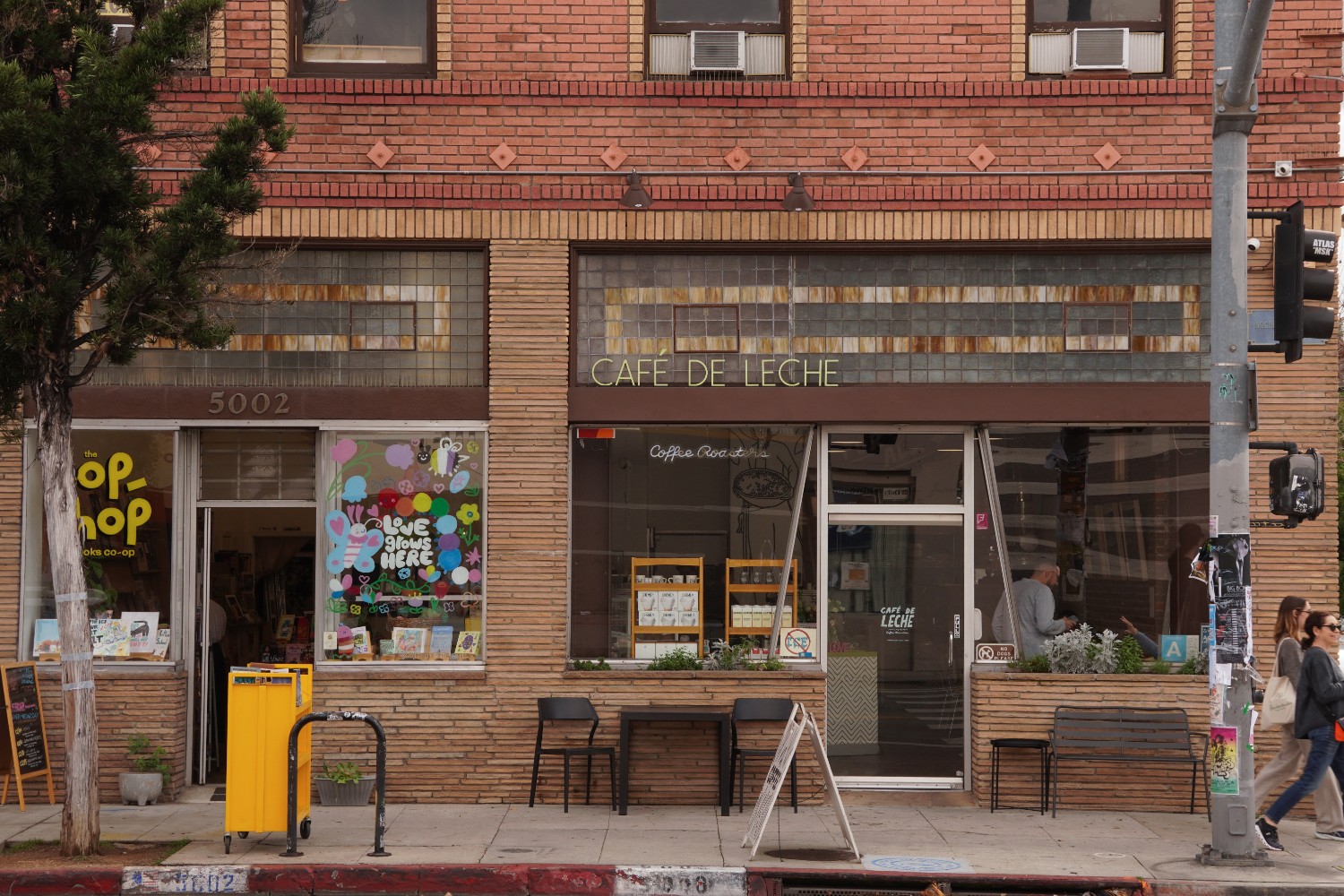
Small businesses in Highland Park are responding to increased U.S. Immigration and Customs Enforcement (ICE) activity with signage, temporary closures and community events following a Jan. 30 general strike against immigration enforcement action that took place across LA.
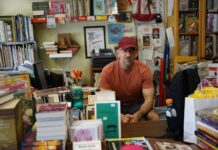
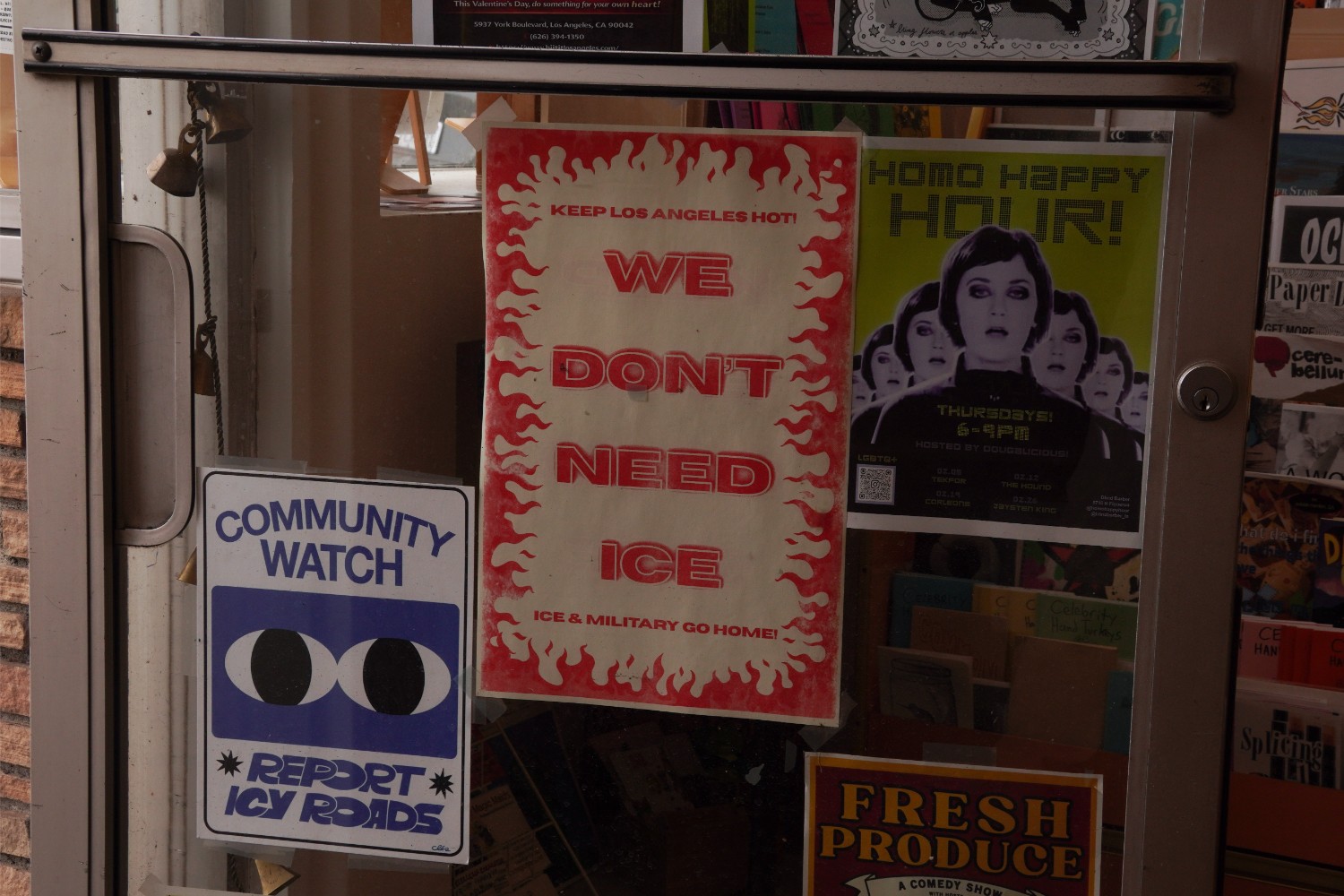
At Pop-Hop Books & Print on York Boulevard, employee Jonathan Hinton said the store displayed hand-painted signs reading “Ice Out of NELA,” and
“Fuera ICE,” which he said reflects opposition to ICE presence in the neighborhood.
“We’re sad and angry about ICE’s presence in our community,” Hinton said. “We are a gathering place for creative people and for people in our neighborhood. We care about our neighbors.”
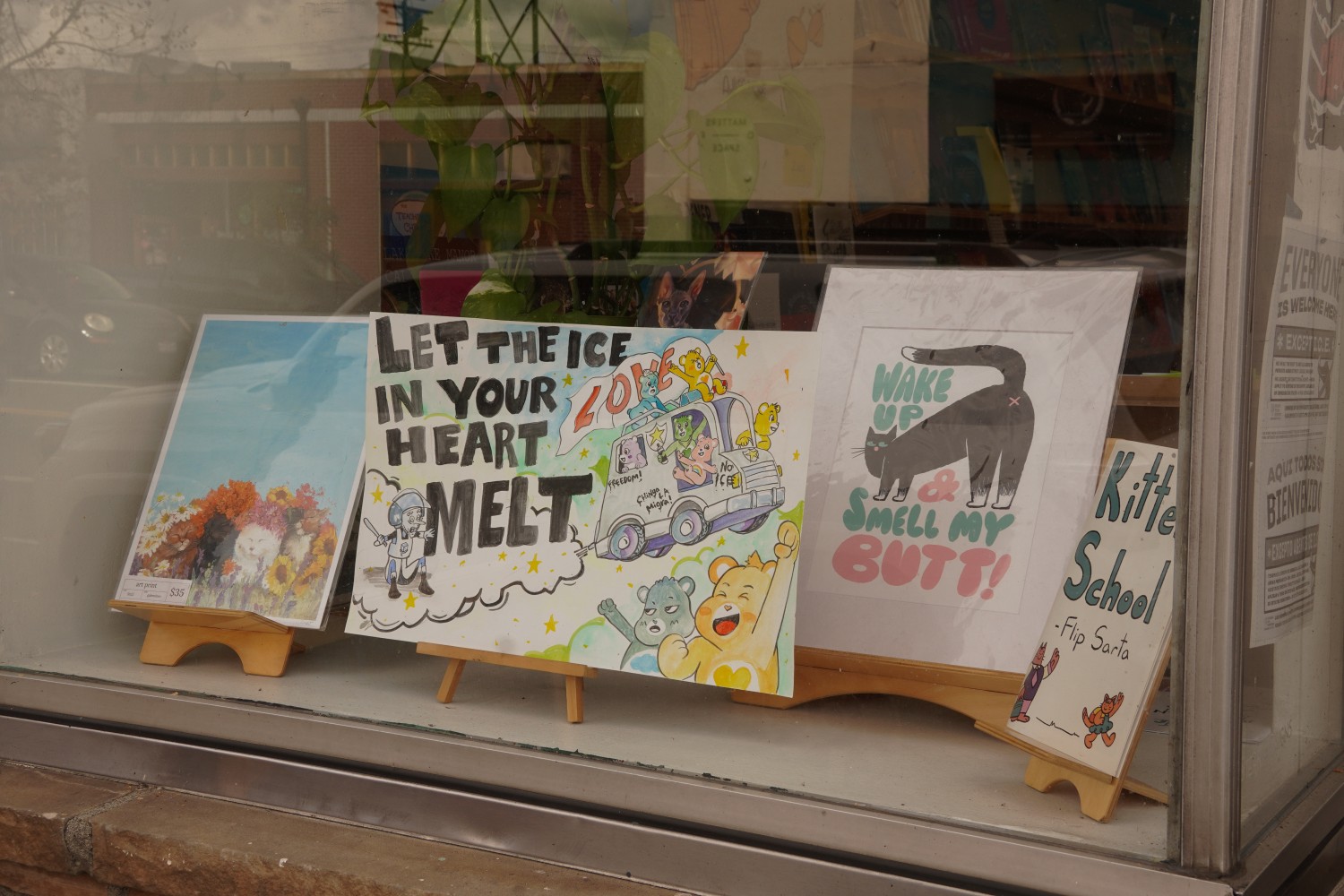
Rosario Calatayud-Serna, co-owner of Pop-Hop, said the signs were created with community members during a general strike.
“The signs are probably the smallest way that we can express our disagreement with the current deportation regime and our support for community members who are affected by it,” Calatayud-Serna said.
According to Calatayud-Serna, the strikes focused on calls to remove ICE from LA neighborhoods.
“I don’t think [the signs] keep ICE out,” Calatayud-Serna said. “I think they are signs of solidarity. They aren’t really protecting anybody — they’re really just to show support and voice what we’re in favor of or against.”

According to Hinton, Pop-Hop participated in the nationwide January business strike, closing its register while keeping the space open for people to gather and make signs.
“Our register was closed. We weren’t making any sales, but we kept the space open for people to come and make signs and gather,” Hinton said.
According to Calatayud-Serna, the strike was emotionally complex.
“It’s always a little bittersweet when I see demonstrations and so many folks gathering,” Calatayud-Serna said. “You feel proud, and a sense of solidarity but also the frustration of it all.”
According to Calatayud-Serna, families gathered, children chanted and neighbors honked their car horns during the strike.
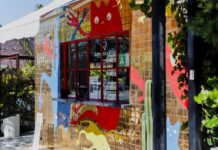
Café de Leche is another small business on York Boulevard that took similar steps to support the community. Soleil Hernando, an employee at Café de Leche, said the cafe prioritizes being a space where staff and customers can check in with one another.
“We know everybody by name,” Hernando said. “We know their orders, and we’re checking in with them constantly. A lot of times, customers will come in and tell us if there’s ICE activity in the area so we can let other customers know.”
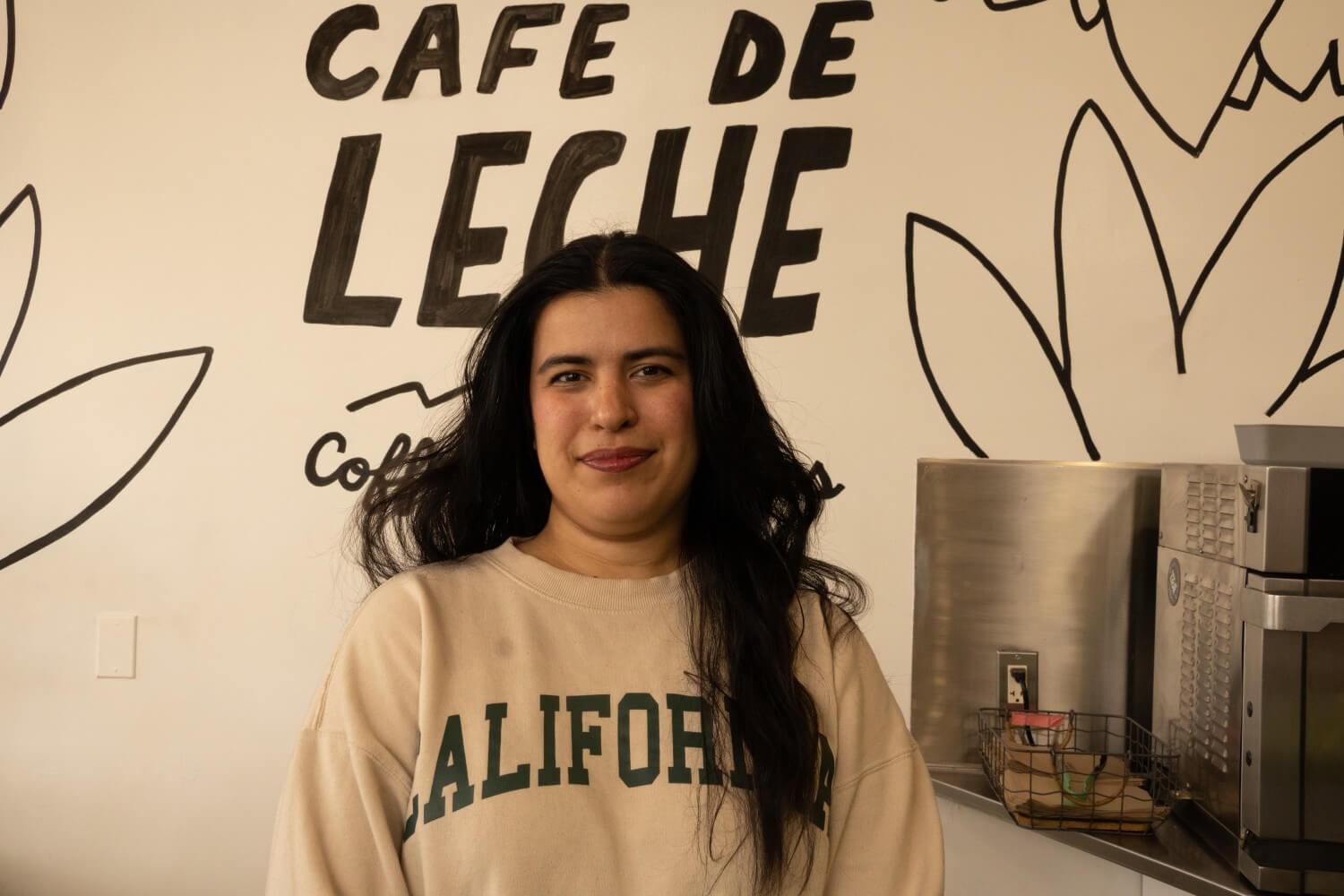
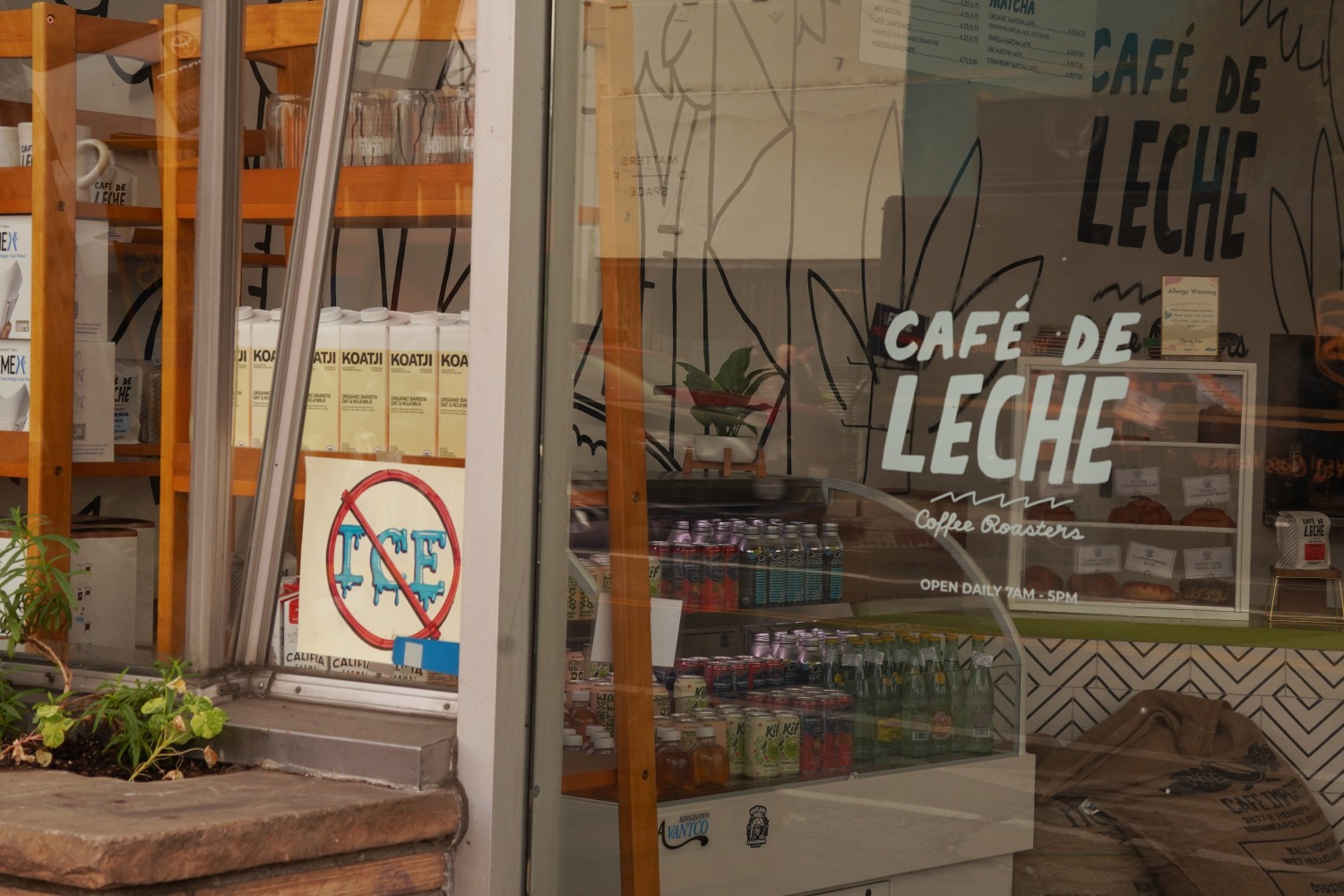
Hernando said the cafe partnered with the band Las Cafeteras to distribute ICE alarm whistles to local businesses, and recently kept its doors open during the national shutdown while providing free drip coffee and space for art making.
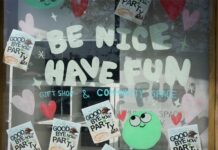
“We turned the space into a place for people to make art and signs,” Hernando said. “People could leave and protest later, but we also protested a bit outside, peacefully of course.”
Hernando said the Jan. 30 strike was personally meaningful, and employees were able to transform their frustration into creative expression.
“It felt good to put the feelings that we’re feeling about it into art and create something beautiful,” Hernando said. “There were really cool, creative signs. One of our coworkers even said, ‘Honk if you love Latinas,’ so we could still find the fun and the funny while dealing with a serious issue.”
Hernando said the cafe lost income from closing that day, but the community responded generously.
“The very next day, customers tipped over $450, which shows how much they were trying to support us,” Hernando said.
According to Calatayud-Serna, it is important to note the status of small businesses as gathering spaces distinct from private homes.
Hinton said bookstores like Pop-Hop allow people to connect and share information quickly.
“We’re a different entity than a home,” Hinton said. “People can gather here.”
Calatayud-Serna described such gathering spaces as third spaces, where people can feel safe expressing ideas and emotions.
“A third space is a place where people can feel safe and comfortable sharing ideas […] being in a space with other people that you know feel the same way that you do,” Calatayua-Serna said.
Hernando said the cafe’s mission is centered on creating a welcoming space for customers.
“You can always come here, enjoy a coffee, and not have to think about what’s going on outside,” Hernando said. “It doesn’t have to be present all the time, this is a space for coffee and equality for all.”
Hernando said collective business closures can be an effective form of protest, depending on scale and resources. Hinton said small closures can build momentum toward larger actions.
“I think it probably depends on their scale,” Hinton said. “You can’t get the really big-scale ones that have an effect unless you have smaller-scale ones to begin with.”
According to Calatayud-Serna, strikes are about more than closing a store; they are about building trust, solidarity and showing up for one another.
“Long term, they will have, and they do have, an effect and will make an impact,” Calatayud-Serna said. “Even if it doesn’t feel like it in the moment, when people come together like that, it shifts something. It shows businesses, neighbors and families that they’re not alone.”
Hernando said businesses should act within their means but highlighted the opportunity her bigger cafe had to show vocal support.
“As a larger business, we were able to make our support really loud and vocal, and I hope it meant as much to the community as it did to us,” Hernando said.
According to Calatayud-Serna, resistance is a continuous effort.
“I know that we’re in it for the long haul,” Catalayud-Serna said.
Contact Samhita Krishnan at krishnan@oxy.edu
