

























Professor and department chair of Asian Studies and Faculty Council President Alexander Day is teaching HIST 346: The Transformation of Rural and Urban China this semester for the second time. According to the course description, after a short semester on campus, students will accompany Day on a three week trip to China, expanding on classroom instruction through in-country experience.
According to Associate Director of the International Programs Office Julie Santos, HIST 346 was in high demand during the registration period.
“[Day’s] course had more applicants than we had spots, so we had a waitlist,” Santos said. “It was something that students really want.”
According to Day, major changes to have occurred in China since the course was last taught in 2018. Day said China’s political state continues to affect how much of migrant life students can experience.
“One of the key themes of the class is rural to urban migration, and rural to urban migrants are crucial to how cities operate […] and how work gets done in China, but [migrants are] often treated in a discriminatory way,” Day said.
Day said he used contacts in the Institute of International Educational of Students to provide his class access to the Museum of Working People’s Culture and Art, which had been closed by the Chinese Government.
“Migrants themselves had made their own migrant museum in Beijing; it was around for several years,” Day said. “[But] It was shut down by the government; they didn’t like it because it was an unofficial museum of migrant laborers, and obviously, it has a political connotation.”
According to Professor of U.S. History, Jane Hong, many of the students’ experiences in China are made possible by Day’s research connections.
“Some of the students who went [in 2018] just told me how transformative it was being able to live in a rural part of China, to experience things they probably never experienced before,” said Hong.

According to Santos, Occidental’s ability to provide financial support for faculty led courses makes HIST 346 a great alternative to studying abroad for an entire semester. Santos said that while there is an additional fee to the program, financial aid packages are adjusted to make the course more affordable.
“We always have a pot of money set aside for scholarships for faculty-led courses, but we also set aside money so that all students get their flights covered,” Santos said.
According to Day, he originally intended the course to be exclusively offered to upper-class students with moderate levels of Chinese language proficiency. Day said the class has been adjusted to include a more diverse range of students so all can contribute and take away different learning experiences.
“The idea was that this would be [available to] students that were juniors or maybe even seniors, not first years,” Day said. “But I shifted it the first time, and I actually have decided to take students from the whole range, first years to seniors. I like to take students from all sorts of majors, so I definitely have some Asian studies majors and Chinese studies majors, history majors, but I also have biochem and CTSJ majors as well.”
According to Day, the diverse range of students fosters communication, which is important as students will be traveling together for three weeks.
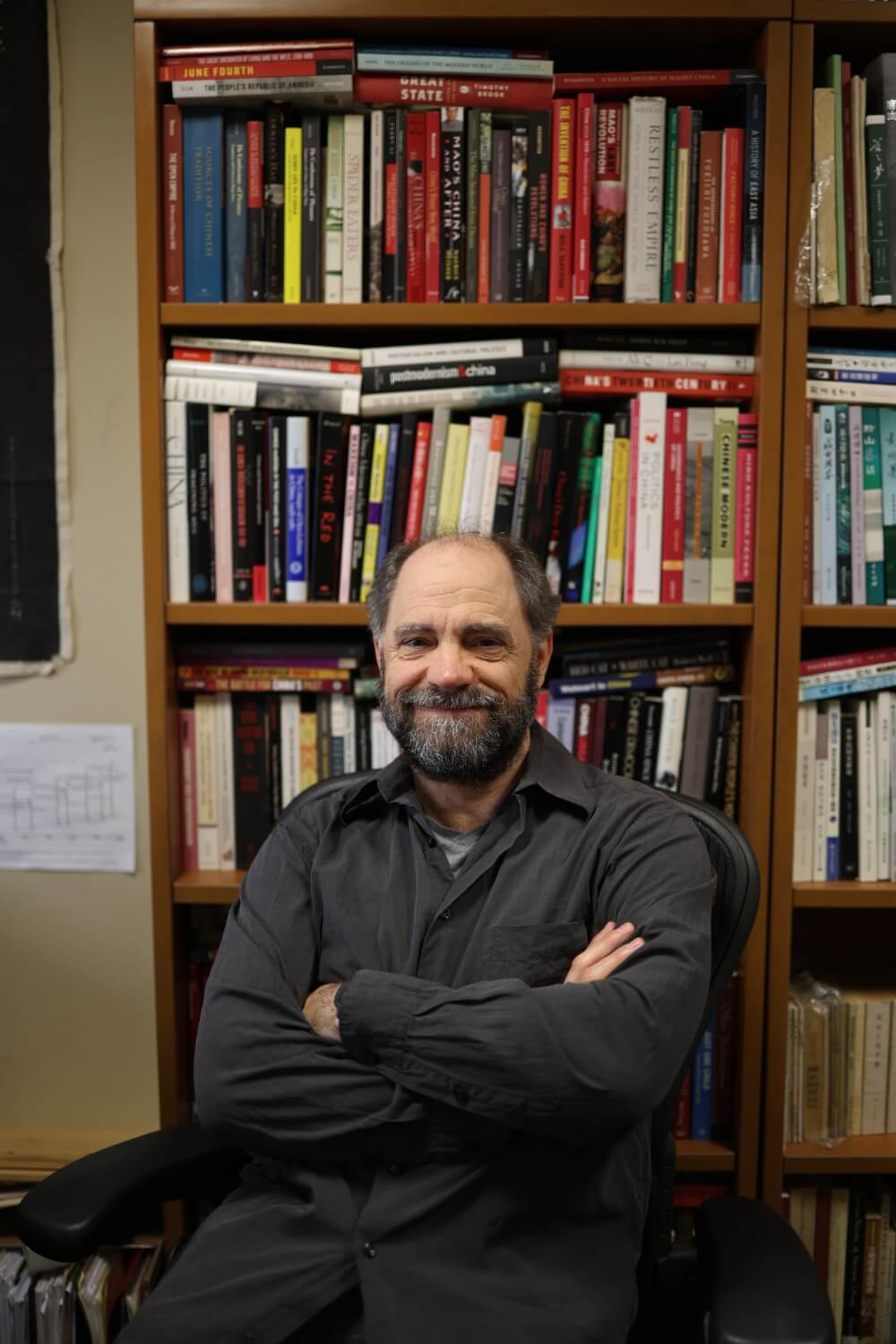
“I take […] students that don’t have any Chinese as well, and they have to rely on each other. A big part of the course is the cohort building,” Day said.
Graham Tapp (sophomore) said via email that the class encourages a certain level of community between students as they all share a high level of interest in the class’s topics.
“I like that collaborative environment. I think it makes us all feel open to asking questions, learning, and struggling together,” Tapp said. “It doesn’t feel awkward waiting on people to answer questions in class and have collaborative conversations; it’s very comfortable. People are very passionate.”
According to Evan Lieber (senior), taking past classes with Day influenced him to take the course, which has deepened his interest and understanding of China as a topic of study.
“I took ‘East Asian Survey‘ with Professor Day last spring, and I really enjoyed that class,” Lieber said. “I really enjoyed his teaching style. I enjoyed just learning about East Asia, and this class combined the in-country experience; it seemed like a total package and something that I’d really enjoy for my final semester of college.”
Day said the diverse array of students creates learning opportunities, allowing students to come into and leave the course with different perspectives.
“These students are gonna learn different things, they’re gonna get different things out of it,” Day said. “That’s a strength, that people are coming from very different experiences and levels of knowledge about the topic.”
Contact Mars Gallati at gallati@oxy.edu
