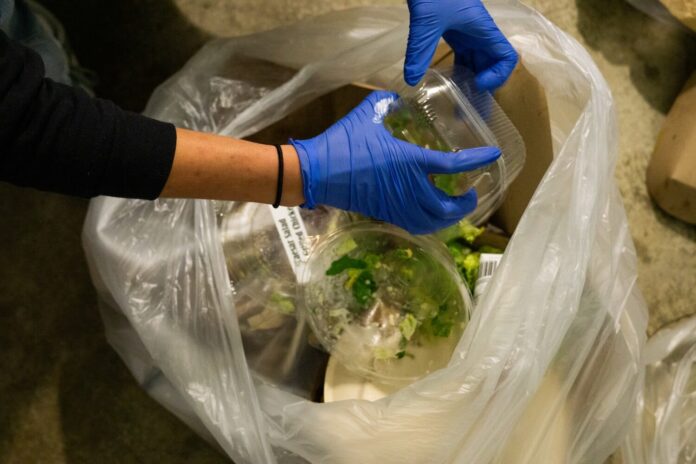
After a pause in Fall 2025, the Occidental Student Compost Actions for Remediation (OSCAR) has returned to operation in residential halls. OSCAR was formerly a student-led club where students volunteered to collect compost waste, but is now run by one paid student worker and managed by Facilities Management, according to Assistant Director of Sustainability Alison Linder.
Student Compost Facilitator Julien De Goldsmith (senior) said the responsibility of the job includes designing bins and flyers, collecting and sorting the weekly compost and educating and informing the student body.
“This year in residential dorms, we installed compost bins so essentially every dorm has one or two bins,” De Goldsmith said. “There are clear instructions as to how to compost, and we’re hoping that people will successfully compost.”
De Goldsmith said contamination poses a challenge to the work and that it would make the student worker’s job easier if everyone sorted their waste.
“It’s kind of frustrating because you’re not supposed to [put trash in compost bins], but people nonetheless do it,” De Goldsmith said. “I guess it’s convenient for them to just discard their waste wherever it’s easier.”
Sustainability Fund President Graham Luethe (senior) said composting is important because it repurposes leftover food that would otherwise sit in a landfill and that lack of knowledge and trust regarding composting presents a challenge.
“I think there’s a lot of misinformation,” Luethe said. “A lot of people don’t understand or trust recycling, compost [or] garbage bins so they just throw it all in the trash. That’s something that Sus Fund talks a lot about, is trying to work on getting people to have a better understanding and knowledge of how waste works.”
As a former OSCAR volunteer, Luethe said collected organic material is weighed both before and after being sorted to measure how much food is composted.
“Compost in the [Tiger] Cooler, in the residential halls are truly sorted and they definitely are composted,” Luethe said. “I don’t think a lot of people believe that.”
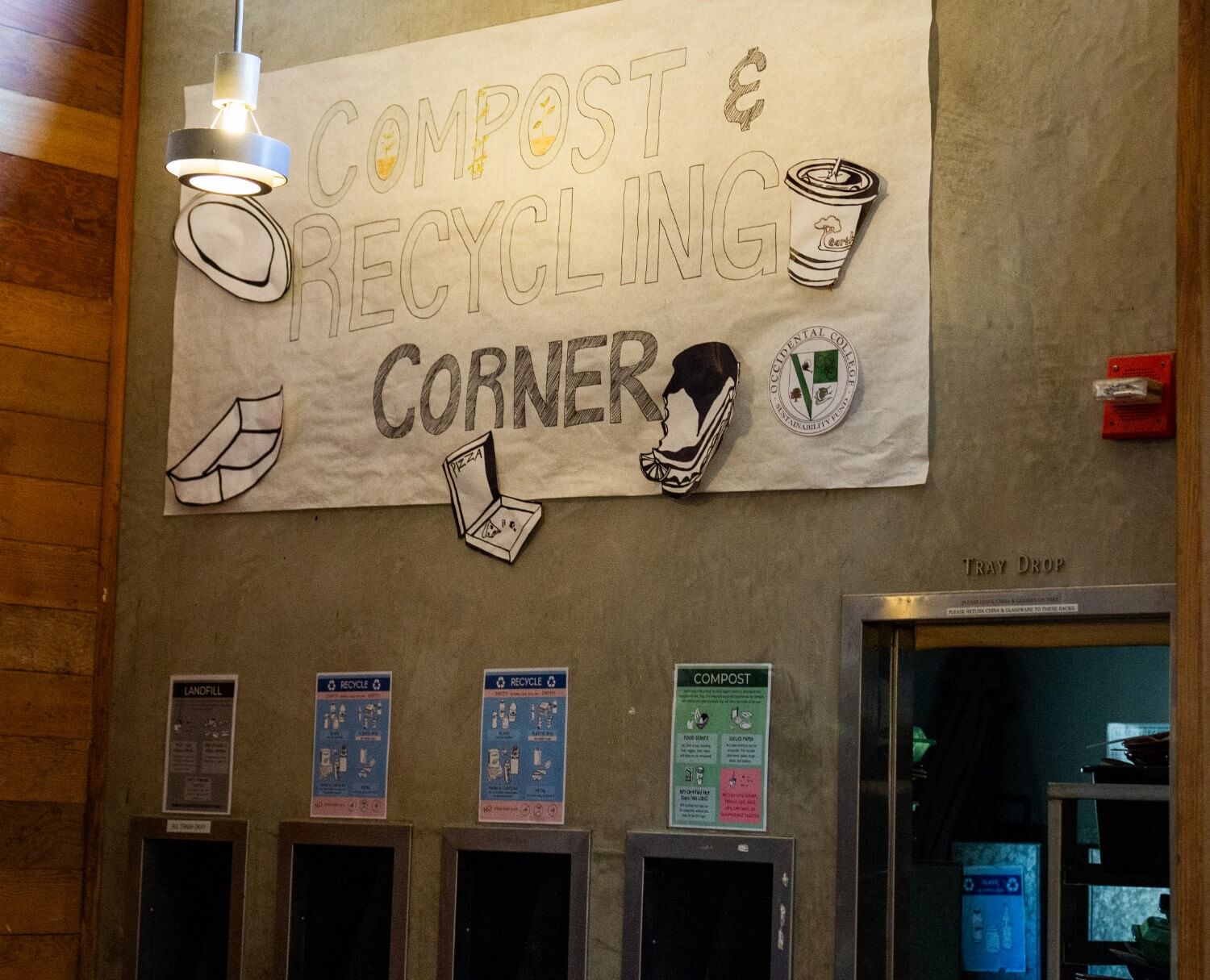
According to De Goldsmith, the Student Compost Facilitator is now the person behind all the collection and sorting of compost from residential halls.
“There’s always someone in the facilities going through that waste to make sure everything is allocated properly,” De Goldsmith said.
Linder said the organic material collected is picked up by the College’s provider, Universal Waste Systems (UWS).
“UWS takes the material for processing in an anaerobic digestion facility,” Linder said via email. “The methane, also called biogas, is recaptured as energy, then the remains are used for agricultural enhancements.”
Drey Chan (sophomore) said composting can reduce food waste if leftover food from the dining halls and bakeries are not allowed to be consumed by staff or donated.
“In my opinion, composting is the best solution for that because it actually turns the food into something that we can use,” Chan said. “We give back to the environment.”
Jeslyn Lara (sophomore) said a few ways to increase students’ interest in this initiative are promoting OSCAR at club fairs, hosting workshops on sustainability and the importance of composting and collaborating closely with Residential Education & Housing Services (REHS).
Luethe said composting is a way to make a difference.
“At Oxy, there’s a collective understanding that climate change is bad and [we] don’t want to have a big impact [on] the world,” Luethe said. “People know that food waste is waste, it’s not the best thing, but composting is a way to relieve that guilt of wasting food and contributing to climate change.”
Linder said collective student enthusiasm surrounding the program can make a big difference.
“Everybody eats, and knowing how our food is disposed properly can really make an impact,” Linder said.
Contact Villathina Ly at lyv@oxy.edu