


























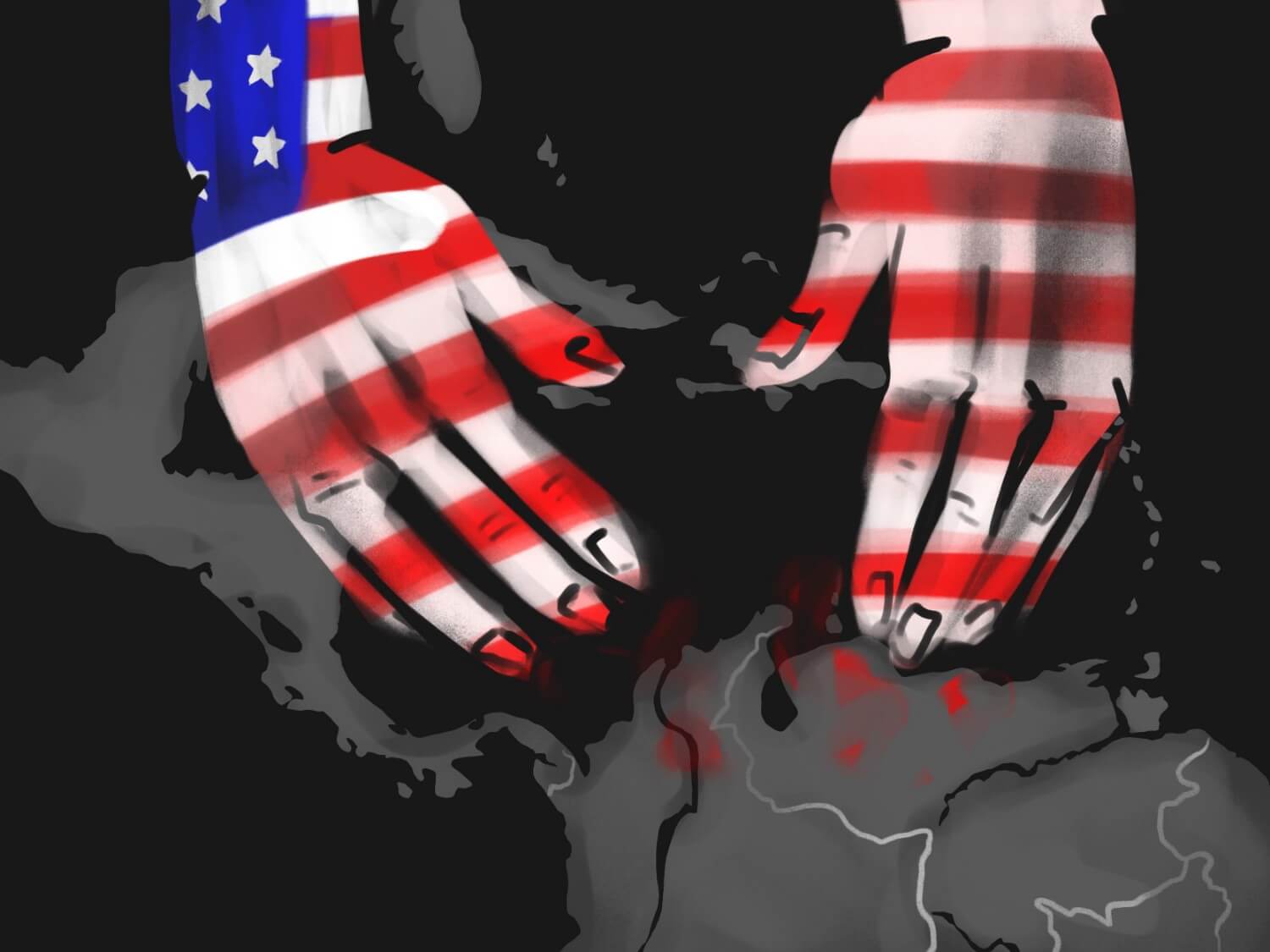
October was Venezuela’s month, and it seems like November — and possibly the rest of the year — will be too. Oct. 10, opposition party leader María Corina Machado was awarded the Nobel Peace Prize “for her tireless work promoting democratic rights for the people of Venezuela.” In October, I also began seeing the first predictions of military action against the Maduro regime. Suddenly, Venezuela was everywhere: from reports of rising tensions and inflammatory language in the news to speculation on social media, conflict seemed imminent and inevitable.
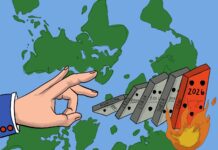
From my perspective, concerns about future military action are grounded in reality. Every day, it seems like there is a new report pointing directly to some kind of conflict in the Caribbean. For example, AP News reported that a U.S. warship had docked in the Port of Spain, Trinidad and Tobago, for training exercises, prompting a strong response from the Venezuelan government. The Washington Post reported Maduro drafting letters requesting military assistance from Russia, China and Iran, and Reuters is tracking the buildup of U.S. military staging around Venezuela, including the upgrading of a naval base on Puerto Rico that has been closed for over 20 years.
Nobody knows what a potential conflict will look like at this point, but I can’t help but feel a pit of dread in my stomach at the thought of any form of U.S. intervention.
Growing up, U.S. military action existed at the periphery of my world. The largest operation I remember feeling fully engaged with was the disastrous withdrawal from Afghanistan in 2021, at the beginning of the Biden administration. As an adult, I’m substantially more informed.
As a major power, the U.S. has had direct or indirect involvement in several conflicts, often set against the backdrop of the Cold War or the War on Terror. The Vietnam and Iraq Wars stand out as particularly brutal examples of direct U.S. intervention. But when I think of a potential conflict with Venezuela, my mind goes to Operation Condor. Officially, from 1975 to 1983, the U.S. financed and supported right-wing dictatorships in Latin America to suppress leftist political movements. Military juntas waged “Guerras Sucias” — Dirty Wars — against their own people, and hundreds of thousands of people were murdered, disappeared and tortured. U.S. intelligence agencies were intimately aware of these operations.
When I think of regime change in Venezuela, this is the image my mind conjures. An effective, brutal regime of some kind; a swing from one form of authoritarianism to another. Or even worse, a total collapse of any semblance of order at all, with paramilitary and guerrilla groups fighting each other, like what we currently see in some parts of Colombia.
With this knowledge and image, it’s easy to argue that all forms of intervention into foreign countries other than aid are bad, but it isn’t a position I necessarily agree with. I’m hesitant to sanction intervention, especially military action, but I do believe that in some cases, it’s necessary. Examining the developments in Sudan and the Sahel region, I find it challenging to argue that non-intervention is the correct stance in all scenarios. But I still dread the potential escalation into full-blown military action in the Caribbean.
The U.S. has been trying to prompt regime change in Venezuela for quite some time, from heavy sanctions to coup talks with Venezuelan military officers. The Maduro regime is undeniably awful, if the refugee crisis is any indicator. According to the UNHCR, more than 7.7 million Venezuelans have been displaced, the majority residing in other Latin American or Caribbean countries. The Biden administration granted Temporary Protection Status (TPS) to more than 400,000 people, which is currently in legal limbo due to court cases from the Trump administration.
The plight of TPS holders highlights an odd contradiction: mobilizing military forces and escalating tensions with one hand, while telling Venezuelans that their political situation is not dire enough to warrant protection with the other. It’s rattling that not even humanitarian grounds have been invoked to justify intervention.
This isn’t the only troubling aspect of this situation. In the Declare War Clause of Article 1 of the Constitution, only Congress can issue formal declarations of war and authorize the use of armed force for limited operations. In practice, presidential power in this area has expanded, and several presidents have taken military action without congressional approval.
When I first began writing this, we were in the midst of a shutdown, and several lawmakers reported inadequate communication from above. This secrecy, combined with the singular focus on drug trafficking and the buildup of military assets, all point to direct, open conflict — the direct opposite of where I would like this country to go.
When I first began learning of the potential for war — or at the very least, drone strikes — in Venezuela, it was hard for me to pinpoint why I cared so much. After all, war occurs every day. At this very moment, there are devastating conflicts all over the world, but I’m focused on something that hasn’t even happened yet.
For me, Venezuela represents a complete departure from the world I grew up in and am familiar with. Despite critiquing it in my classes, I’ve always believed in the power of liberal peace, international institutions and the globalist worldview that emerged out of WWII. Irrational, war-mongering behavior was a thing of the past or of far-flung places, not my own government. As I observe the events unfolding, this feels like more than just a child shedding their naivety, and I’m anxious that this will end in a course-altering disaster.
I don’t believe that war is a glorious endeavor. It’s terrible and occasionally necessary, but not something to look forward to or desire. As the situation in Venezuela takes center stage, one can only hope that we don’t enter another “forever war,” and the lives of Americans, Venezuelans and other people in the Caribbean are prioritized over political objectives.
Contact Wura Ogunnaike at ogunnaike@oxy.edu
