


























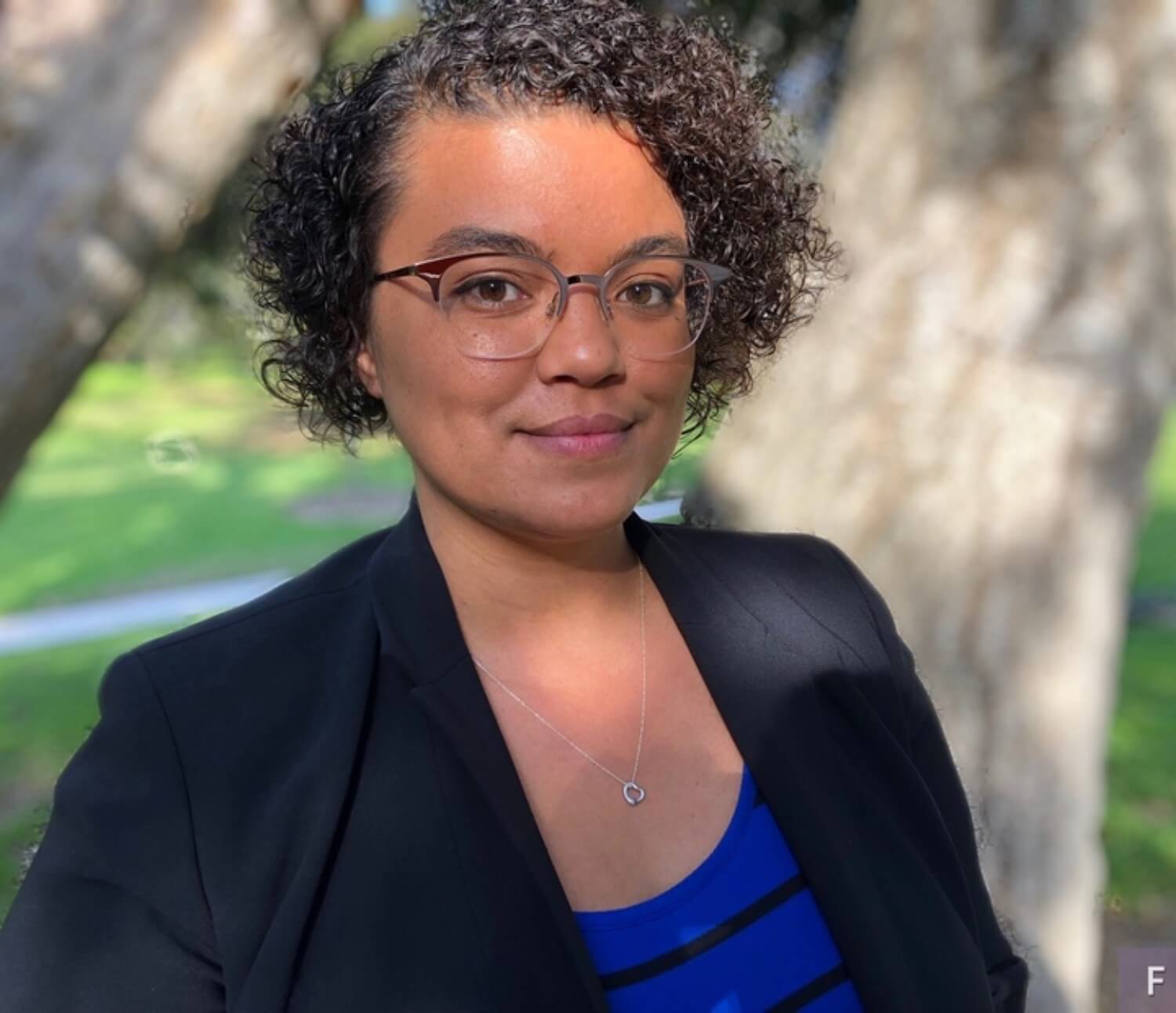
“I grew up in a relatively low-income household, and there were times when we were food insecure and there was no food in the fridge, and I can remember going around with my parents, usually my dad, and he would figure out how to put a meal together, whether that was going [to] a bakery outlet near our house where you could get day-old bread for 25 cents a loaf,” Garth said. “He knew to go to the back corners of the grocery store where you could get 50 percent off food.”
According to Garth, while volunteering at a community garden in South LA she noticed that other volunteers were not locals. Garth said particular individuals and groups created solutions that misaligned with the problems of the locals, shifting the conversation of food justice into alleviating the status quo instead of pursuing systemic change. While recounting her time with other activists, Garth said many envisioned community gardens, apps and other interventions were not particularly relevant to residents’ food issues.
“A lot of the activists that I worked with assumed that people in South Central don’t know how to cook,” Garth said. “They assumed that because there’s a lot of fast food restaurants in South Central, that people were just eating at fast food restaurants. But they ended up presenting a basic cooking demonstration to a set of mothers and grandmothers who cook every single night, cook more than them and who know a lot about how to utilize the ingredients that are available in South Central stores.”
Assistant Professor of UEP Karla Peña said it was opportune to invite Garth to speak about her book.
“Faculty in the Food Studies program thought it was a great opportunity to bring in a scholar who’s working on local [food justice] issues,” Peña said.
Peña said she teaches a class titled “Los Angeles and the Global Food Economy,” so the talk was particularly relevant to her students.
“A lot of faculty here on campus work locally and globally like myself,” Peña said. “Bringing scholars like Dr. Garth, who does on the ground research, is really important to showcase to students, especially on a topic like this where it helps students think about their own role here at Oxy and in the local community.”
Associate Professor and Chair of the Department of Society, Environment and Health Equity at UC Riverside Dana Simmons said that she came to Occidental particularly to attend Garth’s talk.
“Dr. Garth is one of the most brilliant scholars in food studies today,” Simmons said. “This talk is so important; it’s not a joke.”
According to Garth, well-mannered actors and their actions may seem innocent, but cause harm through co-optation of words like justice, empowerment and health. Garth said organizations formed by outsider activists create ineffective programs that undo the radical potential of organization, and compete with grassroots organizations committed to improving community lives.
“There are organizations that have been based in South Central for decades, run by people who are from South Central and live in South Central,” Garth said. “The organizations that are successful will change their programming to cater more to the community that they want to serve.”
According to Garth, the challenge for grassroots organizations to navigate power dynamics affects their capability; for example, nonprofit funding is often a challenge. Garth said that often, nonprofit funding grants are awarded based on how established the nonprofit is, and for grassroots organizations, grants may have to be secured through a larger nonprofit organization that can control the funding.
Garth said despite these challenges, she wants to showcase the potential for radical organizing in the food justice movement and offer these oversights as lessons for other social justice movements.
“Before you try to go into some other community that you don’t live in to create an intervention or a solution to their problems, you should stop and you should learn more about the problem because you probably don’t understand it or don’t understand it enough,” Garth said. “You should reach out to the people within the community who are already working to solve the problem and see what they’ve been doing.”
Contact Vivian Pei at vpei@oxy.edu
