




















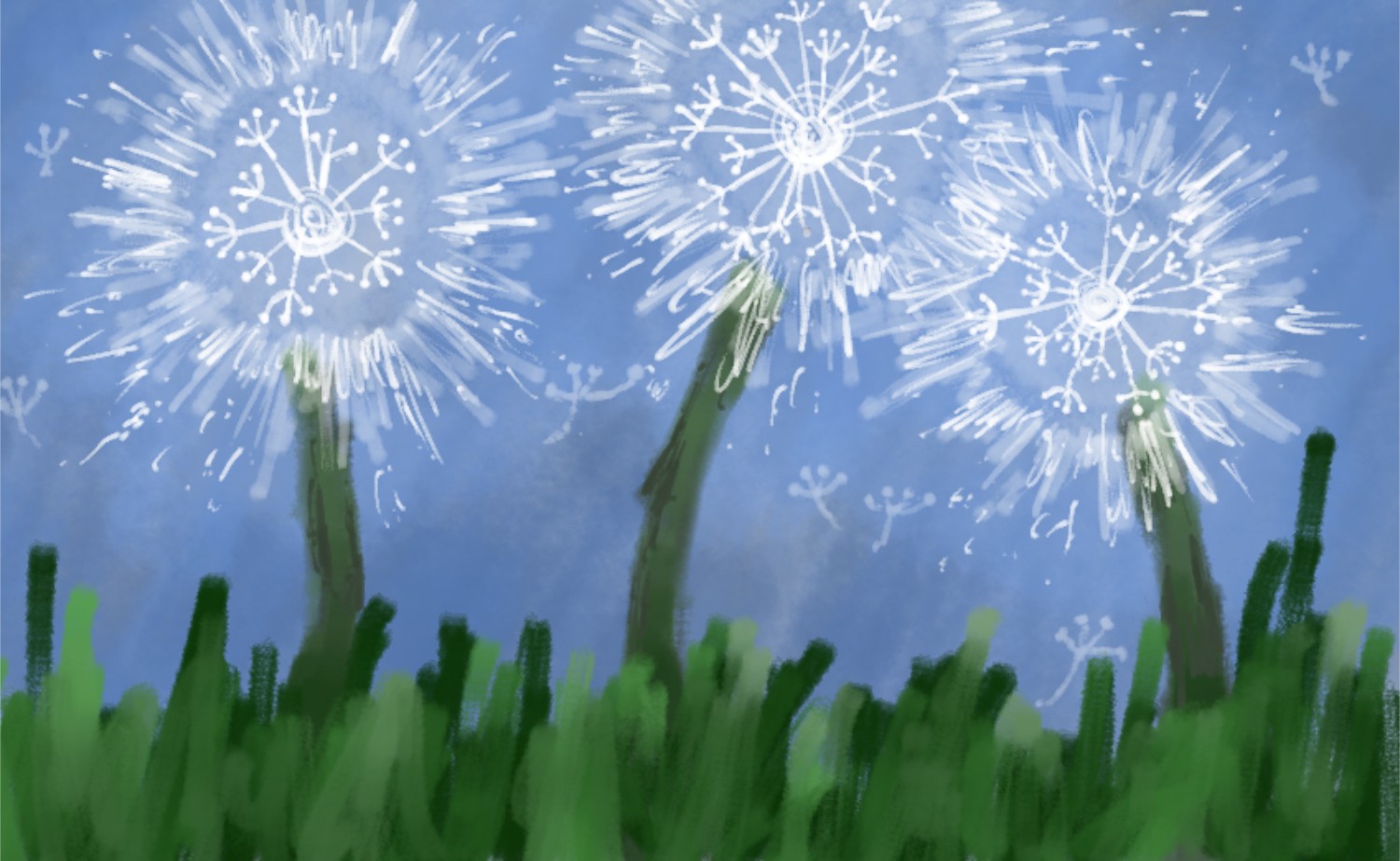
My grandmother has been a forager since she was 10 years old. In the aftermath of the Korean War, my grandmother recalls having nothing to eat. In the southern countryside of Korea, she turned to the fields and forest of Gayasan Mountain for sustenance. Often left in charge of her three younger siblings for days at a time while her mother worked, my grandmother would collect dandelions, mugwort, wild potatoes, ferns and edible flowers — anything to make a bigger portion of the little rice they had.
When I asked her how she learned to forage safely, my grandmother replied that her knowledge came from the past experiences of others whose standard practice of identification was essentially trial and error. The desperation for food was such that being accidentally poisoned seemed like a small sacrifice in the quest for nourishment. I would not recommend this.
Even after moving to the U.S. in her twenties, my grandmother continued to forage. I remember, as a toddler, collecting dandelion leaves and acorns with my grandmother on the trail behind her house. Even now, my grandmother will gather seaweed from the ocean or pull up something she recognizes on a hike.
Have you ever picked blackberries from a wild bramble or harvested the occasional handful of raspberries? Chances are, you have in passing. One of the oldest practices in human history, foraging is rising in popularity. Obviously, it’s not a good idea to go off into the nearest forest to pick random mushrooms, but there are many benefits to responsibly foraging in the wild.
Perhaps you’re not ready to stop going to the grocery store and subsist entirely off of naturally grown shrubs. Don’t worry. Foraging can be a way to augment your diet with disease-preventing nutrients. Wild plants offer high-quality nutrition, specifically antioxidants not found in the typical processed products we pass off as food.
The truth is, processed food is cheaper, plentiful and easy. For the average American, fresh and nutrient-dense produce is often more expensive and not consistently available. Foraging in one’s local ecosystem can help balance out the lack of accessibility most people have to healthy foods.
When energy and calorie-dense foods replace nutrient-dense foods, our bodies take the toll, often leading to lowered immunity and chronic diseases. Imbalance in metabolism is a major contributor to chronic degenerative diseases. Natural foods are a great source of antioxidants and vitamins that we all need to live healthier lives.
Foraging also contributes to sustainable harvesting from the environment. Instead of disrupting natural habitats for the mass production of a single fruit, just taking what you need from the wild allows for the ecosystem to heal and continue to thrive. In this way, foraging can be a way for people to connect with nature and remember the impact of our actions on the environment. The next time you hike Fiji Hill or grab something from the Marketplace, take a minute to recognize the delicate balance of ecosystems that provide us with nutritious food and clean air to breathe.
To forage responsibly, you must be aware that there are many risks to foraging that should not be taken lightly: plant toxicity, allergies, exposure to dangerous chemicals and pollution. Make sure that when foraging, you are always accompanied by a very experienced forager who really knows their stuff — a guidebook won’t drive you to the hospital. Also, avoid difficult-to-identify plants (hello, mushrooms!) and be aware of areas where herbicides/pesticides are being used, as well as urban areas where plants are exposed to car exhaust.
Although foraging can be risky, there is strength in numbers. Group foraging can foster communities and strengthen bonds between people. Because of the safety risk, foraging requires a fair amount of collaboration, trust and humility. In fact, there are many official foraging associations around the world. Not only do they know the best places to forage and what’s safe to eat, but associations also offer the opportunity to connect with others over a shared interest. During a time when loneliness is more prevalent than ever and most of us are glued to our screens, getting outdoors and participating in group activities like foraging are all the more necessary to keep people connected.
Foraging is an activity that everyone can enjoy, from the most adventurous hiker to the risk-averse plant nerd. All skills and temperaments are valued foraging in the forest. Foraging requires strategic risk-taking: it’s always a risk eating plants from the wild, but the more research and background knowledge you have on what you’re harvesting, the better. Foraging is a joint effort, from research to identification, harvesting, preparation, cooking and eating.
While less of an active forager than I was when I was younger, I know I’m always in for a treat when I visit my grandmother’s house for dinner.
Contact Sophie Ha at has@oxy.edu
