










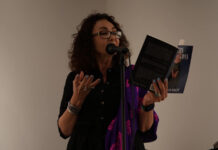








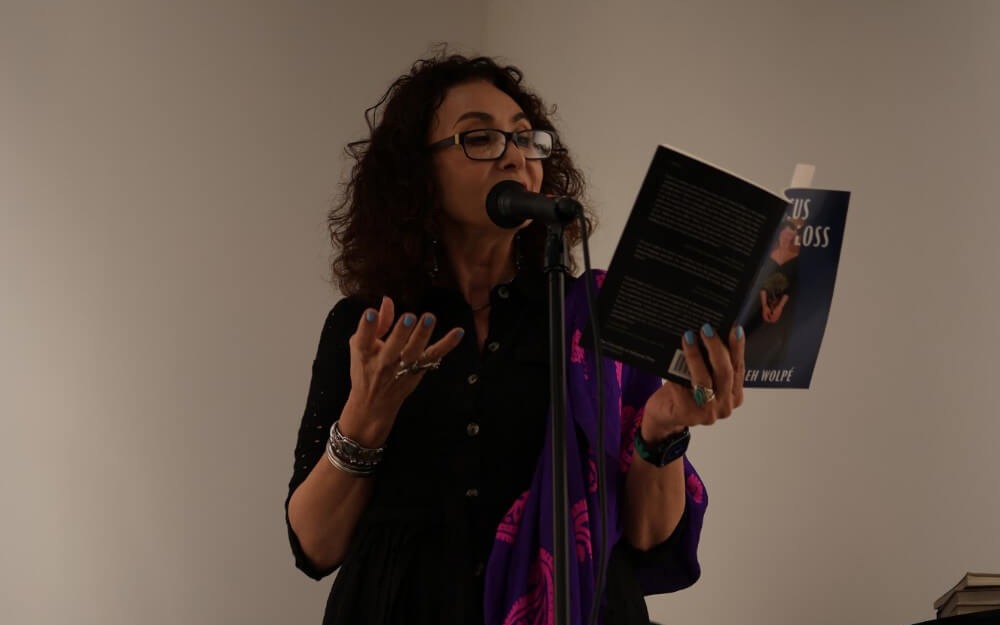
Oxy Arts hosted an evening of poetry with Sholeh Wolpé, Iranian-American poet, writer and librettist March 28. The evening featured readings from her own poetry collection “Abacus of Loss: A Memoir in Verse” and her works in translation, “The Conference of the Birds” and Attar of Nishapur’s “The Invisible Sun.”
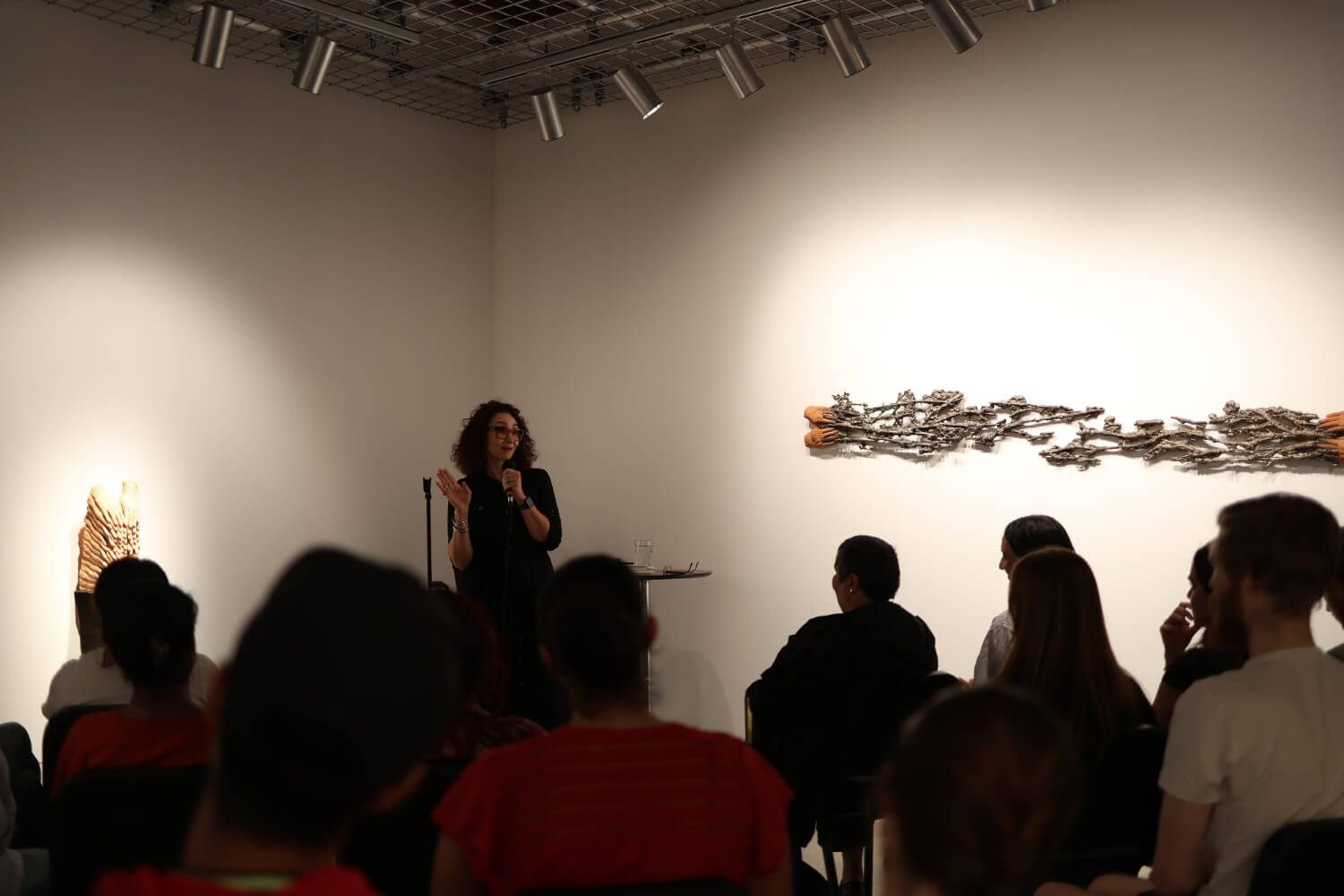
According to Assistant Professor of English Claire Grossman, the event coincided with the exhibit of 2025-26 Wanlass Artist in Residence Roksana Pirouzmand, an Iranian multidisciplinary artist.
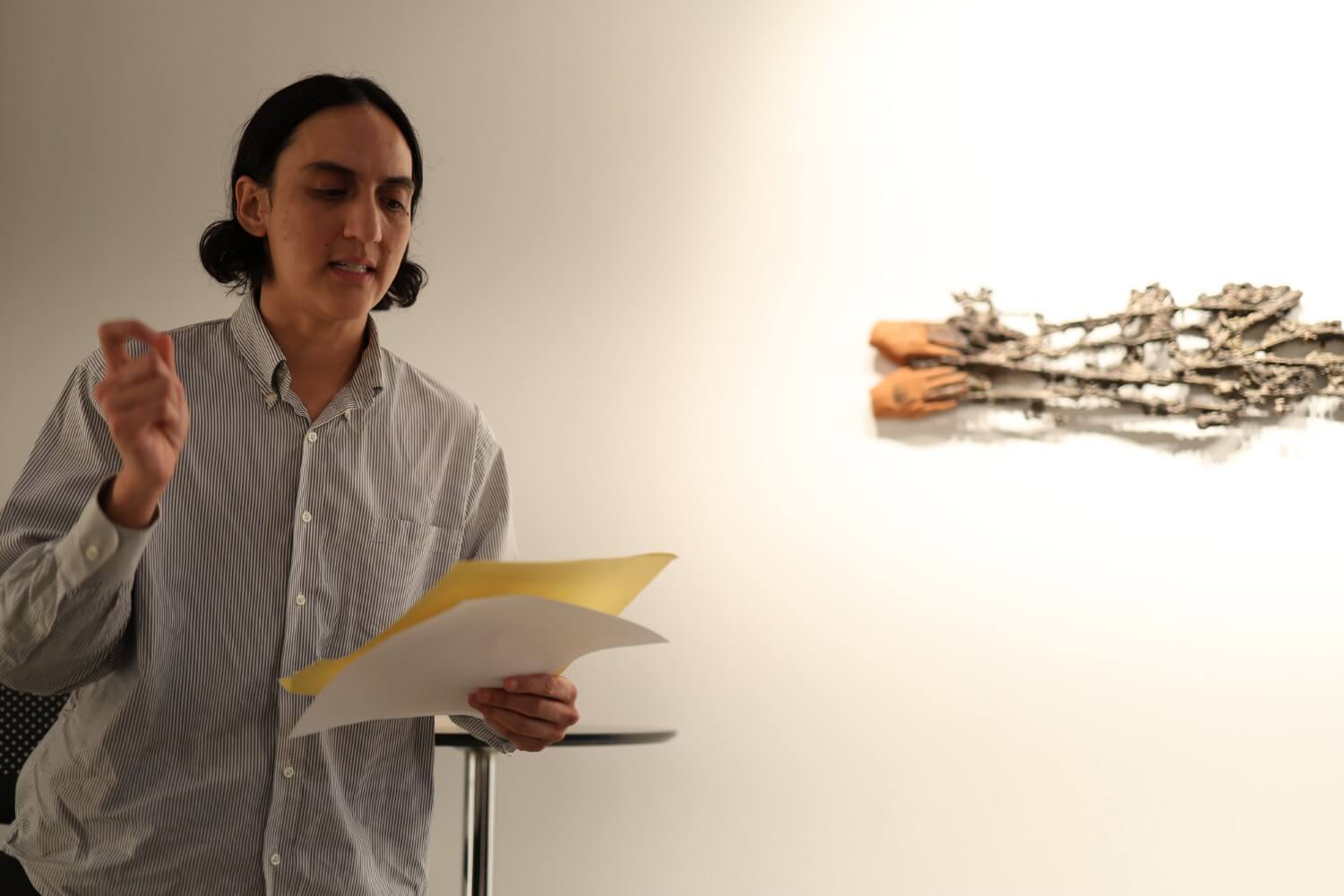
“This reading is performed in conjunction with the exhibit, showing the ways we are connected and disconnected through time and space,” Grossman said.
Grossman said Wolpé’s poetry and Pirouzmand’s sculptures are similar in their energy and mission.
“Wolpé’s poetry has the same tactile sense; it compacts, outstretches, flings it against a hard surface knowing it will bounce back,” Grossman said. “She asks the question: Is home a place to go back to?”
According to Ruby Jeschke (junior), she attended the event as part of class and was grateful for the experience.
“I came to the event as part of my American Experience in Literature class,” Jeschke said. “The experience was so cool. I felt really grateful to be in a space dedicated to the creation and appreciation of art.”
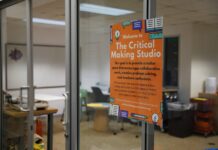
Jeschke said the sculptures in the Oxy Arts exhibit played a role in the event, allowing attendees to hear the poetry and see the space in tandem.
“Experiencing the poetry while being in a space surrounded by sculptures that [explore] both connection and drifting apart made the work resonate on a deeper level,” Jeschke said.
Jeschke said the idea of the individual’s journey and experience presented throughout the night was something that stood out to her.
“When we have only one narrative about a whole group of people, it can be really harmful,” Jeschke said. “I wanted to hear more people’s stories, and the importance of perspective really stuck with me.”
According to Wolpé, the first of her readings, “Abacus of Loss: A Memoir in Verse,” is organized in the same way our minds visualize the past.
“I organized this book the way memory works,” Wolpé said. “If you think about one thing, your mind is flooded with images of that.”
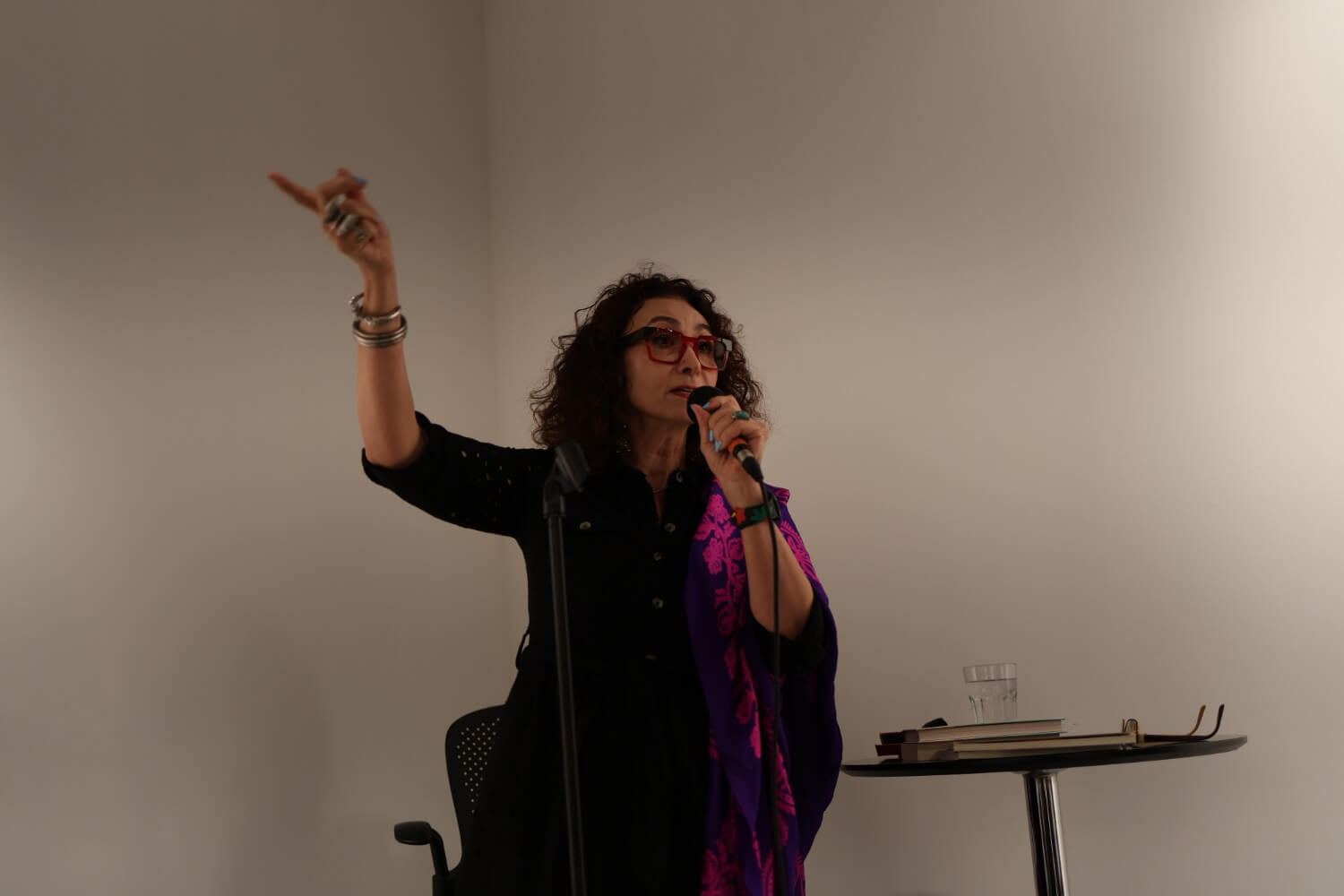
According to Wolpé, the title creates an image of tallying the past, to see how everything has added up in the journey of her life.
“It’s called ‘The Abacus of Loss’ because I am counting my losses and gains to see what I have in the end,” Wolpé said.
According to Wolpé, her works in translation, “The Conference of Birds,” and “The Invisible Sun,” originally written by Attar of Nishapur, speak to the world of all humans.
“‘The Conference of the Birds’ compares humans to the birds telling a story of the birds of the world gathering to their sovereign,” Wolpé said. “The birds are us. They represent our fears as the wayfarer, walking to wherever you end up.”
According to Wolpé, Attar’s poetry speaks to the path each person takes on their journey in life.
“Attar says, ‘All of us are journeying to a great ocean, but on a different path,’” Wolpé said. “Those who stop and judge others are only delaying their journey.”
Wolpe said the metaphorical writings of Attar perpetuate the image of the ocean and give advice on the way a person can walk that path.
“You need to get rid of your ego-self. If you do, you become a drop of water which joins the ocean at the end of the journey,” Wolpé said. “If you don’t let go, you wrap yourself in your ego and arrive as a pebble; the ocean welcomes you but you sink to the bottom.”
According to Wolpé, her translation of “The Invisible Sun” can be used as a guiding text for any day.
“These are my favorite writings of Attar,” Wolpé said. “Open to a page at random, and that will be your answer for the day.”
Wolpé said when she reads Attar, she is reminded of her experience as a kid visiting the religious practitioners and offering prayer.
“We’d go to pray, the Mullah would blow prayer into the balloon,” Wolpe said. “You had to buy as much prayer as you wanted, put your face in front of the balloon, and let the prayers blow against your face.”
Wolpé said she wanted the audience to understand the importance of poetry in light of the current world events.
“As the world is getting stranger, I wonder where we are going,” Wolpé said. “I believe in us and the power of the feminine — not only women, but the power of [the] feminine in all of us.”
Wolpé said she hopes to alter the image of Iranian people through her poetry by showing the reality and beauty of her life.
“I believe we should use our powers to make the world a little better,” Wolpé said. “[There is a] beauty [in] this culture against the terrifying image painted of the Iranian people.”
Contact Cole Banks at cbanks@oxy.edu
