


























MLB – Ben Petteruti
One hundred sixty two games is a grind. No matter how well baseball players take care of their bodies, injuries are almost inevitable. Players age and become injury-prone. Young stars need to adjust to the physical toll of being on the field every day. MLB’s best players have invested millions into physical recovery. But what about the mental side of the game?
Being on the diamond and chasing stardom can be a dream come true, but it can also be the loneliest place in the world. Every error is criticized. Every misplay written about extensively. Endless people are in your ear telling you what you’ve done wrong and what to fix. The opinions pile up and turn into attacks. Fans get angrier and angrier. In the age of sports gambling, all of these negatives increase exponentially.
Mental health has long been taboo in MLB. Players speaking up about anything related to mental health had been virtually unheard of until the story of Daniel Bard. Baseball culture is the main culprit. Often seen as hypermasculine and problematic, each MLB clubhouse across the league has its own tight-knit squad — and with it their own unwritten rules. Problems of anxiety, depression and other mental health issues often don’t qualify as acceptable topics for discussion in the locker room. Vulnerability too often comes at a price. MLB players being honest about what they’re dealing with can cost them their job. But there’s only so many ways to “rub some dirt on it” before the wheels fall off.
What has long been a sport that emphasizes toughness and “the strong silent type” is slowly working to change its historically problematic approach to dealing with player mental health issues. Players like Bard, Justin Duchscherer, Trevor May, Sean Doolittle and others have come forward to discuss their struggles with mental health. For some, they dealt with depression and anxiety silently for years, without getting the proper help they deserved. Some were able to push through the pain as players so often do, until the pressure became too much to bear. Some spent time on the Injured List with anxiety, something that brought further scrutiny from around the league. Critics argued these players were using their struggles with anxiety as excuses for why their performance on the field wasn’t what it used to be.
Baseball players are bred to deal with pressure. To put up with endless jeering from fans. To answer questions from the media when things go wrong on the field. What’s harder for fans to see is that players are still people when the jersey comes off. Players spend their whole lives preparing to make themselves the best they can be when they’re penciled onto a lineup card. Unfortunately, problems come when the pressure becomes too great, and players can’t get comfortable with their own identities and deal with mental health issues off the field. Over the course of MLB’s history, the list of player deaths by suicide (even with many going unreported) is tragically long.
Baseball, a sport that’s been popular in America since the 1850s, has only seen meaningful change on this subject within the last five years. Initiatives like the Mental Health and Wellness Program from the MLBPA and MLB’s “MLB Together” have emerged as useful resources for both major and minor league players. Several teams have hired mental health professionals or psychiatrists to aid their teams. All these things point towards positive change, but how soon will that change come?
As young Red Sox fans, we’ve been captivated by the story of Jarren Duran. After playing at Long Beach State, Duran was drafted in the 7th round by the Sox in 2018. He wasn’t a highly touted “blue chip” prospect, but he was expected to contribute to the team by late 2021.
Duran received major playing time starting in 2022, but his introduction to Boston was anything but smooth. On July 22, Duran lost a ball in the lights in center field, leading to an inside the park homer. The Blue Jays blew out the Sox. Duran was relentlessly lambasted by the media. Threats crossed the line with mentions that Duran should take his own life.
Duran has always been an open book during interviews with the media. He knows he’s his own worst enemy — he can’t ever seem to shake the mistakes he makes on the field. He’s always struggled with being overly critical of himself and his own performance. After the pressure mounted in 2022, things reached a breaking point.
Duran revealed in a Netflix documentary that he made a failed attempt on his own life during the 2022 season. He took it as a sign, saying, “I might have to be here for a reason.” Now, each game he wears wrists bands with “[****] ’em” and “Still Alive” on either arm as a constant reminder of the struggles he’s overcome. After the documentary aired last year, a Boston area teen suicide prevention hotline received a noticeable spike in usage. Duran knew he was lucky and chose to be vulnerable. Now, he may be doing for others what he couldn’t do for himself.
Despite these positive impacts, Duran is a complicated character who has made many mistakes. In the midst of a monster 2024 season, Duran was heard saying a homophobic slur to a fan at Fenway during an August game. Duran, who was in line to play in all 162 games that season, was suspended for two games by the Red Sox and his pay was given to PFLAG. Interestingly, Duran chose to wear his branded “[****] ‘em” T-shirt when speaking to the media afterwards, which sparked more criticism from writers and fans. Duran could surely stand to grow up. He has been caught in the crossfire of a personal mental health struggle and a need to exercise some more humility and responsibility for his actions.
Unfortunately, fans were inspired for all the wrong reasons following Duran’s suspension. His jersey sales quickly skyrocketed, and fans seemed further emboldened to use homophobic slurs and anti-gay rhetoric on team instagram posts.
Struggles continued during the 2025 season, when a Guardians fan yelled at Duran that “he should have killed himself when he had the chance,” according to Red Sox announcer Will Middlebrooks. Duran tried to force his way towards the fan in the stands, but was restrained by teammates and umpires. The fan was escorted out by security, and it’s unclear whether or not the fan has received a lifetime ban.
Knowingly or not, Duran put a target on his back by opening up. It’s up to him to prove that he can be cool-headed enough to deal with things in a respectful manner. Duran says he’s focused on baseball moving forward, but we know he continues to keep a mental health–related journal. If he’s really dedicated to the cause, he should continue speaking out — without inspiring praise at the cost of hate.
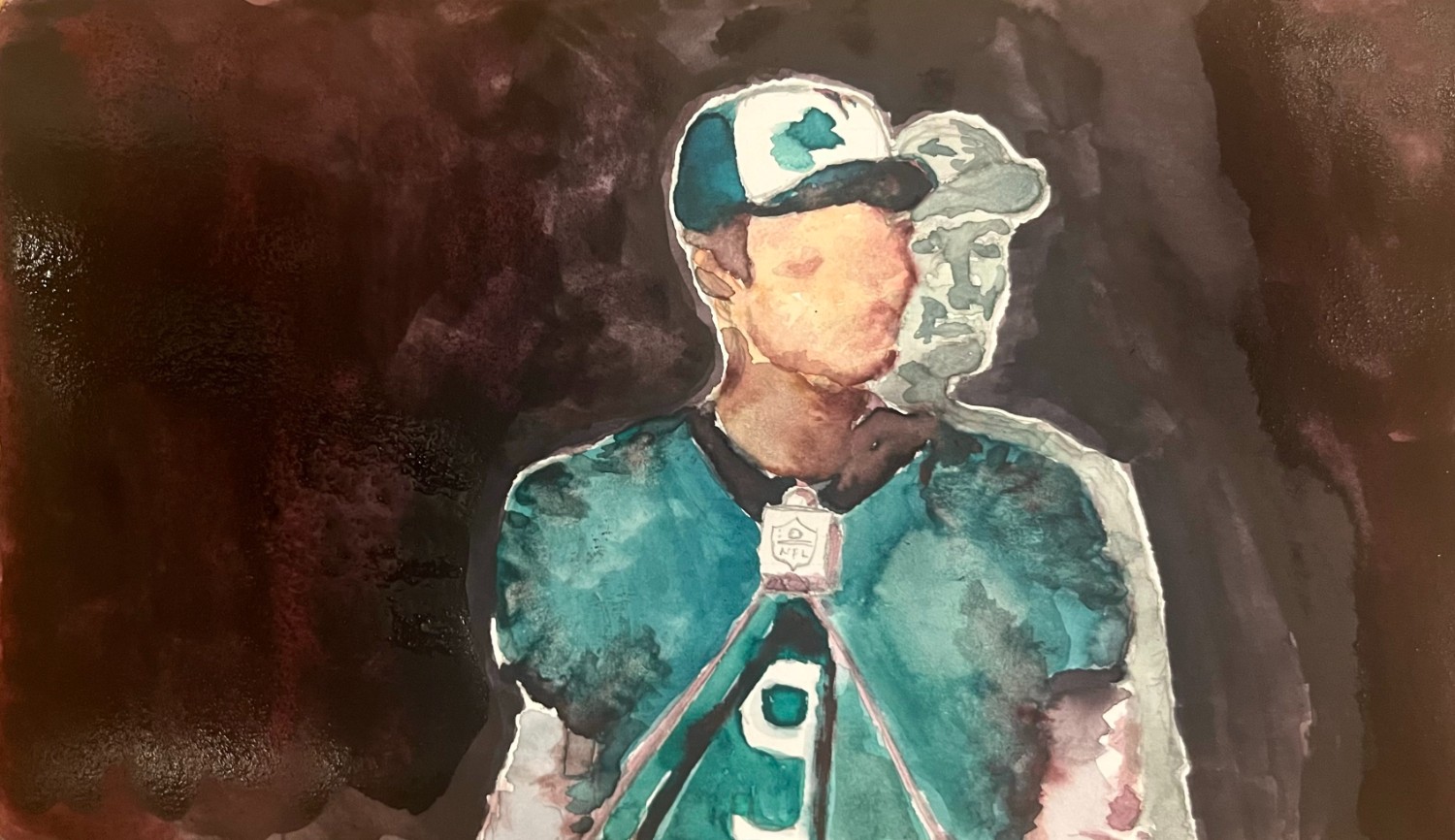
NFL – Mac Ribner
In week nine of the 2025 NFL season, Dallas Cowboys defensive end Marshawn Kneeland helped the special teams unit block a punt against the Arizona Cardinals, securing the ball in the end zone for a rare special teams touchdown. It was quite the impressive play for Kneeland — and football fans hoped it would be one of many for a player labeled as a potential breakout star at age 24.
Three days later, Kneeland was dead.
Kneeland was found in the early hours of Nov. 6 by police, who confirmed his death by way of a self-inflicted gunshot wound. Just prior to his death, he had sent farewell texts to his family and friends. By the time those messages had been reported to authorities, it’s likely that Kneeland had already passed away.
The following week, the Cowboys paid tribute to Kneeland with players donning t-shirts bearing his likeness, along with helmet decals sporting his number 94. As Kneeland’s jersey sat behind the bench, the Cowboys thrashed the Las Vegas Raiders in a victory many hoped would be a sweet ending to a tremendously bitter snapshot of football history.
Despite this tribute, Kneeland’s tragedy would only be followed by more heartbreak. Just three months later, another NFL player — Rondale Moore of the Minnesota Vikings — was found dead in his garage at 25 years old. Police investigation revealed Moore’s life ended in a manner eerily similar to Kneeland’s — by way of his own bullet.
While Kneeland had expressed feelings of depression prior to his death, Moore seemingly suffered in silence. After constant knee injuries derailed what looked to be a promising football career, Moore had essentially fallen off the NFL community’s radar. It’s not surprising to see athletes flame out young — especially at a demanding position like wide receiver — but the sheer speed with which Moore’s career deteriorated was an anomaly even amongst his peers.
The nature of Moore’s physical health is likely to have played a role in his mental tribulations as well. When athletes face career-altering injuries, the road to recovery is inextricably intertwined between body and mind.
After tearing his achilles tendon in the prime of his career, Celtics forward Jayson Tatum was forthright regarding the mental agony involved in his rehab process. It’s easy for people to imagine the highlights of athletic life, but most childhood daydreams don’t involve crutch-assisted showers or mornings spent in tears.
Moore didn’t command the superstar status that is seemingly necessary to warrant media focus on his recovery, but it’s hard to imagine that he didn’t feel a similar anguish. What little coverage Moore received was mostly dedicated to deeming his career a failure, despite him still being young enough to live with his parents.
The ugly truth of the matter is that for every extensively-chronicled injury recovery in sports, there are many that are completely unexplored — unless such coverage is in the interest of scrutiny or schadenfreude. It’s not realistic to expect intense documentation for every such instance, but it’s worth questioning why sympathy is apparently only reserved for superstars.
While the general sporting world largely offered routine condolences for Kneeland and Moore in the wake of their deaths, some athletes have attempted to provide new solutions to what has been described as a mental health crisis in sports.
A.J. Green, a former NFL wide receiver and teammate of Rondale Moore, proposed making mental health consultation a mandatory aspect of injury rehab. Speaking from the perspective of a longtime NFL veteran, Green stated that mental health concerns in sports are primarily viewed as a detriment to a player’s potential career earnings — and thus as something to be concealed. Green said this standard incentivizes players to lie about their mental health — a trend that he believes will continue until the league implements practices to reverse it.
Green’s theory also points to one of the most harrowing aspects of these deaths — they’re merely the latest in a series of tragedies to befall football players. Legendary linebacker Junior Seau committed suicide in 2012, just four years after his retirement. LSU football’s neglect of an injury to team captain Greg Brooks Jr. led to him suffering irreparable brain damage. The ongoing crisis of CTE has claimed the careers — and lives — of multiple football players.
These issues are not new, and they certainly aren’t isolated, despite what the NFL would lead you to believe. The football community is facing an ongoing player mental health emergency, and this recent string of deaths is yet another reminder of the desperate need for change. Those involved in football’s executive world would be wise to heed the words of players like Green before more lives are needlessly lost in service of the gridiron.
Contact Mac Ribner at ribner@oxy.edu and Ben Petteruti at petteruti@oxy.edu
