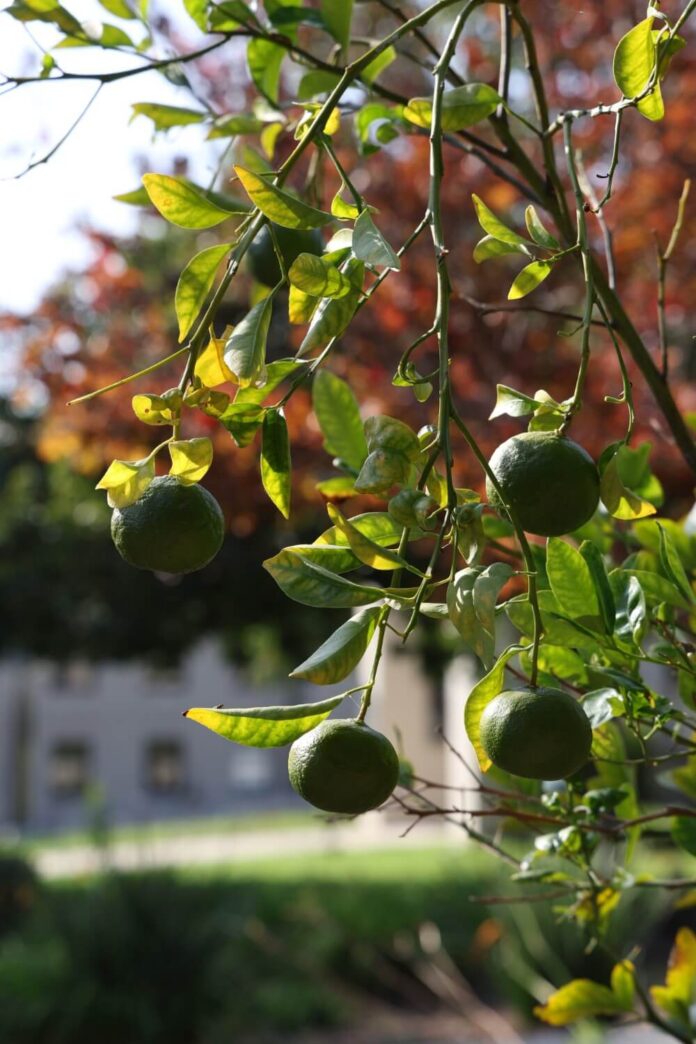
Occidental has several varieties of fruit trees, including crabapple, Catalina cherry, fig, natal plum and loquat, according to the Office of Sustainability. Reagan Rosenthal (freshman) said she first noticed the fruit trees when she moved into Chilcott Hall.
“I live in Chilcott Hall, so I passed by the fruit trees and really wanted to try the limes — I know that there are limes over there, or at least I hope they’re limes,” Rosenthal said.
Caden Mann (sophomore) said she picks from the orange and loquat trees near Haines Hall.
“I see them every day when I walk to the quad,” Mann said. “They only bloom every so often.”
Rosenthal said she uses the fruit to supplement her meals from the Marketplace.
“I had fish tacos from the Marketplace and they didn’t have any limes,” Rosenthal said. “I was like, ‘Oh, I might as well just go and get some limes from over here and squeeze them on top.’”
Sam Ludwig, the campus Grounds Supervisor, said there is less incentive for students to pick fruit off the trees due to the commercial accessibility of fruit.
“In the olden days you would […] walk to an apple tree and go pick an apple,” Ludwig said. “There’s none of that going on when you have the [Marketplace] — you can get anything you want.”
Occidental’s campus is also home to a variety of fruit-bearing bushes, according to the Office of Sustainability. The selection includes lemonade berry, prickly pear and rose bushes. Assistant Director of Sustainability Alison Linder said the berries are picked by families in the community.
“I haven’t picked my own fruit, but it gives me much joy to see families from the neighborhood eating the berries off the bushes,” Linder said.
Linder said the fruit trees are for all to harvest. She said since it is a shared resource, people are expected to pick fruit in moderation.
“It’s a great example of demonstrating respect for each other enjoying the benefits [of the fruit trees],” Linder said.
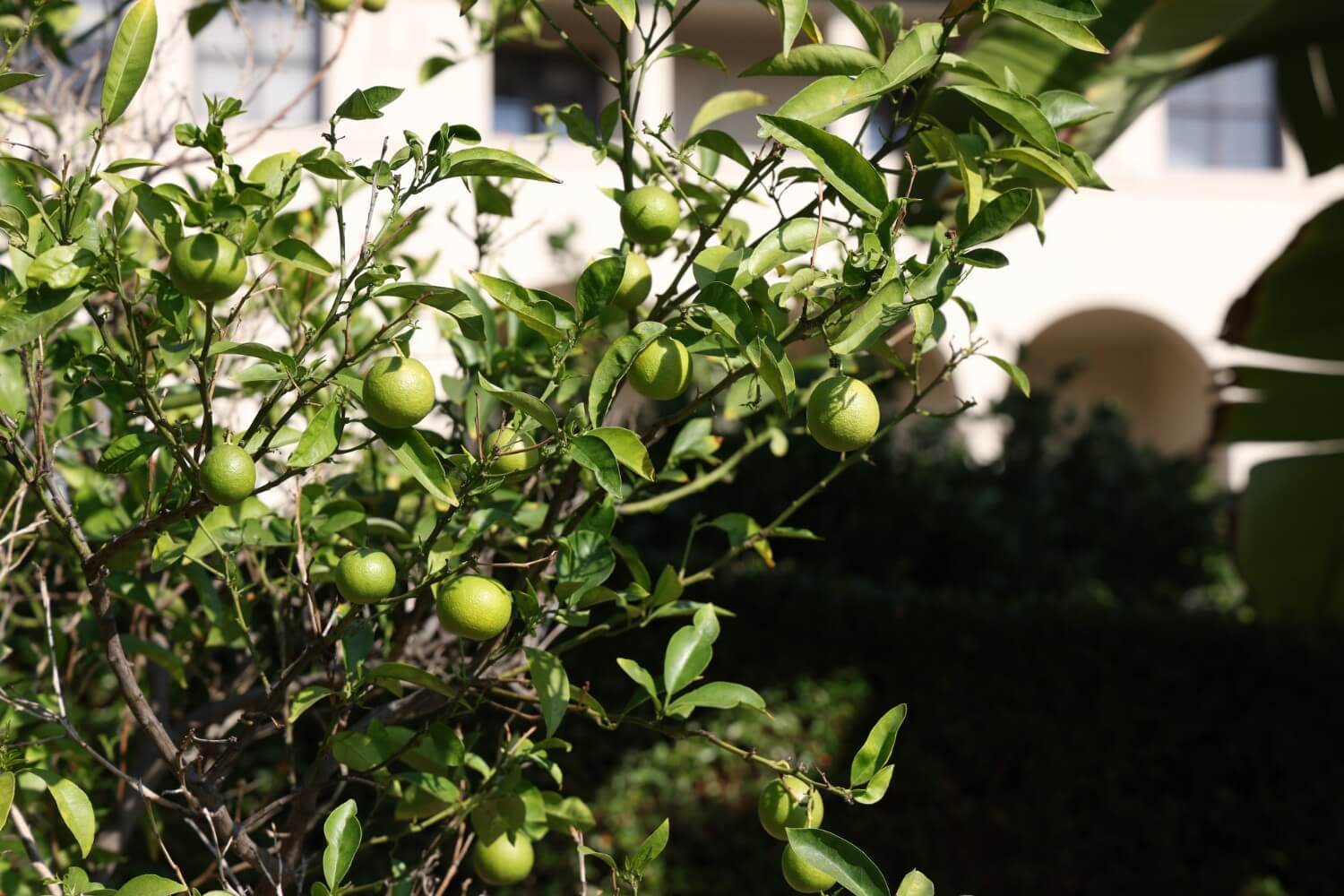
According to Linder, all trees serve important functions on campus.
“Trees sequester carbon, help keep areas cool through shade and evapotranspiration, provide habitat, stabilize soils and are an important part of the water cycle,” Linder said. “I love the term ‘nature-based services,’ and trees are a great example [of that].”
Ludwig said the fruit trees do not require any special maintenance.
“Maintenance is the same whether it is a fruit tree or not,” Ludwig said. “If they are damaged we’ll make some cuts on the tree, but if not we’re probably not touching [them].”
The Office of Sustainability recommends students follow the principles of the Honorable Harvest. This includes taking only what students need, harvesting in a way that minimizes harm and using everything they take. Mann said she thinks Occidental could use the fruit trees to promote sustainable practices.
“When [the fruit] doesn’t get eaten, a lot of them just fall on the ground and rot,” Mann said. “I noticed that the MP has a lot of fruit — it would be cool if they sourced that fruit from the campus trees.”
According to the Office of Sustainability, the olive trees near Thorne Hall are harvested by volunteers and pressed by Ojai Olive Oil Company, a small olive farm 80 miles northwest of campus. They said while Occidental Campus Dining Catering does not use the olive oil on a frequent basis, they use it for special events like Earth Month, Alumni Weekend and the Olive Harvest Fest.
Mann said she wants to start a fruit and vegetable garden outside of Haines Hall.
“By Haines there’s a big lot of dirt, [so] I wanted to get my friends together and make some flower beds to start a little garden,” Mann said. “I think it would be really cool to be able to plant and eat our own food that we grow — it’s more sustainable.”
According to Linder, the Office of Sustainability accounts for the fruit trees in their project planning.
“As the Office of Sustainability is developing Oxy’s first Climate Action and Sustainability Plan, we will be considering the implications of how we manage our landscape,” Linder said.
Rosenthal said she hopes the fruit trees remain on campus.
“I like the fruit trees,” Rosenthal said. “If they’re trying to get rid of them, [I hope they] don’t.”
Ludwig said there is viable space on Fiji hill to plant more fruit trees.
“If you want to grow [more] for usage, there’s plenty of space to do it up there on the hills,” Ludwig said.
Contact Nick Dobbs at ndobbs@oxy.edu